Japan Actors’ Union Sets Voice AI Rules
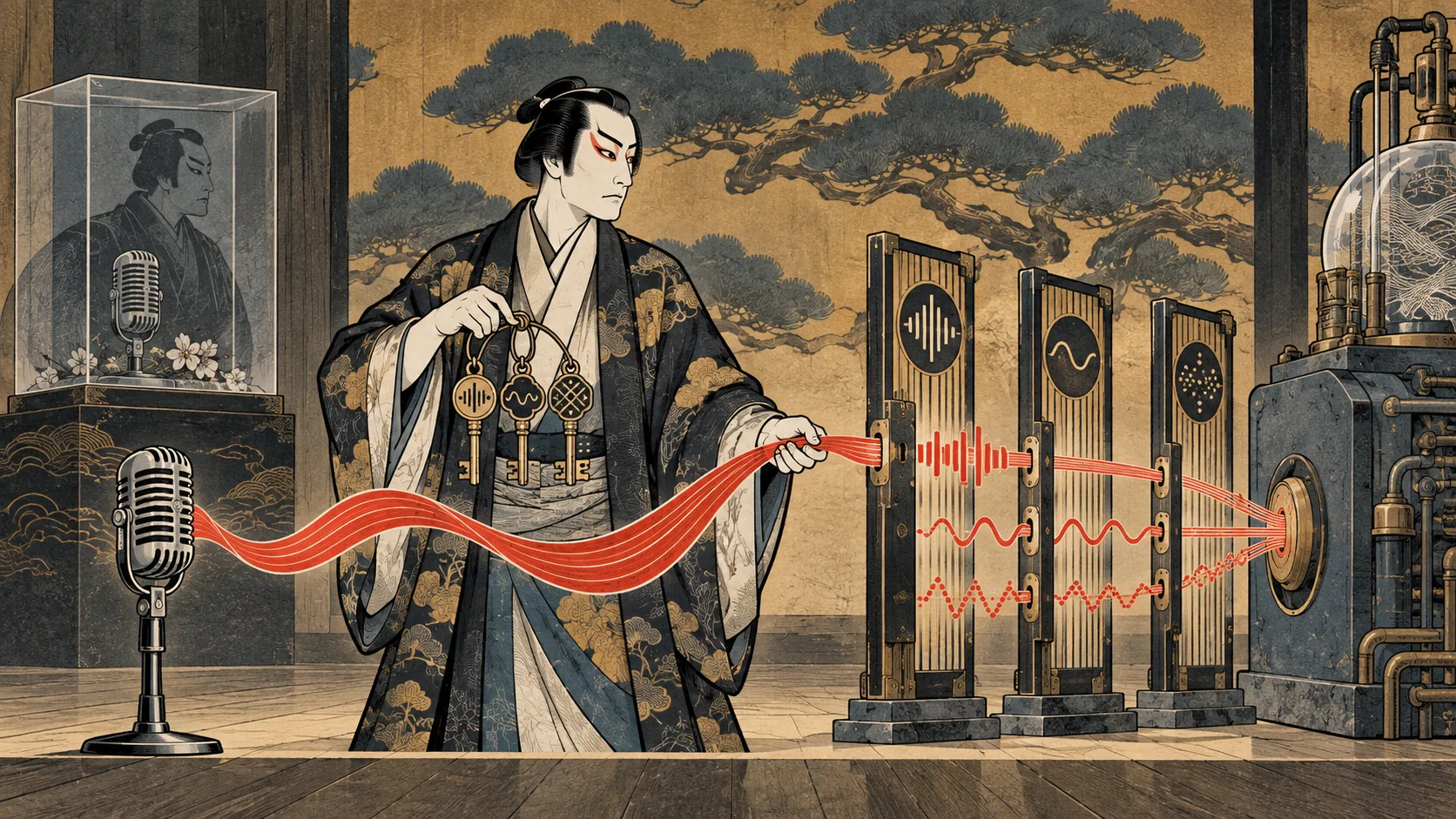
- •Japan Actors’ Union announced voice AI guidelines on October 15, 2026
- •Separate written consent required for training, generation, and use in works
- •Each language requires consent; use of deceased performers’ voices is generally prohibited
The Japan Actors’ Union (Nichihairen), with about 2,600 members, announced guidelines on October 15, 2026, for using actors’ and voice performers’ voices with generative AI. The union cited cases in which audio collected without consent was used to create highly similar synthetic voices for commercial purposes or fake videos. The voluntary standards aim to protect performers’ rights and dignity while helping production companies and AI developers conduct business appropriately.
Creating or using a model that recreates a person’s voice requires that person’s separate written consent at each of three stages: analysis and training, generation and construction, and use of the generated audio in a project. Consent to training alone does not permit use of generated audio in a work or advertisement. Beforehand, businesses must explain the work, purpose, duration, and technical method. For advertising, they must also obtain consent for specific uses, such as particular lines, for each product, service, or campaign.
The guidelines prohibit blanket contracts covering future uses. Consent must be obtained again when use in another work or a new series becomes necessary. Consent and contract periods are generally limited to one year; continued use requires renegotiating compensation and terms. Longer periods may be accepted when there is a reasonable need for long-term production or development, but indefinite consent is not allowed.
The union calls for compensation to be set separately from standard performance fees, including fees for training and development, generative AI use, additional uses such as advertising, and multilingual use. The amount and payment method should be negotiated based on factors such as the medium, countries of distribution, and actual use, and set out in an individual written contract. If the parties cannot agree, AI must not be used. When AI translates a Japanese-language work into other languages, consent is required for each language. The guidelines also call for avoiding changes that substantially damage the original performance’s nuance or cultural context, and for considering AI protection agreements made by performers’ unions in destination countries.
The guidelines generally prohibit AI from replacing performers in Japanese-language audio works involving acting, such as anime and dubbing for foreign films and dramas. Any permitted use requires authorization from the performer and the rights holders for the voice, work, and audio production, along with an individual contract that includes compensation. Limited noise removal, sound-quality improvement, and minimal phoneme adjustments to match a character’s mouth movements are allowed within the scope agreed with the performer, provided they do not change the essence of the performance. Generated audio must be labeled as AI-generated and identify the service or model used and the performer who supplied the original voice. Performers may request that their names be omitted or shown anonymously or under a pseudonym.
Creating, retaining, or using AI models or generated audio based on a deceased person’s voice is generally prohibited. Exceptions are limited to cases such as a continuation of a series for which specific production had begun at the time of death, or a project the performer had agreed to appear in while alive. Use must be minimal, such as completing unfinished portions that cannot objectively be handled by replacing or handing over the role to a human performer. Prior written consent covering purpose, scope, and duration must be obtained from the family and the performer’s former agency, and the family must receive appropriate usage fees at least equivalent to those paid during the performer’s lifetime. Use in new works, advertisements, or events that the performer had no involvement in while alive is prohibited. The union says it will work to establish the guidelines and step up efforts with the national government and government agencies to legislate “voice rights.”