NVIDIA Shows Optical Interconnect Prototypes
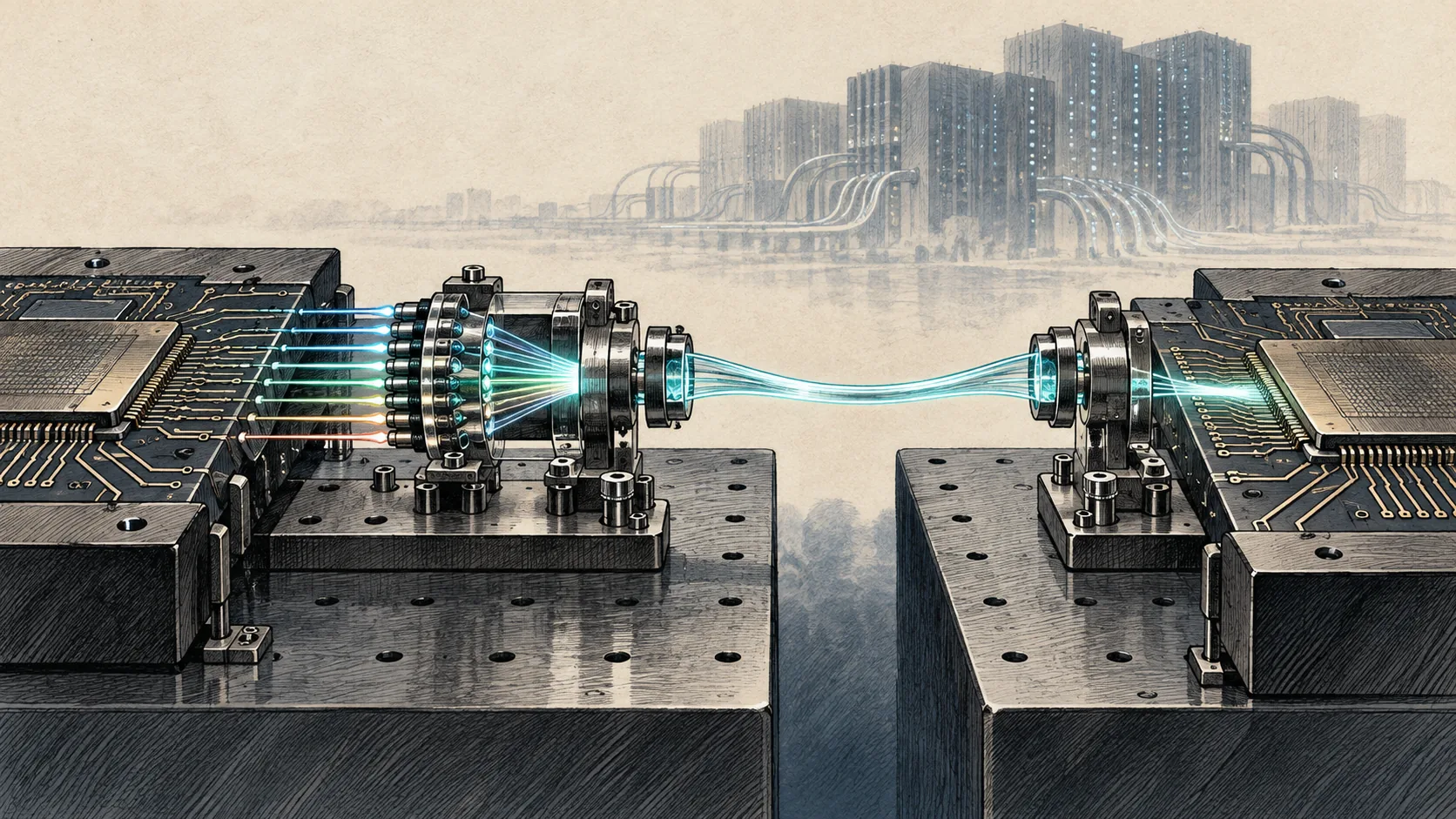
- •NVIDIA showed OOI and DWDM research prototypes at SEMICON West 2026 for optical integration in AI systems
- •DWDM demonstration combined eight wavelengths at up to 32 Gb/s each, totaling 256 Gb/s per fiber
- •NVIDIA has not set a commercialization timeline; Feynman is expected in 2028, according to Wccftech
NVIDIA presented an optics-on-interposer (OOI) prototype and dense wavelength-division multiplexing (DWDM) technology at SEMICON West 2026 under the theme “Optical Integration for the Next Generation of AI,” according to Wccftech. The prototypes are in the research stage, and NVIDIA has not announced a commercialization timeline. It says it is evaluating them for potential future products, according to The Elec.
The OOI design places optical engines on the silicon interposer that carries computing chips, instead of on the organic package substrate. Removing the substrate from the electrical signal path lets signals travel through shorter, fine-pitch interposer connections, which could raise bandwidth density and lower power consumption, The Elec reported. DWDM is designed to increase the data capacity of a single optical fiber. NVIDIA’s demonstration combined eight wavelengths running at up to 32 Gb/s each, for an aggregate 256 Gb/s per fiber, Wccftech reported.
NVIDIA researcher Nikola Nedovic said efficient optical interconnects for future AI systems require balancing device and circuit design trade-offs while addressing thermal management and packaging challenges. NVIDIA plans to extend optical interconnects with its Kyber NVL1152 architecture, connecting eight racks into one 1,152-GPU NVLink domain and supporting the Feynman platform. Wccftech reported Feynman is expected in 2028.
NVIDIA’s commercial CPO products are already in production: in May 2026, it announced that Spectrum-X Ethernet Photonics switches entered full production, combining 200Gb/s SerDes with CPO for the Vera Rubin platform. CoreWeave, Lambda and Oracle Cloud Infrastructure are among the early adopters. NVIDIA says TSMC fabricates silicon photonics, SPIL handles chip-scale packaging, assembly and testing, TFC packages laser dies into modules and validates reliability, and Foxconn integrates the switches into networking systems. Coherent, Lumentum and Sumitomo Electric supply external laser source modules; Corning, Senko and Browave provide optical fibers and related components; Fabrinet handles cooling and final testing, The Elec reported.