OpenAI Sets Data Center Trust Policies
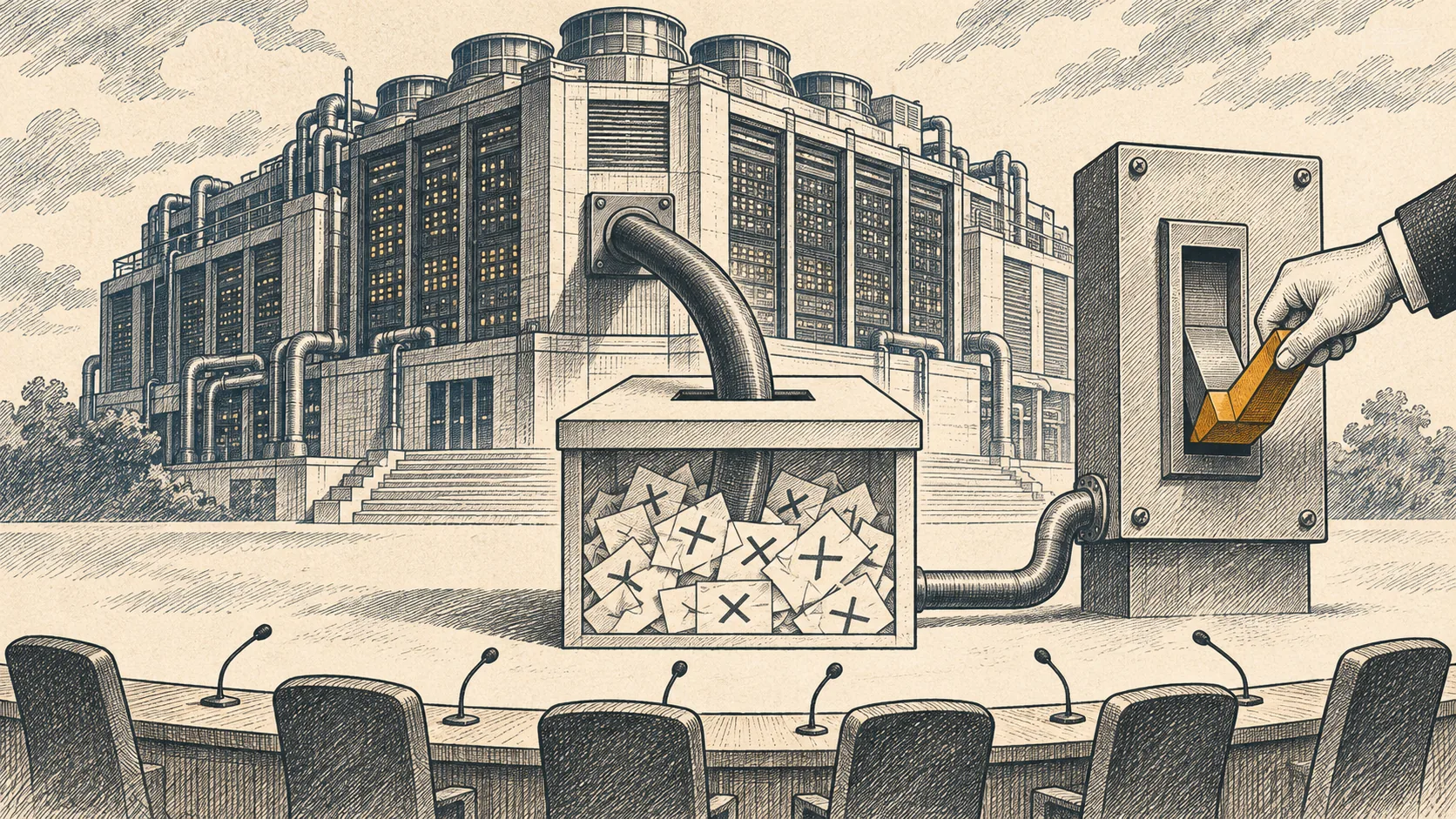
- •OpenAI announced electricity-cost and transparency policies after voters rejected data centers in 40 of 41 local measures.
- •Bridget Bean said data centers influenced ballot outcomes, while prices, the president and war drove the election.
- •Georgia Power could cut an OpenAI campus’s power by 1,000 megawatts during grid stress under an agreement Bean cited.
OpenAI announced policies to rebuild public trust in AI infrastructure two days after midterm voters rejected data centers in 40 of 41 local ballot measures and elected governors who had pledged to pause new projects. The company said it would pay the full cost of electricity and had ended non-disclosure agreements with public officials, steps it said were intended to increase transparency about construction and potential impacts. Former Cybersecurity and Infrastructure Security Agency director Bridget Bean told The National News Desk that data centers were not the main driver of election outcomes, but became a significant factor where voters decided on them directly. She called them “an accelerant, not the engine,” saying prices, the president and the war drove the election.
Bean said every locality where a data center was on the ballot rejected it. In Texas, Gov. Greg Abbott had paused new centers in September, but lost; Bean said voters may not have believed the pause came with a secure plan for ratepayers. In Georgia, she said the Utility Board, which sets the terms power companies offer data centers, flipped for the first time in 30 years. In Florida, Byron Donalds won after advocating that data centers be built, pay their own way, protect water and leave decisions to towns. Bean said the facilities remain essential to the economy, homeland security and daily life.
Bean expects delays in the AI buildout in the near term and said moratoriums or pauses would have a major impact. She cited an agreement with Georgia Power that would let the utility reduce power to an OpenAI campus by 1,000 megawatts when the grid is stressed, to prevent outages for the rest of the community. Bean said voters’ concerns, including electricity costs, must be addressed while the United States competes with China in AI. She argued that continued construction and innovation can coexist with informing the public and ensuring voters do not bear added costs.