OpenAI Launches GPT-Live-1 API
- •OpenAI launched GPT-Live-1 in the API for full-duplex voice agents on September 10, 2026
- •Speak evaluations found GPT-Live-1 cut tutor interruptions by almost 80% versus previous turn-based systems
- •GPT-Live-1 costs $0.05 per minute and improved Full Duplex Bench by 30 percentage points
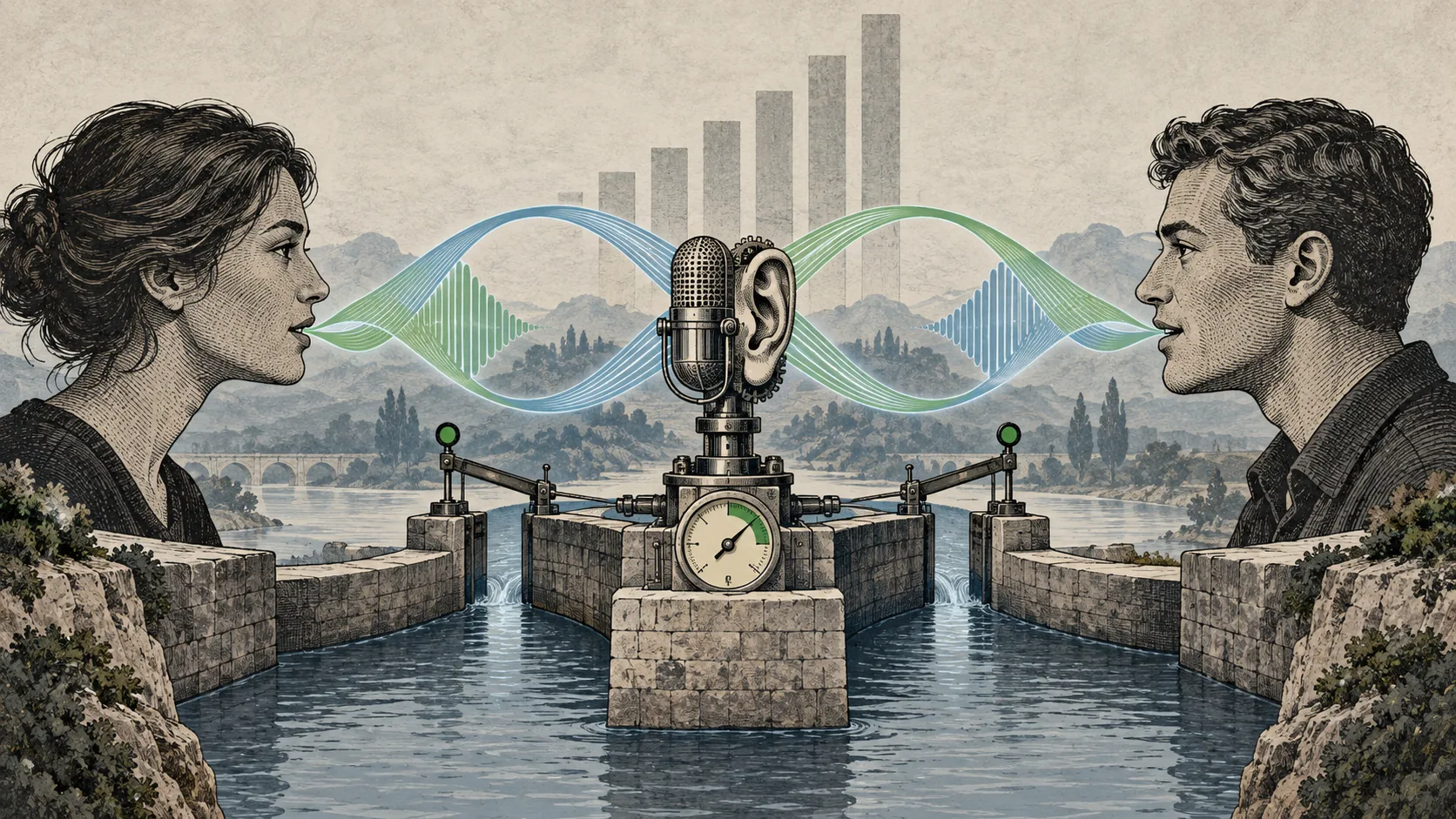
OpenAI launched GPT-Live-1 in the API on September 10, 2026, giving developers a voice model for voice-enabled apps and business workflows. The company said GPT-Live-1 brings ChatGPT’s natural, full-duplex conversations to the API, meaning the model can listen and speak at the same time while letting developers control how voice agents speak and act.
GPT-Live-1 was first introduced in ChatGPT and can delegate deeper reasoning and actions to paired models and tools, including setups like Codex and ChatGPT Work. OpenAI said the API release emphasizes developer control over voice experiences for different users, workflows, and goals. In early evaluations, Speak found GPT-Live-1 gave language learners more time to think before a tutor responded, cutting interruptions by almost 80% compared with previous turn-based systems.
OpenAI listed interruption handling as a core strength because GPT-Live-1 reasons over incoming and outgoing audio together, avoiding the latency and brittle handoffs of chained STT-LLM-TTS architectures. The model can delegate reasoning and tool calls to backend text models such as GPT-6 Astra or third-party models, and developers can shape tone, pace, and conversational style through the system prompt.
The company said GPT-Live-1 handles background noise and silence without interrupting conversation or narrating every step aloud. It also improves context retention and conversational quality across extended interactions, and it supports full-duplex voice agents for phone calls such as restaurant reservations and customer support.
OpenAI said traditional voice agents stitch together speech-to-text, a reasoning model, and text-to-speech, with each handoff adding latency and more chances to lose timing, context, or natural rhythm. GPT-Live-1 handles listening and speaking in one model, responds to interruptions and acknowledgments as they happen, and delegates deeper work to the back end so conversation can continue while background tasks run.
Tony Stoyanov, Co-Founder and CTO, said GPT-Live-1 simplified his company’s code base by 80% and removed 23K lines of code compared with a cascaded build. OpenAI said developers can pair GPT-Live-1 with models such as Luna for high-volume tasks like scheduling or order updates, or Astra for complex customer issues requiring reasoning, matching reasoning depth, speed, and cost to each task.
GPT-Live-1 natively provides ASR transcripts and response text, includes strong alphanumeric understanding, supports keyword biasing, and natively supports turn detection even though it is not a turn-based model. OpenAI said GPT-Live-1 improved Full Duplex Bench performance by 30 percentage points over GPT-Realtime-2.1, with large gains in turn-taking latency and interactive behavior. Paired with GPT-6 Astra at medium reasoning effort, it ranked #1 on Tau3, which measures frontier voice-agent intelligence on end-to-end tasks.
OpenAI said GPT-Live-1 is available in the API today at $0.05 per minute for the front-end voice layer. The company is expanding from a small set of real-time voices to a broader selection across accents, dialects, and languages, and said it will continue expanding voice options and language availability over the coming months. OpenAI also said enterprises can build voice workflows through OpenAI Presence, which uses GPT-Live-1 for real-time voice interactions that can answer questions, resolve issues, use company systems, take approved actions, and escalate to people when needed.