OpenAI Plans Humanoid Robot Demo in 2027
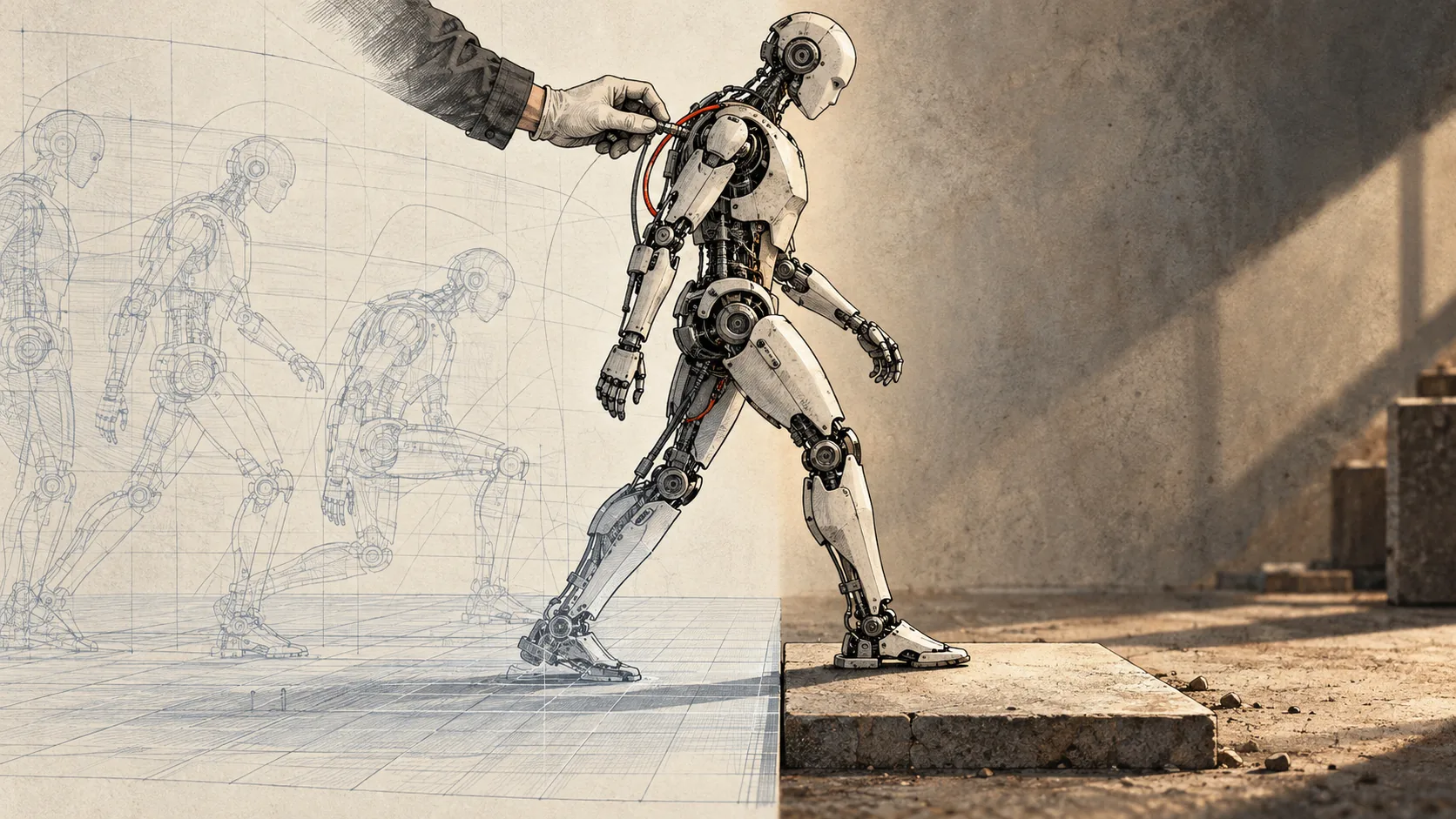
- •Sam Altman says OpenAI plans a humanoid robot and expects to show a demo in 2027.
- •OpenAI is hiring for motion control, actuator coordination and machine-learning systems for physical tasks.
- •Earlier Dactyl experiments exposed the difficulty of transferring simulated robotic skills into reliable real-world actions.
OpenAI CEO Sam Altman said the company plans to build a humanoid robot and expects to show a demonstration in 2027. He told Fortune that robots would not be walking the streets for a few years longer, and OpenAI has not said when the robot might become commercially available. The company has not disclosed what the demo will show or what the robot will look like.
Altman said a human-shaped design fits environments built for people, including doors, keyboards and tools. He described the robot’s intelligence as a higher priority than its appearance: giving a machine arms and legs is not enough if it cannot decide what to do with them. OpenAI is hiring specialists in motion control, estimating a robot’s position and movement, actuator control and coordinating whole-body behavior. Other roles focus on machine-learning systems for training AI to perform physical tasks.
The robot would need to interpret camera and sensor information, understand instructions, plan actions, coordinate movement and adapt to changing conditions. Picking up a mug, for example, requires recognizing it, locating its handle and applying enough pressure to lift it without dropping it or spilling its contents. OpenAI’s earlier Dactyl project trained a robotic hand in simulation before it handled real objects, and the company later used the approach to solve a Rubik’s Cube. The experiments highlighted the difficulty of transferring skills learned in simulation to reliable behavior in the physical world.
OpenAI’s job listings also point to work on custom electromechanical actuators, which combine motors, transmissions, sensors and thermal systems, as well as manufacturing and supply chains. The report says these roles suggest preparation for producing hardware at scale. Bringing the robot’s intelligence and hardware together so it can reliably perform everyday tasks remains a challenge, and commercial availability is still unspecified.