OpenAI Pledges to Pay Data Center Costs
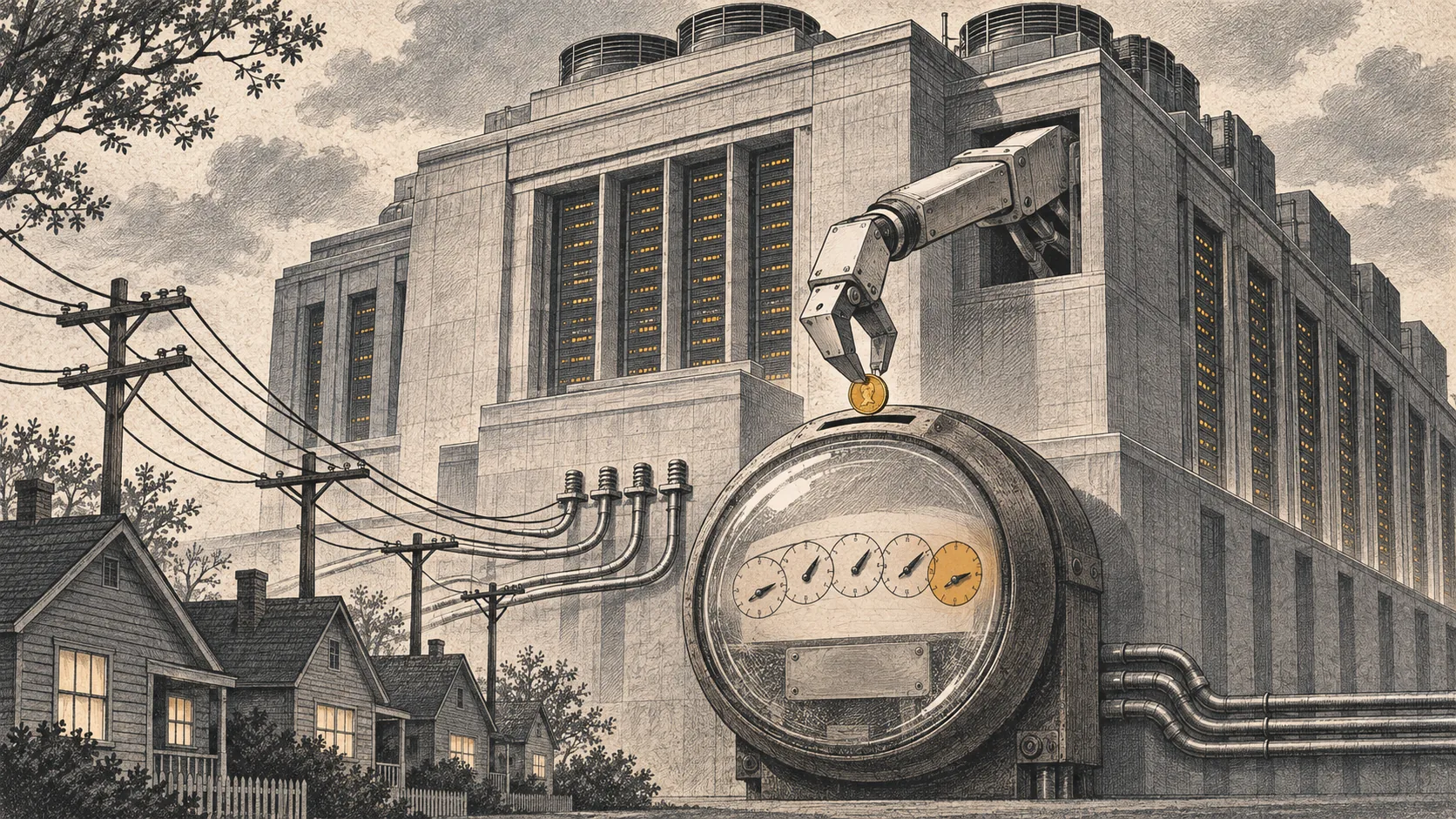
- •OpenAI’s National Community Compact pledges to cover electricity and grid costs at its campuses
- •Roughly 28 local measures in 25 localities passed against data centers by Wednesday morning
- •Poll found more than 70% of Americans opposed a nearby data center, citing electricity prices
OpenAI published a National Community Compact on Thursday, two days after midterm voting in which residents in communities across the United States backed measures to limit data center development. The company pledged to pay for electricity and grid infrastructure at campuses it owns and operates, and to post financial guarantees before major spending begins so utility customers are not left with costs if a project is delayed or canceled. OpenAI told Fortune the commitments had been in the works for months and that it had already made them for its campuses; the compact put several pledges in writing for the first time.
The compact seeks a “social license,” or continued community consent for a company to operate. Fortune says companies earn that consent by showing nearby residents a project will leave them better off, or at least no worse off; zoning approval and tax breaks alone do not provide it. After the Democratic wave on Tuesday, the AI industry faced local demands to put limits and costs on data center projects. The article characterizes OpenAI as the first major AI company to agree to pay that new price since votes were counted.
Data centers appeared on ballots in roughly 40 localities. By Wednesday morning, about 28 measures in 25 localities had passed, all opposing data centers; 18 of those municipalities were in Ohio, which already had 125 data center moratoriums. Sunbury, Ohio, voted 79% to 21% to ban facilities over 25 megawatts after Amazon proposed a $2 billion campus. Trenton approved a ban 80% to 20% while Amazon Web Services builds a 250-megawatt facility there. Hubbard approved a ban 76% to 24%, and its mayor said a proposed 300-megawatt project was dead.
The article says the votes favored restrictions rather than outright bans across the board. In Perry, Ohio, 87% supported requiring hyperscale developers seeking tax breaks to post financial guarantees and meet noise limits. Grove City banned no projects, but voters passed a public vote requirement by 55% to 45% for projects exceeding 50 acres, 20 megawatts, or 500,000 gallons of water per day. Many bans use size thresholds, leaving room for smaller server farms while excluding gigawatt-scale campuses. Similar opposition crosses party lines: Vivek Ramaswamy pledged a construction moratorium until Ohio’s legislature acted, and Texas Gov. Greg Abbott had paused new data center grid connections in August. More than 70% of Americans polled said they would oppose a nearby data center, with higher electricity prices their leading reason.
Communities had often exchanged tax breaks for corporate tax revenue and construction jobs. After the votes, companies are offering to cover more project costs. Microsoft’s January “Community-First AI Infrastructure” plan pledged to pay its electricity costs and full local property taxes without seeking tax breaks, replenish more water than it uses, and provide free AI training in local schools and community colleges. A week later, OpenAI said each Stargate campus would have a community plan. By this fall, Google, Microsoft, Meta, Oracle, xAI, OpenAI, and Amazon had signed a non-binding White House pledge to build or buy the power their facilities need.
Fortune describes the shift as repricing: companies now offer to pay for grid upgrades, water and training, with OpenAI also promising a guarantee if it walks away. The article says bans move data center projects elsewhere rather than eliminating demand for computing power. Harwood, the lone town that voted in favor of the industry, is near a facility Applied Digital is already building. Projects pushed out of Sunbury and Hubbard may seek counties willing to approve them under the terms those counties set. On Election Day, Arizona Congresswoman Yassamin Ansari called for a pause on advanced AI development, regulation of the industry and a ban on artificial superintelligence; Fortune says voters’ concerns centered on how data center construction affects their communities.