Compare AIFind AIAI NewsAI How-To
About Us
PrivacyTermsFAQContactContact
AIB Inc.Company info
© 2026 AIB Inc.

AI Eases Coding, Expands Open-Source Review Burden
AI Eases Coding, Expands Open-Source Review Burden

CIO Korea·Monday, October 12, 2026
  • •Three open-source maintainers describe heavier review and project-direction decisions as AI adoption makes coding easier
  • •Valkey commits nearly doubled and submitted code lines rose about fivefold from late last year to early this year
  • •AI agents help check errors and security, while maintainers assess design and whether changes fit project goals
  • •Three open-source maintainers describe heavier review and project-direction decisions as AI adoption makes coding easier
  • •Valkey commits nearly doubled and submitted code lines rose about fivefold from late last year to early this year
  • •AI agents help check errors and security, while maintainers assess design and whether changes fit project goals
  • •Three open-source maintainers describe heavier review and project-direction decisions as AI adoption makes coding easier
  • •Valkey commits nearly doubled and submitted code lines rose about fivefold from late last year to early this year
  • •AI agents help check errors and security, while maintainers assess design and whether changes fit project goals
  • •Three open-source maintainers describe heavier review and project-direction decisions as AI adoption makes coding easier
  • •Valkey commits nearly doubled and submitted code lines rose about fivefold from late last year to early this year
  • •AI agents help check errors and security, while maintainers assess design and whether changes fit project goals

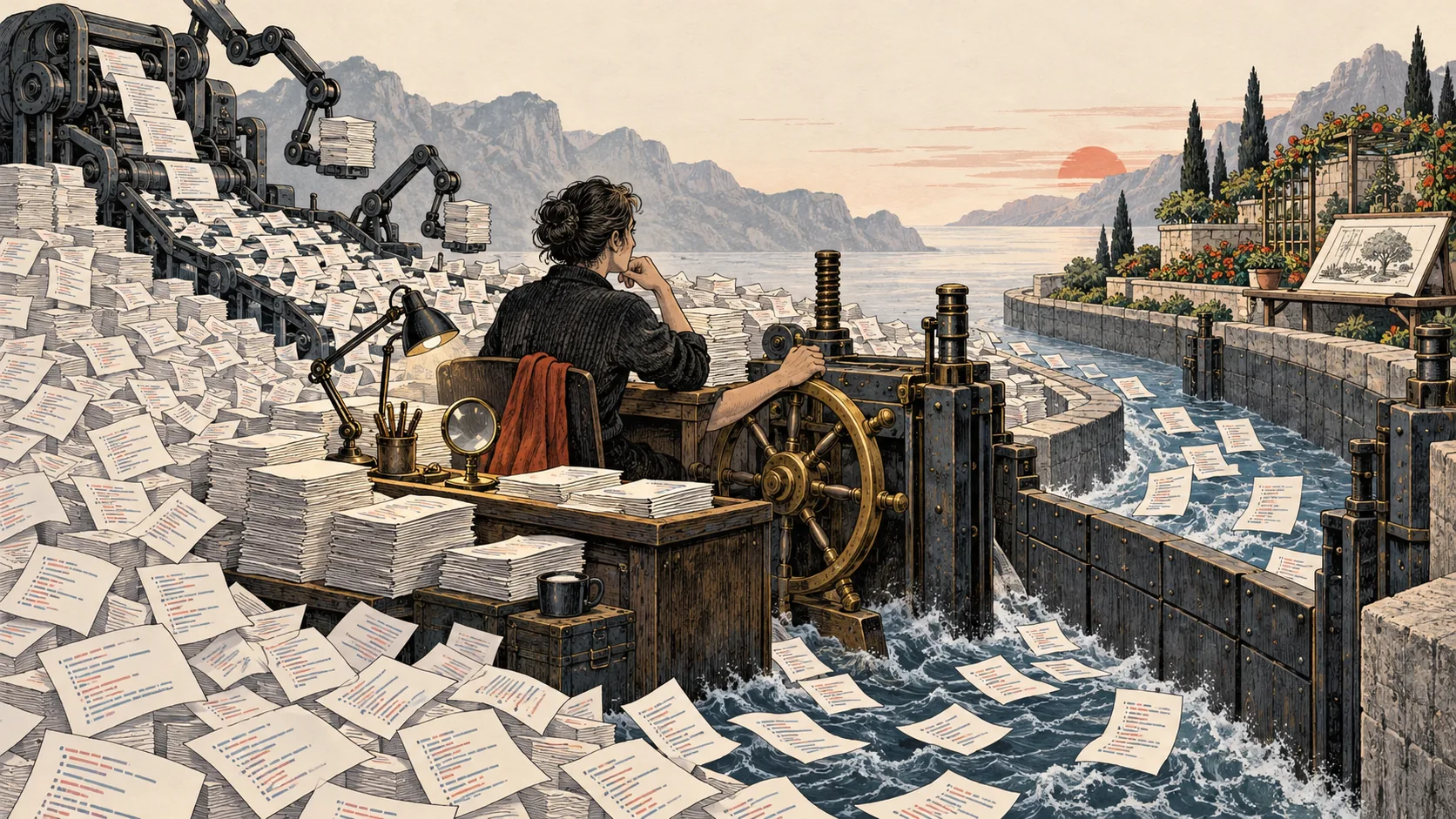
Three open-source project maintainers said AI has made writing code easier while increasing the burden of reviewing contributions and judging their direction. CIO Korea interviewed leaders of projects including Valkey and Istio on October 12, 2026, about changes to contributions, reviews and their communities. Valkey maintainer Madelyn Olson said her analysis found that commits to Valkey nearly doubled and submitted lines of code rose about fivefold from late last year to early this year. She said the increase coincided with improvements in AI agents’ problem-solving abilities.

Valkey maintainer Jacob Murphy said the time and effort once required to write code helped filter out contributions that had not been carefully considered. Now, AI can generate 1,000 lines at once, so maintainers often have to provide the first critical review. Code generation has become much easier, but reviewing has become only slightly easier; checking whether a contribution is headed in the right direction still takes focus and deep judgment. Olson said she regretted being unable to review every pull request (PR, a proposed code change), but welcomed more people wanting to participate.

Lin Sun said she had seen AI write responses to review comments as well as code, with contributors pasting those responses in unchanged. Some new or occasional contributors submit changes without understanding or checking the code, adding to maintainers’ workload; some reviewers have complained about exchanges with bots and repeated requests for revisions. In response, some projects Sun works on have set contribution principles based on the Linux Foundation’s AI use guidelines. Contributors may use AI, but must be confident in the result and disclose that they used it. Sun sometimes asks new participants to attend meetings to see whether they have people to work and communicate with. She also uses AI coding tools to spend less time looking up syntax and procedures, but says she checks and understands the output herself before publishing it.

The maintainers also use AI to review code. Murphy divides reviews into three levels: checking for errors such as memory leaks or crashes, checking code consistency and duplication, and judging whether a change fits the overall design and purpose. When several AI agents inspect code and leave comments before a human review, contributors can fix some problems first. Reviewers check for duplication with existing features and alignment with the project’s direction. They may also ask an agent to read a pull request, then exchange questions with it to understand the implementation’s context.

Olson said she uses AI to check for duplicate functions, consider simpler solutions and write tests. She verifies directly whether tests check the intended behavior and whether the implementation works as desired. If tests fail in continuous integration (automated testing of code changes), she may ask an AI agent to reproduce the problem; if it can, that gives her a basis for investigating and fixing the cause locally. Olson said AI tools can also help find security problems early. Maintainers must still check that changes fit project goals, preserve stability and performance, and do not create new security vulnerabilities.

The three maintainers said open-source communities offer experience beyond learning how to write code. Olson said AI still struggles to understand which design elements were prioritized or sacrificed and why software was built a particular way. She added that engineers in these communities can consider user experience from the perspectives of development and product managers. Murphy cited learning about user experience, development goals and the conditions under which systems fail, as well as judging which ideas from a flood of research and technical information a project should adopt or leave out.

Sun said earning trust, building influence and motivating others differ from conversing with AI. Communities let people build expertise in new fields and demonstrate their abilities, but reaching agreement can be difficult when technical issues, companies’ interests and politics are intertwined. Olson recalled that users remembered a bug she fixed in the Redis project around 2019 and thanked her years later, describing that as rewarding.

Sun predicted that concern about token costs would lead more people to consider self-hosted open models and that coding agents would lower the barrier to contributing. She stressed, however, that successful projects need communities that support and help them grow. Even when the cost of producing code falls, she said, people will not necessarily use that code. The article said changes in open source raise a question for corporate development teams: how to build skills in explaining design decisions, reaching agreement with colleagues and solving users’ problems.

Three open-source project maintainers said AI has made writing code easier while increasing the burden of reviewing contributions and judging their direction. CIO Korea interviewed leaders of projects including Valkey and Istio on October 12, 2026, about changes to contributions, reviews and their communities. Valkey maintainer Madelyn Olson said her analysis found that commits to Valkey nearly doubled and submitted lines of code rose about fivefold from late last year to early this year. She said the increase coincided with improvements in AI agents’ problem-solving abilities.

Valkey maintainer Jacob Murphy said the time and effort once required to write code helped filter out contributions that had not been carefully considered. Now, AI can generate 1,000 lines at once, so maintainers often have to provide the first critical review. Code generation has become much easier, but reviewing has become only slightly easier; checking whether a contribution is headed in the right direction still takes focus and deep judgment. Olson said she regretted being unable to review every pull request (PR, a proposed code change), but welcomed more people wanting to participate.

Lin Sun said she had seen AI write responses to review comments as well as code, with contributors pasting those responses in unchanged. Some new or occasional contributors submit changes without understanding or checking the code, adding to maintainers’ workload; some reviewers have complained about exchanges with bots and repeated requests for revisions. In response, some projects Sun works on have set contribution principles based on the Linux Foundation’s AI use guidelines. Contributors may use AI, but must be confident in the result and disclose that they used it. Sun sometimes asks new participants to attend meetings to see whether they have people to work and communicate with. She also uses AI coding tools to spend less time looking up syntax and procedures, but says she checks and understands the output herself before publishing it.

The maintainers also use AI to review code. Murphy divides reviews into three levels: checking for errors such as memory leaks or crashes, checking code consistency and duplication, and judging whether a change fits the overall design and purpose. When several AI agents inspect code and leave comments before a human review, contributors can fix some problems first. Reviewers check for duplication with existing features and alignment with the project’s direction. They may also ask an agent to read a pull request, then exchange questions with it to understand the implementation’s context.

Olson said she uses AI to check for duplicate functions, consider simpler solutions and write tests. She verifies directly whether tests check the intended behavior and whether the implementation works as desired. If tests fail in continuous integration (automated testing of code changes), she may ask an AI agent to reproduce the problem; if it can, that gives her a basis for investigating and fixing the cause locally. Olson said AI tools can also help find security problems early. Maintainers must still check that changes fit project goals, preserve stability and performance, and do not create new security vulnerabilities.

The three maintainers said open-source communities offer experience beyond learning how to write code. Olson said AI still struggles to understand which design elements were prioritized or sacrificed and why software was built a particular way. She added that engineers in these communities can consider user experience from the perspectives of development and product managers. Murphy cited learning about user experience, development goals and the conditions under which systems fail, as well as judging which ideas from a flood of research and technical information a project should adopt or leave out.

Sun said earning trust, building influence and motivating others differ from conversing with AI. Communities let people build expertise in new fields and demonstrate their abilities, but reaching agreement can be difficult when technical issues, companies’ interests and politics are intertwined. Olson recalled that users remembered a bug she fixed in the Redis project around 2019 and thanked her years later, describing that as rewarding.

Sun predicted that concern about token costs would lead more people to consider self-hosted open models and that coding agents would lower the barrier to contributing. She stressed, however, that successful projects need communities that support and help them grow. Even when the cost of producing code falls, she said, people will not necessarily use that code. The article said changes in open source raise a question for corporate development teams: how to build skills in explaining design decisions, reaching agreement with colleagues and solving users’ problems.

Read original (Korean)·Oct 12, 2026
#open source#maintainers#valkey#istio#ai agents#code review#pull requests#continuous integration