Compare AIFind AIAI NewsAI How-To
About Us
PrivacyTermsFAQContactContact
AIB Inc.Company info
© 2026 AIB Inc.

Raspberry Pi Predicts AI Move to the Edge
Raspberry Pi Predicts AI Move to the Edge

diginomica·Thursday, October 1, 2026
  • •Raspberry Pi CEO Eben Upton predicts most generative AI inference will run at the network edge by the end of the decade.
  • •Upton estimates generative AI’s shift to edge computing may take two, three or four years, after visual AI’s roughly 10-year transition.
  • •Raspberry Pi is considering future Linux and microcontroller platforms, including eventual successors to Raspberry Pi 6 and Pico 3.
  • •Raspberry Pi CEO Eben Upton predicts most generative AI inference will run at the network edge by the end of the decade.
  • •Upton estimates generative AI’s shift to edge computing may take two, three or four years, after visual AI’s roughly 10-year transition.
  • •Raspberry Pi is considering future Linux and microcontroller platforms, including eventual successors to Raspberry Pi 6 and Pico 3.
  • •Raspberry Pi CEO Eben Upton predicts most generative AI inference will run at the network edge by the end of the decade.
  • •Upton estimates generative AI’s shift to edge computing may take two, three or four years, after visual AI’s roughly 10-year transition.
  • •Raspberry Pi is considering future Linux and microcontroller platforms, including eventual successors to Raspberry Pi 6 and Pico 3.
  • •Raspberry Pi CEO Eben Upton predicts most generative AI inference will run at the network edge by the end of the decade.
  • •Upton estimates generative AI’s shift to edge computing may take two, three or four years, after visual AI’s roughly 10-year transition.
  • •Raspberry Pi is considering future Linux and microcontroller platforms, including eventual successors to Raspberry Pi 6 and Pico 3.

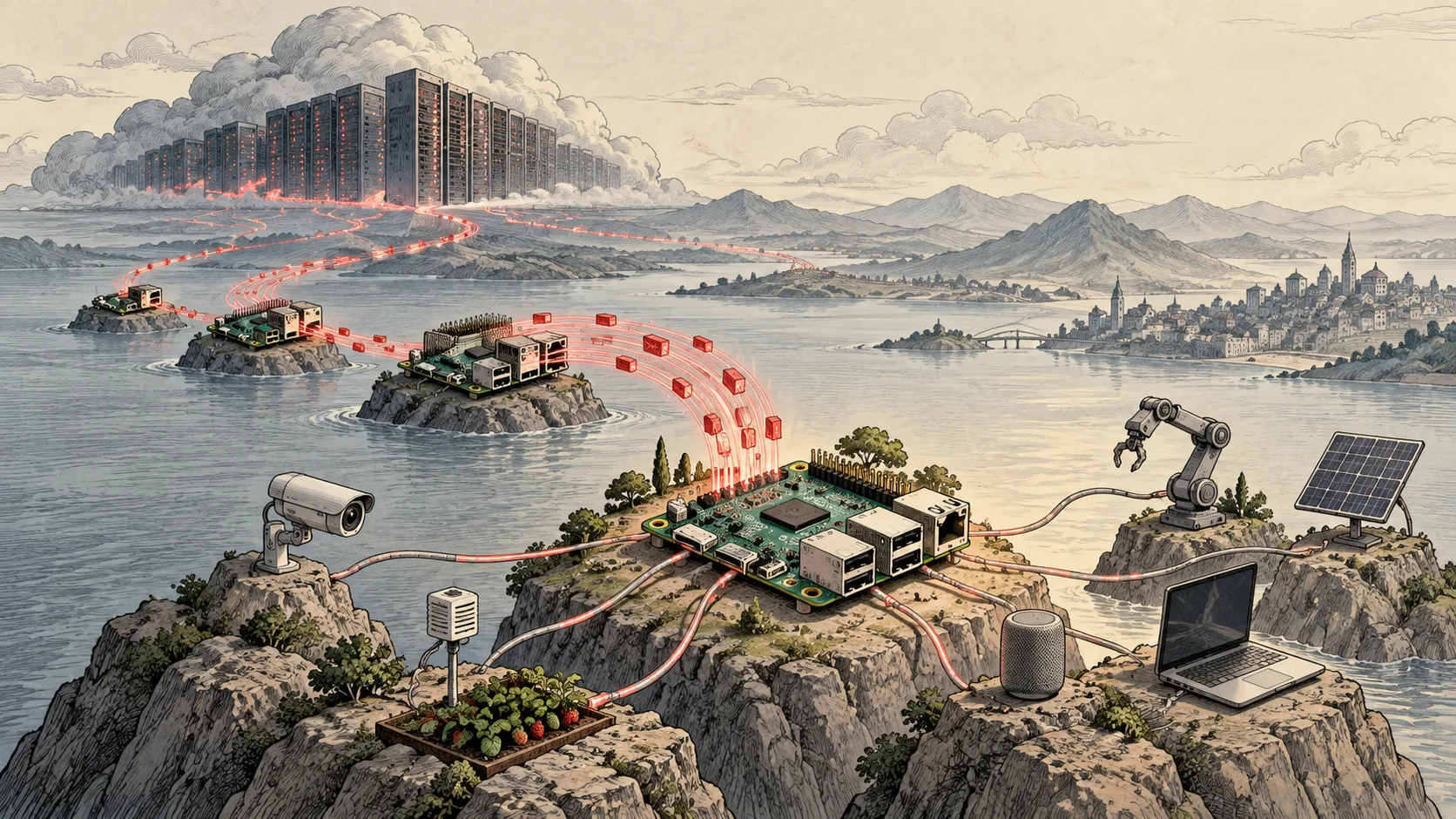
Raspberry Pi CEO and founder Eben Upton says AI computing will move from central data centers to network-edge devices as those devices become more capable and AI systems require less computing power. He argues that moving workloads outward can improve reliability, cost structure, privacy and security. Raspberry Pi customers already run visual AI algorithms on its platforms, work Upton says would have been inconceivable at the network edge a decade ago; he says the same shift is beginning in generative AI.

Upton estimates that visual AI took roughly 10 years to shift toward edge computing, while generative AI may make the transition in two, three or four years. By the end of the decade, he predicts, the vast majority of generative AI inference operations will run at the edge rather than the network core. He attributes this outlook to a collapse in the computing requirements for a given level of generative AI performance.

Raspberry Pi also wants manufacturers to outsource the computing and intelligence inside their products instead of building and maintaining their own computer engineering teams. Upton says memory pricing and availability, regulatory complexity and the cost and administrative burden of hiring embedded engineering talent have accelerated that trend. He says outsourcing lets manufacturers focus on the engineering and features that distinguish their products. Formlabs, a 3D printer company and long-time Raspberry Pi customer, uses Raspberry Pi technology for the computing element in its professional printers. Upton cited a Raspberry Pi-powered Formlabs printer appearing in a video at an Apple event that month.

Upton says Raspberry Pi intends to remain based, listed, designing and manufacturing in the UK, with the goal of building a globally meaningful business there. He cites its cost structure, proprietary technology, end-to-end engineering, long-term product support and established ecosystem as competitive strengths. He also describes a tougher environment, including a growing focus on sovereign capability, supply-chain tariffs and stricter rules for connected products; he names the EU Cyber Resilience Act as an example. The United States accounts for roughly a third of Raspberry Pi’s business, and Upton says UK manufacturing gives the company a tariff advantage for American customers compared with almost any other non-domestic manufacturing location.

Upton says the company is beginning to consider successors to its Linux-based platform, eventually Raspberry Pi 6, and its microcontroller platforms, including Raspberry Pi Pico 3 and a next-generation RP2 series. He says both current platforms are still fairly new and that Raspberry Pi does not generally discuss products in development. The article also notes that Raspberry Pi became a public company after its IPO a couple of years earlier and had to take on shareholder responsibilities; it describes the firm’s shift toward semiconductor business as having had some success.

Raspberry Pi CEO and founder Eben Upton says AI computing will move from central data centers to network-edge devices as those devices become more capable and AI systems require less computing power. He argues that moving workloads outward can improve reliability, cost structure, privacy and security. Raspberry Pi customers already run visual AI algorithms on its platforms, work Upton says would have been inconceivable at the network edge a decade ago; he says the same shift is beginning in generative AI.

Upton estimates that visual AI took roughly 10 years to shift toward edge computing, while generative AI may make the transition in two, three or four years. By the end of the decade, he predicts, the vast majority of generative AI inference operations will run at the edge rather than the network core. He attributes this outlook to a collapse in the computing requirements for a given level of generative AI performance.

Raspberry Pi also wants manufacturers to outsource the computing and intelligence inside their products instead of building and maintaining their own computer engineering teams. Upton says memory pricing and availability, regulatory complexity and the cost and administrative burden of hiring embedded engineering talent have accelerated that trend. He says outsourcing lets manufacturers focus on the engineering and features that distinguish their products. Formlabs, a 3D printer company and long-time Raspberry Pi customer, uses Raspberry Pi technology for the computing element in its professional printers. Upton cited a Raspberry Pi-powered Formlabs printer appearing in a video at an Apple event that month.

Upton says Raspberry Pi intends to remain based, listed, designing and manufacturing in the UK, with the goal of building a globally meaningful business there. He cites its cost structure, proprietary technology, end-to-end engineering, long-term product support and established ecosystem as competitive strengths. He also describes a tougher environment, including a growing focus on sovereign capability, supply-chain tariffs and stricter rules for connected products; he names the EU Cyber Resilience Act as an example. The United States accounts for roughly a third of Raspberry Pi’s business, and Upton says UK manufacturing gives the company a tariff advantage for American customers compared with almost any other non-domestic manufacturing location.

Upton says the company is beginning to consider successors to its Linux-based platform, eventually Raspberry Pi 6, and its microcontroller platforms, including Raspberry Pi Pico 3 and a next-generation RP2 series. He says both current platforms are still fairly new and that Raspberry Pi does not generally discuss products in development. The article also notes that Raspberry Pi became a public company after its IPO a couple of years earlier and had to take on shareholder responsibilities; it describes the firm’s shift toward semiconductor business as having had some success.

Read original (English)·Sep 30, 2026
#raspberry pi#edge computing#generative ai#visual ai#inference#formlabs#microcontrollers#cyber resilience act