Compare AIFind AIAI NewsAI How-To
About Us
PrivacyTermsFAQContactContact
AIB Inc.Company info
© 2026 AIB Inc.

Refutation Gate for AI Code Review
Refutation Gate for AI Code Review

DEV.to·Tuesday, September 22, 2026
  • •Info Inlet proposes a Refutation Gate after 30 days of AI-only application coding
  • •Stripe webhook example passed tests but risked losing payment records after HTTP 200 acknowledgement
  • •Author recommends clean-context reviewers, different model families, break-it briefs, and human-owned merges
  • •Info Inlet proposes a Refutation Gate after 30 days of AI-only application coding
  • •Stripe webhook example passed tests but risked losing payment records after HTTP 200 acknowledgement
  • •Author recommends clean-context reviewers, different model families, break-it briefs, and human-owned merges
  • •Info Inlet proposes a Refutation Gate after 30 days of AI-only application coding
  • •Stripe webhook example passed tests but risked losing payment records after HTTP 200 acknowledgement
  • •Author recommends clean-context reviewers, different model families, break-it briefs, and human-owned merges
  • •Info Inlet proposes a Refutation Gate after 30 days of AI-only application coding
  • •Stripe webhook example passed tests but risked losing payment records after HTTP 200 acknowledgement
  • •Author recommends clean-context reviewers, different model families, break-it briefs, and human-owned merges

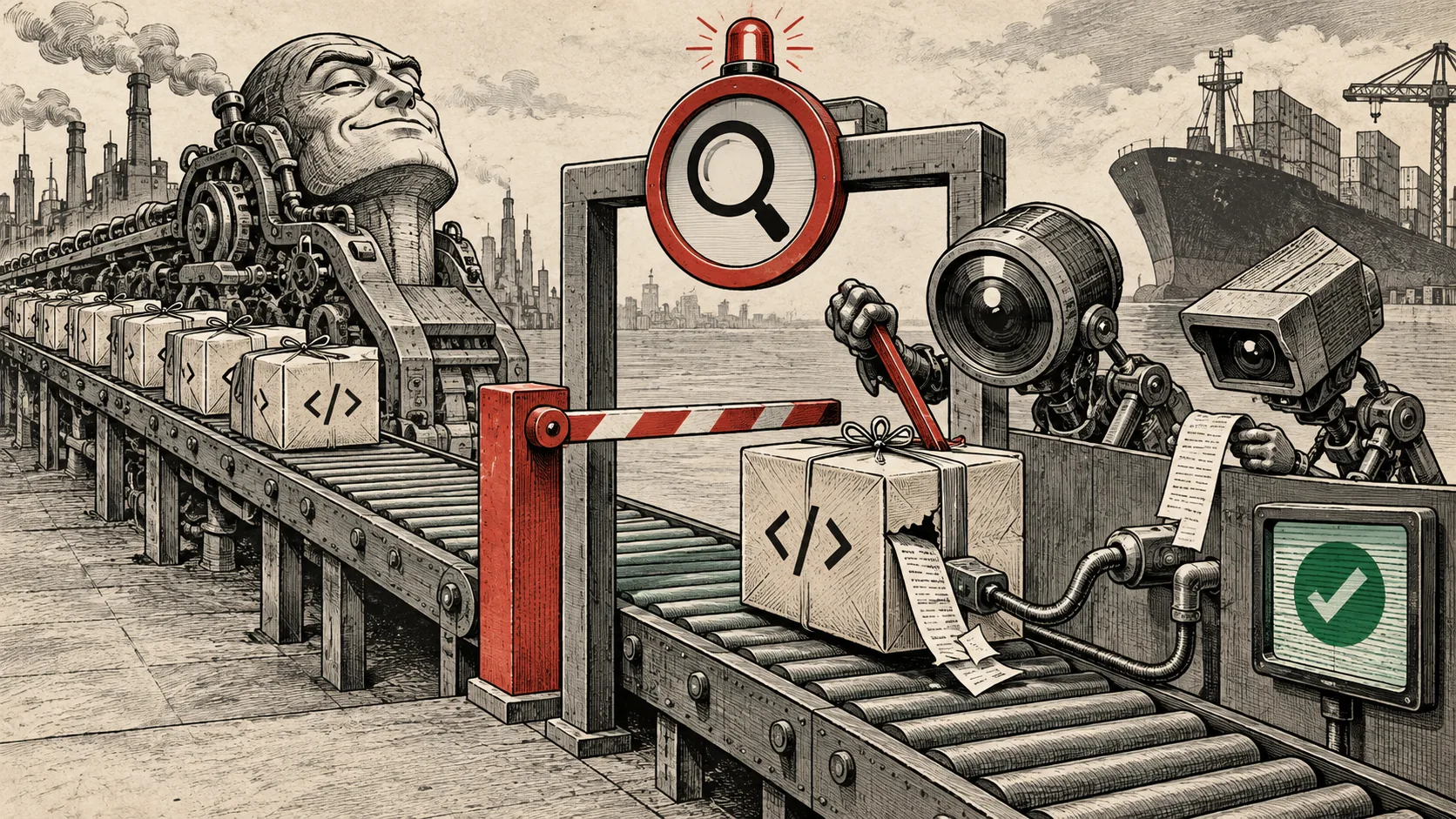
A Dev.to post published on September 21, 2026 argues that AI-generated code should not merge until a second reader, working in a separate context, tries to break it and fails. Info Inlet says the advice comes from 30 days of letting AI write 100% of application logic in production-style work “with money on the line,” where ordinary prompts, green tests, and polished diffs still allowed dangerous bugs to pass. The proposed rule is called the Refutation Gate: no merge happens until a reviewer’s only job is to find the specific input, sequence, or state that makes the code fail.

The post says asking an LLM to “review this code and tell me if it’s correct” is ineffective because the model is being asked to confirm its own output. Info Inlet frames confirmation and refutation as separate jobs: confirmation asks the model to agree with itself, while refutation asks it to produce a concrete failure. The recommended reviewer should be a fresh context that did not watch the code being written, and the author says the “single highest-leverage change” in the 30-day experiment was using a different model family for the reviewer because similar models can share the same blind spots.

The break-it brief in the post tells the reviewer to assume hard failure modes: the network drops a packet at the worst moment, two processes run at the same time, a database write fails after an external call succeeds, or a user behaves unexpectedly. The reviewer is asked to identify the exact scenario that loses data or customer money, and to explain what would have to be true if no such scenario exists. The post says this changes the model’s objective from approving clean-looking code to hunting a specific failure.

The central example is a Stripe webhook handler that verifies an event, immediately sends HTTP 200 to Stripe, and only then calls `db.savePayment(event)`. Info Inlet says every test passed and an AI reviewer asked whether the code was correct praised the low-latency acknowledgement. Under the Refutation Gate, the failure was obvious: if the database write fails after the 200 response, Stripe believes the payment event was delivered, but the database has no record, leaving a paying customer without access or payment history.

The post says the fix is to persist the payment first and acknowledge the webhook afterward, but the broader lesson is that tests and readability do not prove production correctness. Info Inlet also reports that a second AI given a strong break-it brief still sometimes approved the same webhook when it came from the same model family as the author. The explanation offered is that both models may have learned the same “clean webhook code” pattern and can reproduce the same error with more confidence.

A senior engineer identified the webhook problem in five minutes, according to the post, because she had been paged for the same ack-before-write failure in 2021. Info Inlet says the human role is not to out-code the machine but to own the merge decision and remember past production failures that are not reliably available inside a model context window. The post’s final pattern has 4 steps: never ask AI to confirm its own code, add a second reader in a clean context, give that reader a break-it brief instead of a bless-it brief, and keep a human, ideally one with production incident experience, on the merge.

A Dev.to post published on September 21, 2026 argues that AI-generated code should not merge until a second reader, working in a separate context, tries to break it and fails. Info Inlet says the advice comes from 30 days of letting AI write 100% of application logic in production-style work “with money on the line,” where ordinary prompts, green tests, and polished diffs still allowed dangerous bugs to pass. The proposed rule is called the Refutation Gate: no merge happens until a reviewer’s only job is to find the specific input, sequence, or state that makes the code fail.

The post says asking an LLM to “review this code and tell me if it’s correct” is ineffective because the model is being asked to confirm its own output. Info Inlet frames confirmation and refutation as separate jobs: confirmation asks the model to agree with itself, while refutation asks it to produce a concrete failure. The recommended reviewer should be a fresh context that did not watch the code being written, and the author says the “single highest-leverage change” in the 30-day experiment was using a different model family for the reviewer because similar models can share the same blind spots.

The break-it brief in the post tells the reviewer to assume hard failure modes: the network drops a packet at the worst moment, two processes run at the same time, a database write fails after an external call succeeds, or a user behaves unexpectedly. The reviewer is asked to identify the exact scenario that loses data or customer money, and to explain what would have to be true if no such scenario exists. The post says this changes the model’s objective from approving clean-looking code to hunting a specific failure.

The central example is a Stripe webhook handler that verifies an event, immediately sends HTTP 200 to Stripe, and only then calls `db.savePayment(event)`. Info Inlet says every test passed and an AI reviewer asked whether the code was correct praised the low-latency acknowledgement. Under the Refutation Gate, the failure was obvious: if the database write fails after the 200 response, Stripe believes the payment event was delivered, but the database has no record, leaving a paying customer without access or payment history.

The post says the fix is to persist the payment first and acknowledge the webhook afterward, but the broader lesson is that tests and readability do not prove production correctness. Info Inlet also reports that a second AI given a strong break-it brief still sometimes approved the same webhook when it came from the same model family as the author. The explanation offered is that both models may have learned the same “clean webhook code” pattern and can reproduce the same error with more confidence.

A senior engineer identified the webhook problem in five minutes, according to the post, because she had been paged for the same ack-before-write failure in 2021. Info Inlet says the human role is not to out-code the machine but to own the merge decision and remember past production failures that are not reliably available inside a model context window. The post’s final pattern has 4 steps: never ask AI to confirm its own code, add a second reader in a clean context, give that reader a break-it brief instead of a bless-it brief, and keep a human, ideally one with production incident experience, on the merge.

Read original (English)·Sep 21, 2026
Coding#coding ai#code review#refutation gate#webhook#stripe#llm review#production bugs#software testing