Shoe Distributor Prioritizes ERP Before AI Forecasting
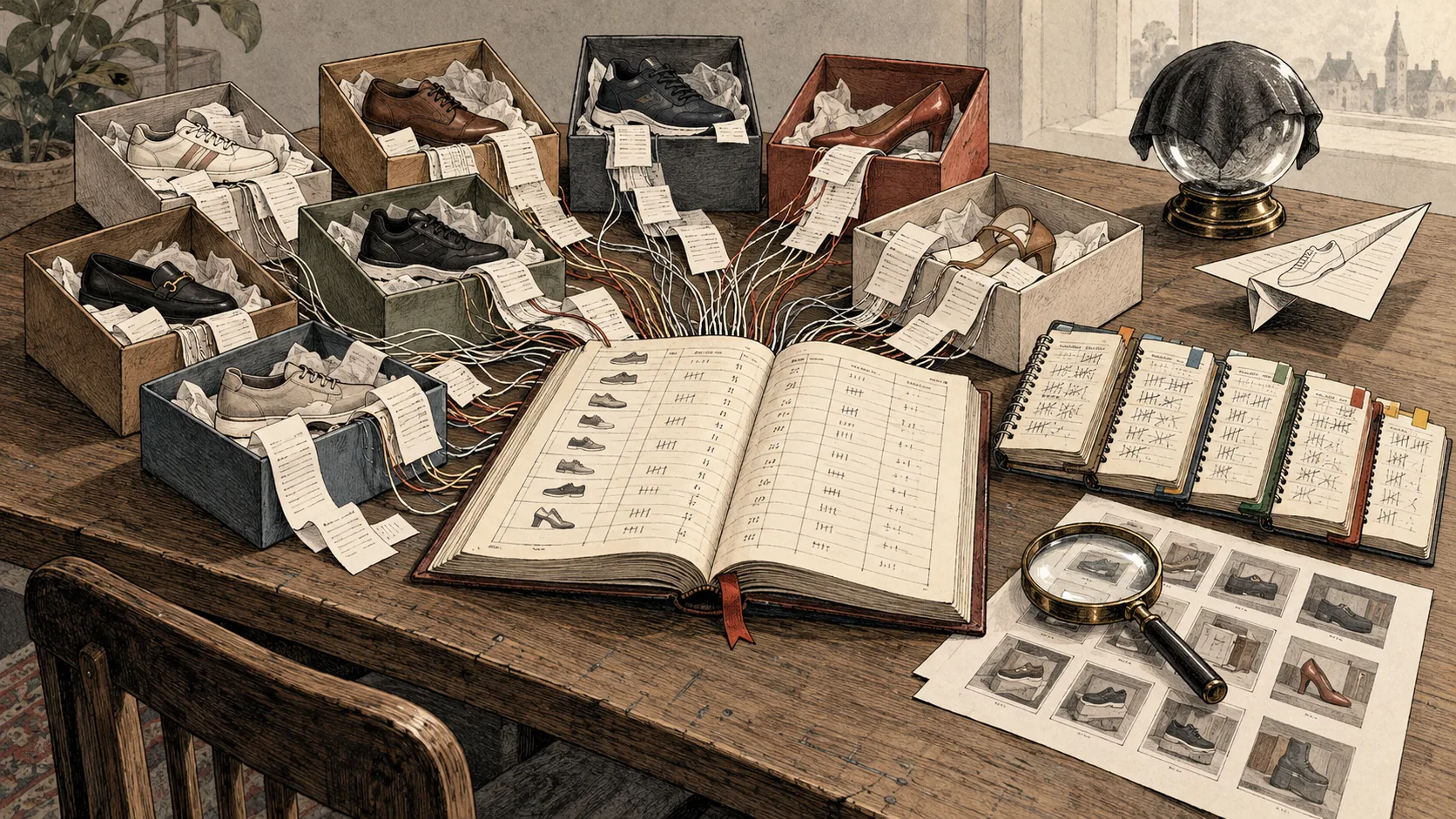
- •A shoe distributor with nine stores is building an ERP system to unify inventory records across its locations.
- •Sales data is scattered across about 10 tools, while five ledgers use different revenue rules; the company cannot see actual stock in one place.
- •AI helps diagnose records and compare quantities in box photos; the distributor will consider order forecasting after inventory data is organized.
A distributor that imports and sells overseas shoe brands operates six department-store locations and three other stores, managed by five head-office employees. Sales records are spread across department-store systems and about 10 other tools inside and outside the company. Store employees copy each sale into five company ledgers, but none shows actual inventory in one place. The company commissioned a redesign of its online store, but Ahn Jae-hoon, a project lead at Wishket AIDP, said the starting point for its different work processes was an inventory ledger whose figures everyone could trust.
The inventory mismatches had three main causes. The accounting ERP recorded only shoes treated as assets, while accessories, shoe-care products and samples were tracked in Google Sheets; one care product showed a gap of about 2,000 units between the ledger and physical stock. Defective goods and items provided as services were not counted separately, and the head-office warehouse tracked stock by adding and subtracting slips without regular full counts. Shoes displayed in stores were also recorded together in one warehouse, making their locations and quantities hard to determine.
The ledgers also applied different revenue rules to the same sale. The purchasing manager's report used the customer's order date, the ERP used the shipment date, and department-store online malls used the delivery completion date. Invoices sent to the tax accountant recorded amounts after fees were deducted. For the six stores selling under department-store names, revenue was the amount after fees; for the three stores selling under the company's name, revenue was the full sale amount. Because the company had not set a common rule, monthly sales and month-end inventory differed between ledgers.
The ERP does not record stock until goods physically arrive at a warehouse, while Google Sheets lists expected deliveries in advance. If store employees use those entries to take payment early, the system can record a sale of an item absent from the ERP and show negative inventory. The company has also calculated imported-product costs using estimated exchange rates and shipping charges rather than the rates actually paid. The owner wants to report taxes based on physical inventory.
The team leader wanted to forecast future order quantities from past sales, combine sales across channels and use a chatbot for simple inquiries. The leader was already connecting Excel to Claude to produce sales analysis reports, and the marketing employee was automating product listings for the online store. AIDP nevertheless excluded order forecasting and consolidated sales reporting from the project's initial scope. Inventory, sales and expected-delivery data were scattered, and revenue rules differed, so AIDP judged that employees would have difficulty trusting results if AI chose a standard on its own. The project instead aims to reduce time spent preparing orders, checking deliveries, consolidating sales and handling inventory requests. The team will measure the time spent at the start and compare it again after completion.
The company decided to replace its existing ERP, which recorded only accounting inventory, with a system that tracks stock from receiving through store transfers and sales. The owner plans to calculate product cost using the actual exchange rate paid plus the average shipping cost for that delivery. Company records kept outside the ERP in separate spreadsheets or handwritten ledgers will move into the new system. Records connected to outside partners, such as department-store systems, courier forms and the tax accountant's ledger, will remain accessible through file uploads and downloads. When inventory is first entered into the new ERP, employees plan to count all stock in warehouses and stores and start from those physical quantities.
AI currently helps diagnose company records and read text in box photos to compare quantities during delivery inspections. The team is testing the accuracy of photo-based checks, and a person makes the final confirmation. Once inventory is organized in the new ERP, AI could suggest next month's order quantities based on past sales and stock, combine sales from multiple channels in one table, notify customers waiting for restocks, and help stores respond to requests for stock held at headquarters. The company will decide which tasks to take on first after the ERP is established, based on which would benefit the business most. It also plans to train its five head-office employees to turn repetitive tasks into bots.
AIDP plans to have employees use an ERP that is about 80% complete for two weeks before finalizing the project's scope. The writer assessed the company's inventory and logistics work as falling short of Lv1, where recorded values match, and closer to Lv0, where operations rely on memory and KakaoTalk. The plan is to use the ERP to reach Lv1 and Lv2, where workflows are visible in the system, befo