Rutgers Buys $1.5 Million AI Surveillance System
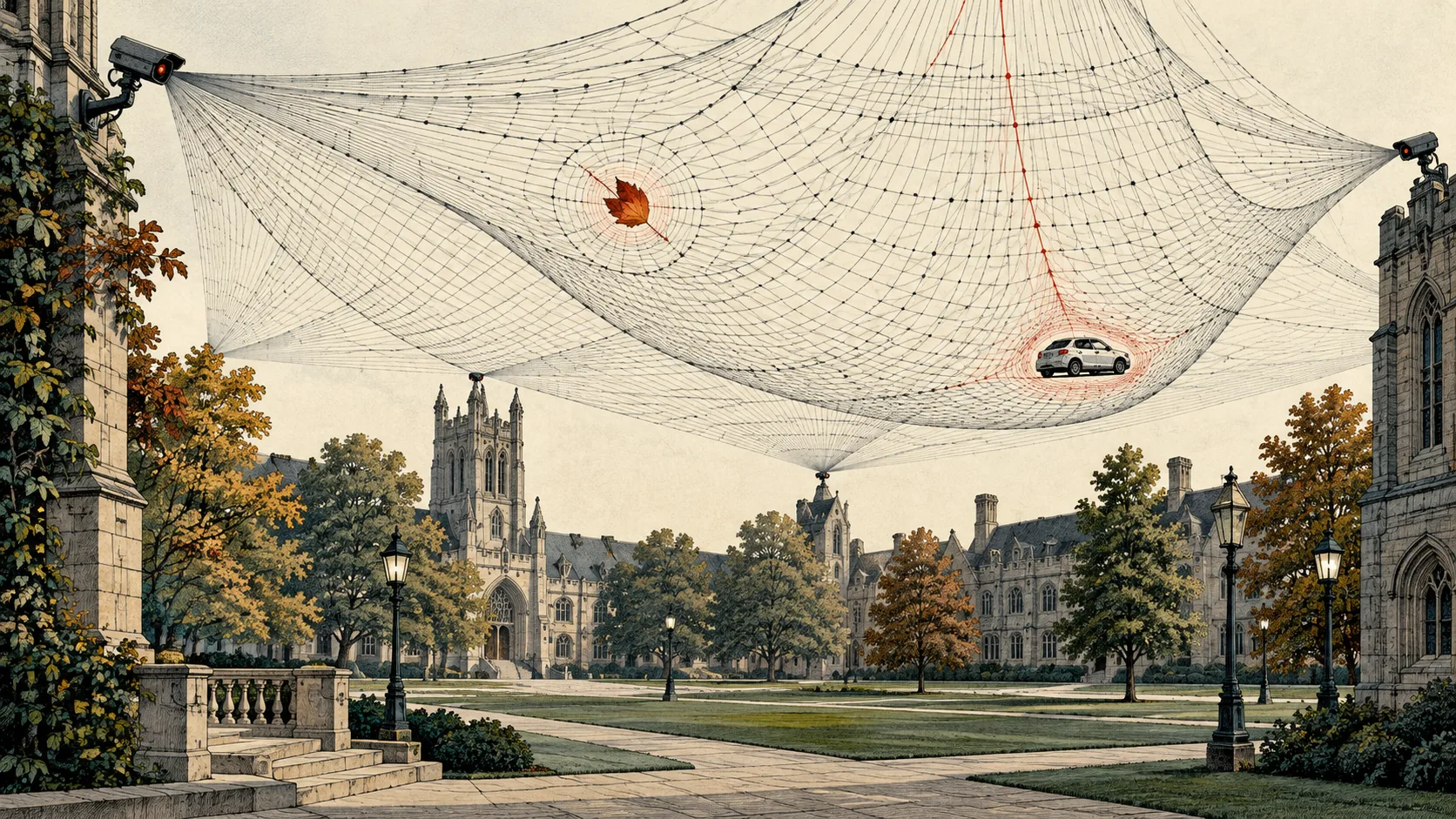
- •Rutgers paid at least $1.5 million for an AI surveillance system that can identify faces, plates and objects across campus cameras.
- •Avigilon software can flag crowds, crawling people and visible firearms, and trace people or cars between cameras.
- •Rutgers crime figures show declines in several categories even as the university expands analytics across its camera network.
Rutgers University paid at least $1.5 million over the summer for a surveillance analytics system that can recognize faces, read license plates, identify objects, track people and cars across cameras, and alert police when it detects them, according to procurement records obtained by NJ.com. The university did not publicly announce the purchase. Spokesperson Dory Devlin said Rutgers has tested facial recognition but “has not used it as an investigative tool”; she said the analytics are being tested “to improve public safety.”
The system, made by Avigilon, a Motorola Solutions company, analyzes camera video in real time. Its software can flag a crowd forming, a person crawling or a visible firearm, and its Appearance Search feature can trace a person or vehicle from camera to camera. The software works with cameras from other manufacturers, so it could be used with existing campus cameras as well as the new ones. Rutgers began buying Avigilon equipment with a roughly $49,000 demonstration order in 2023, followed by smaller purchases in 2024 and 2025; records tie the systems to a phased, multi-year upgrade project. The new purchase came through the public safety division’s Identity and Access Management office, which handles locks, alarms, ID cards and cameras. It did not require Board of Governors approval, Devlin said, and was paid from the general budget.
Rutgers began installing campus cameras nearly two decades ago. By the mid-2010s, its Cameras for Safety program had more than 2,500 units, which generally recorded footage for review after an incident. The university publicly announced a 2018 camera expansion in New Brunswick neighborhoods as a partnership with the city and student government; more recent expansions were not announced. Faculty member Britt Paris said people often learn of such purchases only after deployment. ACLU of New Jersey attorney Dillon Reisman warned that universities may gain surveillance capabilities they did not initially intend to use. Rutgers says its definition of law enforcement includes local, state and federal agencies, but Devlin said it had received no inquiries from Immigration and Customs Enforcement or Homeland Security Investigations and does not provide unrestricted access to its camera systems.
The purchase came as Rutgers reduced academic and dining budgets by more than $140 million over eight years and cut library funding by roughly a quarter, while administration and athletics spending grew by more than $160 million, according to a 2025 university senate budget report. Rutgers says its cameras deter crime, improve safety, protect property and assist police. Yet university figures show crime across its campuses has held steady or declined in recent years. In New Brunswick, robberies fell from 18 in 2022 to five in 2024, stalking reports from 29 to nine, and domestic-violence reports from 107 to 63. Camden recorded three robberies and no burglaries in 2024; burglaries at the biomedical campus fell for a third straight year. Some categories, including car thefts, rose, but Rutgers’ figures did not show a surge in violent crime.
The report places Rutgers’ purchase amid wider campus surveillance expansion. MIT is spending more than $3 million to install over 500 AI surveillance cameras, a plan that prompted a petition calling for their removal after students and faculty learned of it through leaked records. Arizona State and Michigan State operate real-time monitoring centers drawing on thousands of cameras. Privacy researchers describe campuses investing in monitoring technology since 2023, as they responded to protests by restricting access to open spaces. Advocates also warn that university systems could become a route for data to reach outside law enforcement, including federal agencies; Motorola Solutions did not respond to NJ.com’s request for comment.