Compare AIFind AIAI NewsAI How-To
About Us
PrivacyTermsFAQContactContact
AIB Inc.Company info
© 2026 AIB Inc.

Sakana AI Introduces MASS for Self-Improvement
Sakana AI Introduces MASS for Self-Improvement

Sakana AI·Monday, October 12, 2026
  • •Sakana AI introduces MASS, using virtual subagents to search for stronger team workflows and train a shared model
  • •Two cycles with a 27B open-weights model raised output-token scores to 1.2-1.6x across four benchmarks
  • •Researchers warn that shared evaluator blind spots may reinforce mistakes during recursive self-improvement training
  • •Sakana AI introduces MASS, using virtual subagents to search for stronger team workflows and train a shared model
  • •Two cycles with a 27B open-weights model raised output-token scores to 1.2-1.6x across four benchmarks
  • •Researchers warn that shared evaluator blind spots may reinforce mistakes during recursive self-improvement training
  • •Sakana AI introduces MASS, using virtual subagents to search for stronger team workflows and train a shared model
  • •Two cycles with a 27B open-weights model raised output-token scores to 1.2-1.6x across four benchmarks
  • •Researchers warn that shared evaluator blind spots may reinforce mistakes during recursive self-improvement training
  • •Sakana AI introduces MASS, using virtual subagents to search for stronger team workflows and train a shared model
  • •Two cycles with a 27B open-weights model raised output-token scores to 1.2-1.6x across four benchmarks
  • •Researchers warn that shared evaluator blind spots may reinforce mistakes during recursive self-improvement training

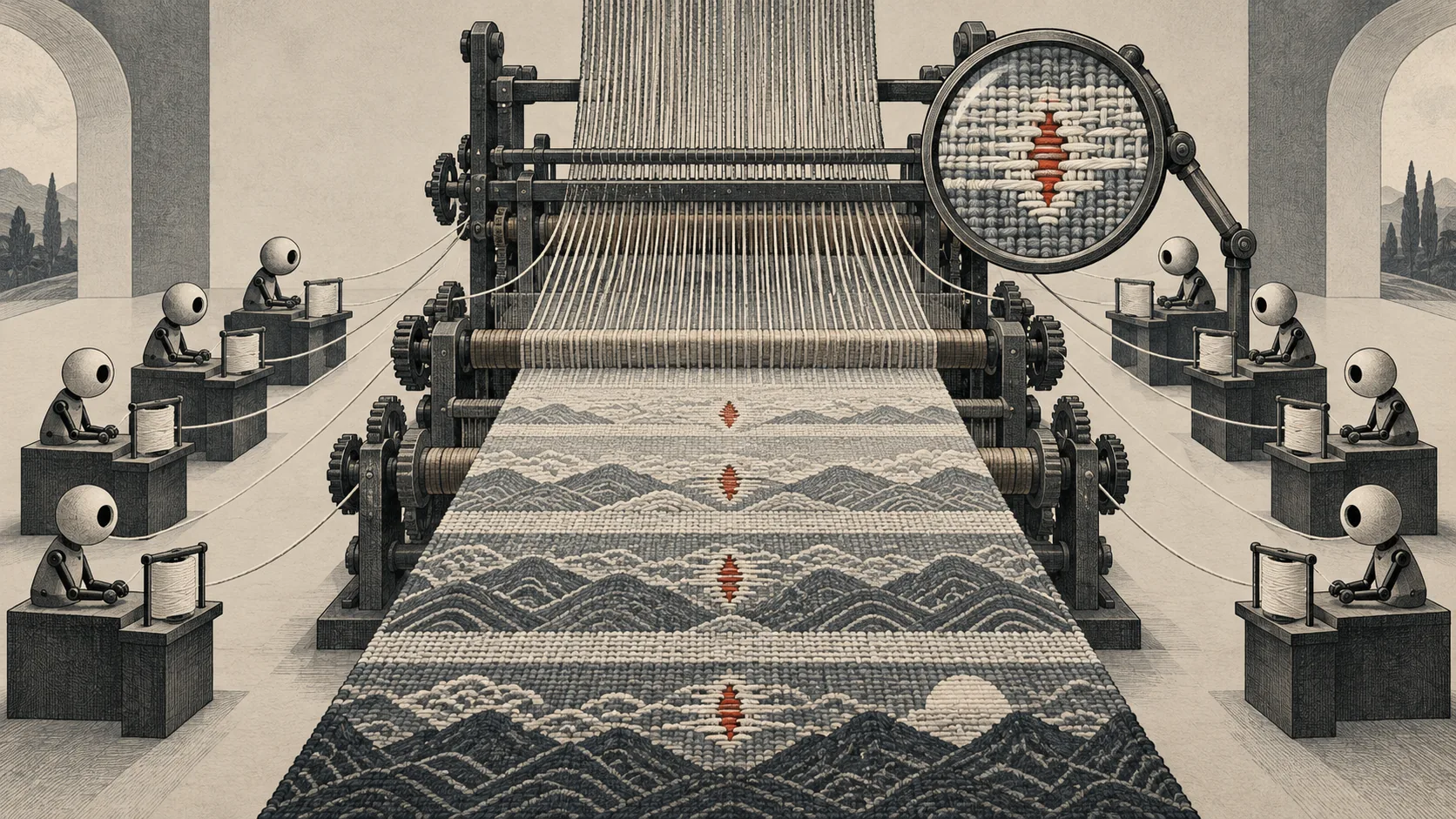
Sakana AI introduced Multi-Agent Self-Supervision (MASS), a method for recursive self-improvement, in a post dated October 11, 2026. It uses one shared model to solve tasks through virtual subagents, search for better team workflows, and judge which workflows perform best. The model is then trained on executions by the best-performing team, transferring the team’s collective experience back into the shared model.

Researchers ran two improvement cycles with a 27B open-weights model on synthetic, open-ended research tasks. After the second cycle, its score per output token was 1.2-1.6x the base model’s level across four research benchmarks. The team reports that training on task-solving data from the optimizee improved both the optimizer and evaluator, that multi-agent trajectories provided more efficient training data than single-agent trajectories, and that optimizer capacity—not evaluator capacity—could limit the pace of improvement.

The researchers said homogeneous recursive self-improvement needs careful study for AI safety. When a model evaluates its own work, shared blind spots could cause mistakes to be accepted as progress and reinforced through training. They said researchers need to understand these failure modes and preserve ways to detect and intervene in them. The work was conducted by Hyunin Lee, Jinglue Xu, Jeffrey Seely, Yujin Tang, and collaborators Somayeh Sojoudi, Matei Zaharia, and Donghyun Lee of UC Berkeley.

Sakana AI introduced Multi-Agent Self-Supervision (MASS), a method for recursive self-improvement, in a post dated October 11, 2026. It uses one shared model to solve tasks through virtual subagents, search for better team workflows, and judge which workflows perform best. The model is then trained on executions by the best-performing team, transferring the team’s collective experience back into the shared model.

Researchers ran two improvement cycles with a 27B open-weights model on synthetic, open-ended research tasks. After the second cycle, its score per output token was 1.2-1.6x the base model’s level across four research benchmarks. The team reports that training on task-solving data from the optimizee improved both the optimizer and evaluator, that multi-agent trajectories provided more efficient training data than single-agent trajectories, and that optimizer capacity—not evaluator capacity—could limit the pace of improvement.

The researchers said homogeneous recursive self-improvement needs careful study for AI safety. When a model evaluates its own work, shared blind spots could cause mistakes to be accepted as progress and reinforced through training. They said researchers need to understand these failure modes and preserve ways to detect and intervene in them. The work was conducted by Hyunin Lee, Jinglue Xu, Jeffrey Seely, Yujin Tang, and collaborators Somayeh Sojoudi, Matei Zaharia, and Donghyun Lee of UC Berkeley.

Read original (English)·Oct 11, 2026
#sakana ai#mass#multi agent self supervision#recursive self improvement#open weights model#synthetic research tasks#multi agent trajectories#ai safety