Salesforce Reports ARTEX Attacks on Customers
- •Salesforce reported multiple actors using ARTEX to attempt access to customer environments through compromised application credentials.
- •Microsoft linked ARTEX activity to Storm-0940 attacks reaching privileged cloud access in under three hours and over 2,250 tenants.
- •Salesforce urged phishing-resistant MFA, short-lived OAuth tokens, integration controls, behavioral monitoring and response plans.
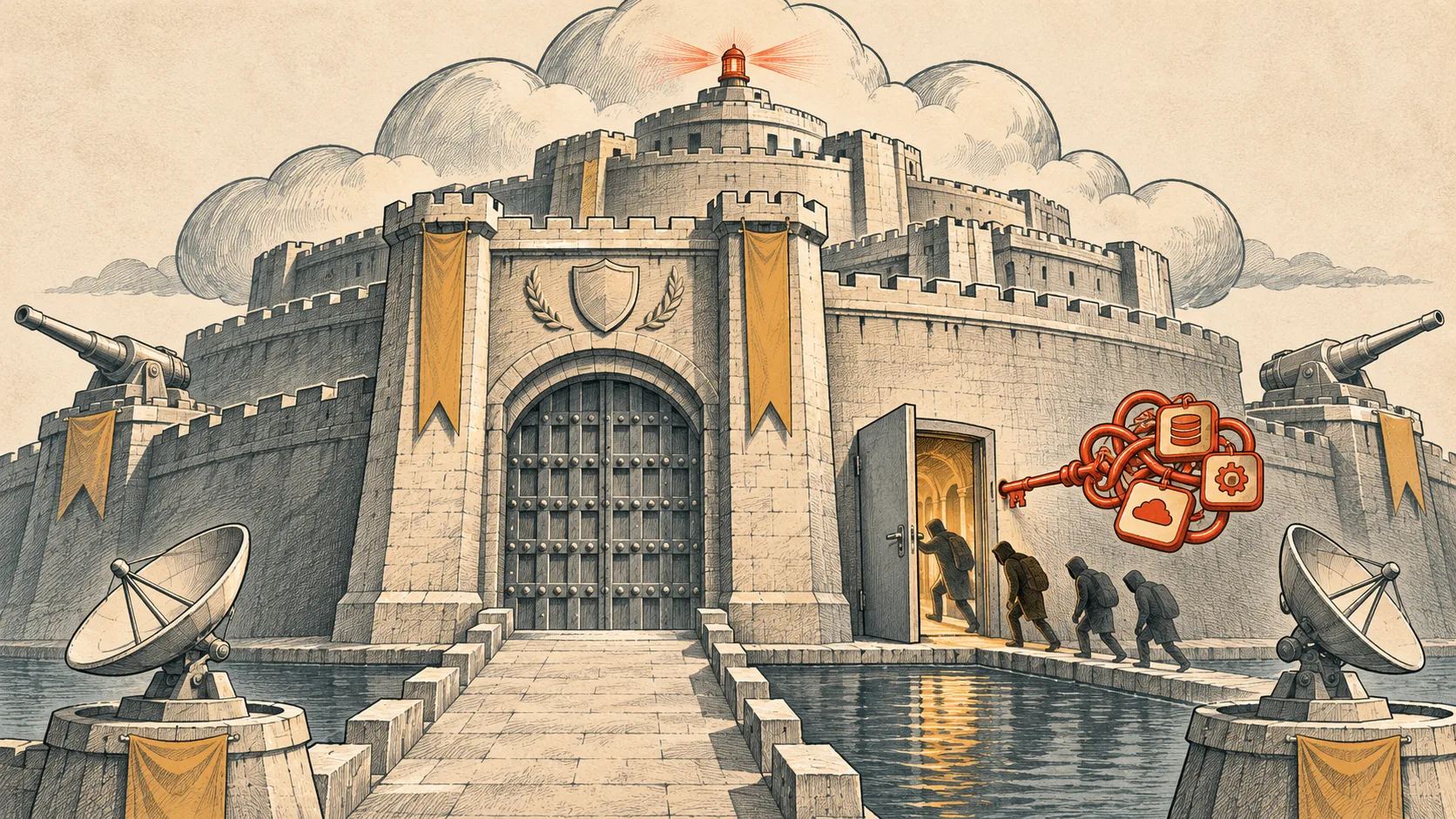
Salesforce Threat Intelligence said on November 12 that it observed multiple threat actors using ARTEX, an AI-enabled offensive framework, to try to access Salesforce customer environments. The company said its findings align with reports from industry peers and that the campaign it observed used compromised application credentials and trusted integration sessions. Salesforce said the activity did not result from a vulnerability in its platform and that it notified affected customers.
ARTEX is an open-source, multi-agent framework developed to automate penetration testing of systems and networks. An operator supplies a target and objective, and AI agents coordinate activity using existing attack techniques, continuous planning, parallel execution and code generation. The original GitHub repository was taken down by its creator, but community forks continue to circulate. Salesforce said the attack techniques are not necessarily new; the agent-based operating model can sustain multiple operations, recover from failures and navigate complex environments. Google Threat Intelligence described real-world use of such frameworks as a critical inflection point for defenders.
Salesforce assessed ARTEX as an accessible capability for numerous threat actors, rather than a tool tied to one actor or nation-state. Microsoft attributed a large-scale campaign to Storm-0940, a China-state-aligned actor; several attacks reached privileged cloud access in under three hours. The actor used stolen app credentials to attempt sign-ins to more than 2,250 Microsoft 365 tenants. Storm-3358 began using ARTEX in October to target financial organizations alongside conventional tools. Microsoft also observed actors using an agentic framework to search GitHub at scale for exposed credentials and application secrets.
In the Salesforce-targeting campaign, observed activity included routing outbound requests through Apex and abusing Named Credentials to reach connected services and move laterally. The actors inspected Apex code and integration settings, then deployed custom Apex, REST endpoints and Visualforce components to access data, send requests and maintain access. They enumerated users, profiles and permission sets, and tried privileged actions including executing Apex, creating users, assigning permissions and changing integration settings. After failed attempts, they tried alternative code-execution and integration-access paths, including anonymous Apex and different endpoint and authentication configurations. Salesforce said audit logs showed rapid, dynamic automation; custom Apex code was deployed shortly after initial access, and the speed and scale strongly indicated agentic-like operation.
Salesforce recommended phishing-resistant MFA for all users, email-domain restrictions on user accounts, short-lived context-bound OAuth tokens and step-up authentication for sensitive actions such as bulk data exports and permission changes. It also advised enforcing IP allowlists for users and connected apps; reviewing integrations, removing unused ones, applying least privilege and rotating client secrets; and scanning repositories for exposed credentials. Salesforce urged customers to monitor full attack sequences by enabling Event Monitoring and streaming logs to a SIEM, watching for varied requests in short periods, repeated technique changes and rapid progression to later actions. It also recommended having a response plan to disable integrations, revoke tokens and reset credentials within hours.