Samsung SDS Breaks Ground on 60 MW AI Data Center
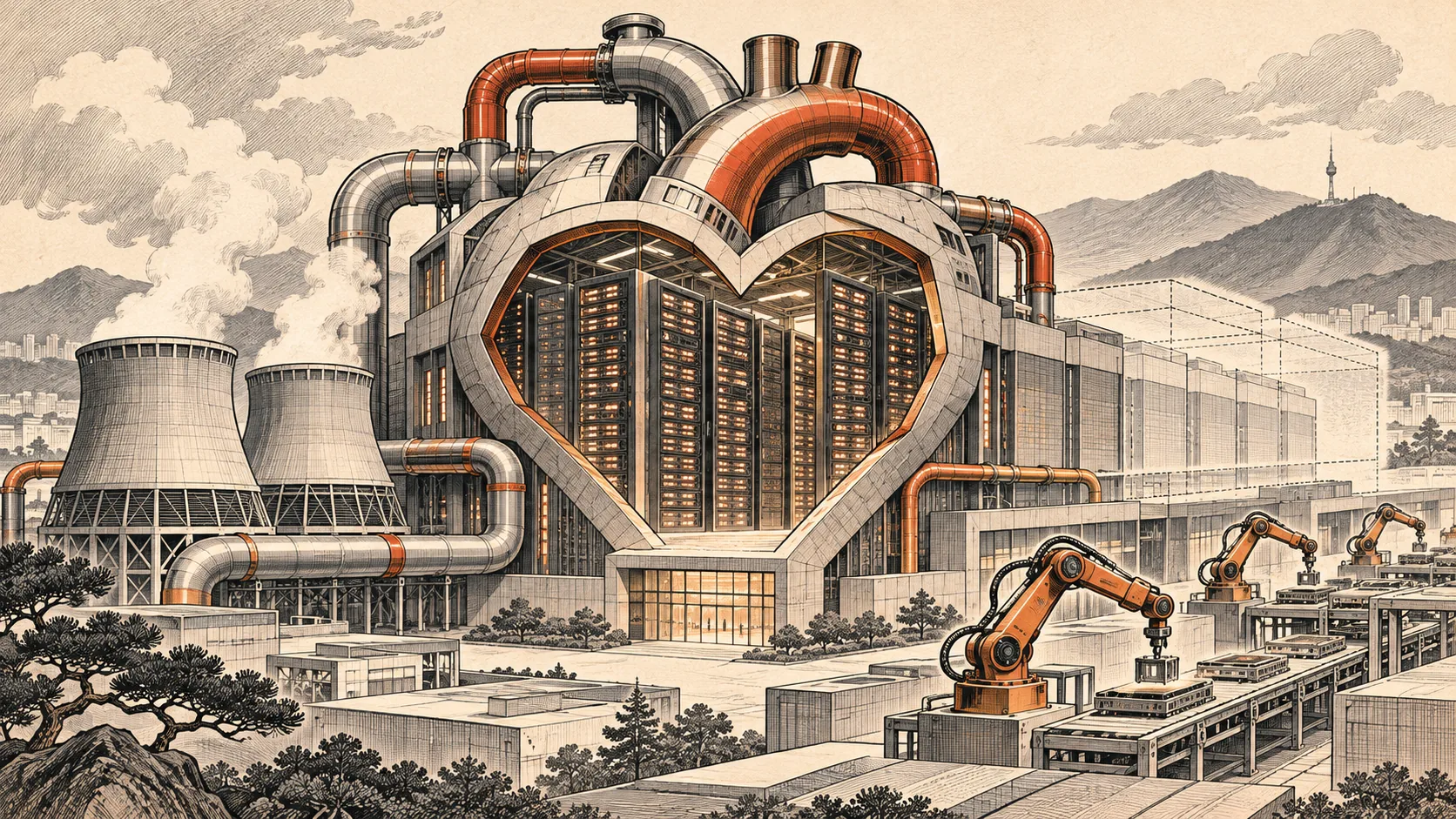
- •Samsung SDS began construction of a 60 MW AI data center in Gumi, targeting completion by the end of 2028.
- •The project is the first visible result of Samsung’s roughly 60 trillion won investment plan for the Yeongnam region.
- •The center is designed to expand to 120 MW and use hybrid cooling to support manufacturing robots and AI.
Samsung SDS held a groundbreaking ceremony on the 2nd in Gongdan-dong, Gumi, North Gyeongsang Province, for an AI data center with an initial power capacity of 60 MW. The company plans to build it on a 14,000-pyeong site and complete it by the end of 2028. Its design allows capacity to expand in stages to as much as 120 MW as demand grows.
The groundbreaking is the first visible result of Samsung’s roughly 60 trillion won investment plan for the Yeongnam region, announced last July at Gyeongsang National University in Jinju, South Gyeongsang Province. Samsung said it would invest in humanoid robots and an AI data center in Gumi; solid-state batteries in Ulsan; package substrates for AI servers and multilayer ceramic capacitors (MLCCs) in Busan; and high-value ships in Geoje. The plan is to connect AI infrastructure, robotics, advanced components and shipbuilding to strengthen manufacturing in the region and develop it into a global physical AI innovation cluster.
Drawing on 30 years of data center construction and operations experience, Samsung SDS plans to build the Gumi facility as hyperscale AI infrastructure. To handle the high power use and heat from high-performance GPU servers, it will install large-capacity power infrastructure, redundant core equipment and emergency power systems, with the aim of providing stable service during large-scale computing. Cooling will combine air and liquid systems: air cooling will serve general servers such as networking and storage equipment, which produce less heat, while liquid cooling will circulate water to cool high-density GPU servers where heat is concentrated. The design assigns cooling methods according to server characteristics and power density to improve energy efficiency and operational stability.
The server rooms are designed to accommodate racks with different power densities and to operate future ultra-high-power GPU racks reliably. The center is intended to support a range of AI systems rather than being limited to a particular GPU or AI service, allowing it to adapt to changes in semiconductors and services. Samsung SDS will pursue both services using its own GPUs and colocation, in which customers place and use their own equipment in the data center, to expand its infrastructure business for external customers.
The facility is also intended to support the manufacturing robot transformation (RX) of Samsung affiliates. It will provide the large-scale data processing and computing resources needed to train AI for precision-work robots, linking data center capabilities with robotics and AI technologies on factory floors. Samsung SDS disclosed in January that it would invest 427.3 billion won in the center and signed a memorandum of understanding (MOU) with North Gyeongsang Province and Gumi City for its construction. Samsung also aims to expand the region’s AI industry ecosystem, attract related companies and stimulate the local economy. Lee Joon-hee, Samsung SDS CEO and president, said the company would combine its data center operations experience with its cloud and AI capabilities to build trusted AI infrastructure, drive AX innovation in manufacturing and industry with next-generation infrastructure, and provide full-stack AI services.