Compare AIFind AIAI NewsAI How-To
About Us
PrivacyTermsFAQContactContact
AIB Inc.Company info
© 2026 AIB Inc.

Singapore Deploys iScreen Head CT AI
Singapore Deploys iScreen Head CT AI

GovInsider Asia·Friday, September 25, 2026
  • •Singapore General Hospital’s iScreen flags suspected brain bleeds in head CT scans and alerts radiologists to urgent cases.
  • •iScreen returns results in around six minutes, compared with 30 to 60 minutes for standard reporting.
  • •In SGH surveys, 93 per cent found iScreen useful, while 73 per cent valued its SMS alerts for prioritizing cases.
  • •Singapore General Hospital’s iScreen flags suspected brain bleeds in head CT scans and alerts radiologists to urgent cases.
  • •iScreen returns results in around six minutes, compared with 30 to 60 minutes for standard reporting.
  • •In SGH surveys, 93 per cent found iScreen useful, while 73 per cent valued its SMS alerts for prioritizing cases.
  • •Singapore General Hospital’s iScreen flags suspected brain bleeds in head CT scans and alerts radiologists to urgent cases.
  • •iScreen returns results in around six minutes, compared with 30 to 60 minutes for standard reporting.
  • •In SGH surveys, 93 per cent found iScreen useful, while 73 per cent valued its SMS alerts for prioritizing cases.
  • •Singapore General Hospital’s iScreen flags suspected brain bleeds in head CT scans and alerts radiologists to urgent cases.
  • •iScreen returns results in around six minutes, compared with 30 to 60 minutes for standard reporting.
  • •In SGH surveys, 93 per cent found iScreen useful, while 73 per cent valued its SMS alerts for prioritizing cases.

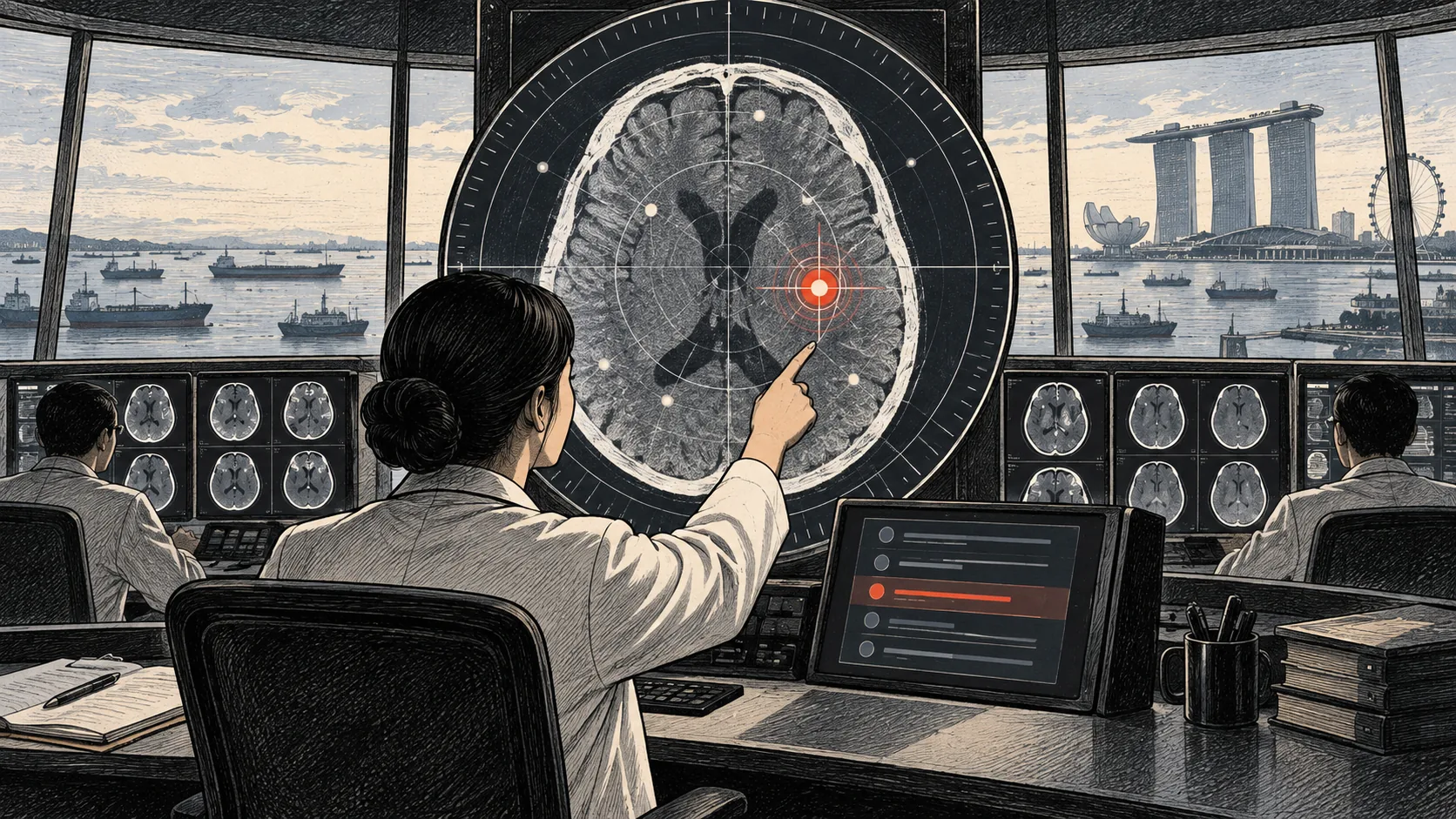
Singapore General Hospital (SGH) began using iScreen in January 2026 to analyze head CT scans for signs of acute brain bleeds, with results in around six minutes. The AI tool flags suspected intracranial haemorrhage (bleeding inside the skull) and alerts radiologists to urgent cases. SGH performs about 50 head CT scans each day; about 10 per cent reveal acute brain bleeds that may be life-threatening. Standard reporting usually takes 30 to 60 minutes, said Dr Robert Chen, head and senior consultant in neuroradiology at SGH and the National Neuroscience Institute at SGH.

Launched by SGH, national healthtech agency Synapxe and startup Iota MedTech, iScreen is the first head CT AI model deployed on AimSG, Singapore’s national medical imaging platform. Developed by Synapxe with NHG Health, National University Health System and SingHealth, AimSG has been deployed across all three public healthcare clusters and eight public healthcare institutions. The platform connects AI models to diagnostic imaging workflows and lets institutions access models from a central catalogue, with minimal additional installation or setup.

AimSG is designed to coordinate and scale multiple models, addressing isolated software, vendor lock-in and repeated setup work. Since its launch in 2023, it has supported deployments in bone trauma interpretation, tuberculosis screening from chest X-rays, thyroid ultrasound and, most recently, head CT scans. Synapxe says iScreen can be expanded to other public institutions using the platform; the agency also plans to add models and onboard more hospitals across clusters.

At SGH, radiologists have used iScreen in their workflow since January 2026 without needing training, according to Dr Sarat Kumar Sanamandra. In surveys of SGH neuroradiologists and radiology residents, 87.5 per cent said they routinely viewed iScreen outputs, 93 per cent found them useful, and 73 per cent said automatic SMS alerts helped prioritize cases. The team expects the tool to help more than 18,000 SGH patients in future and support residents and junior radiologists in prioritizing and interpreting acute brain bleed cases.

Singapore General Hospital (SGH) began using iScreen in January 2026 to analyze head CT scans for signs of acute brain bleeds, with results in around six minutes. The AI tool flags suspected intracranial haemorrhage (bleeding inside the skull) and alerts radiologists to urgent cases. SGH performs about 50 head CT scans each day; about 10 per cent reveal acute brain bleeds that may be life-threatening. Standard reporting usually takes 30 to 60 minutes, said Dr Robert Chen, head and senior consultant in neuroradiology at SGH and the National Neuroscience Institute at SGH.

Launched by SGH, national healthtech agency Synapxe and startup Iota MedTech, iScreen is the first head CT AI model deployed on AimSG, Singapore’s national medical imaging platform. Developed by Synapxe with NHG Health, National University Health System and SingHealth, AimSG has been deployed across all three public healthcare clusters and eight public healthcare institutions. The platform connects AI models to diagnostic imaging workflows and lets institutions access models from a central catalogue, with minimal additional installation or setup.

AimSG is designed to coordinate and scale multiple models, addressing isolated software, vendor lock-in and repeated setup work. Since its launch in 2023, it has supported deployments in bone trauma interpretation, tuberculosis screening from chest X-rays, thyroid ultrasound and, most recently, head CT scans. Synapxe says iScreen can be expanded to other public institutions using the platform; the agency also plans to add models and onboard more hospitals across clusters.

At SGH, radiologists have used iScreen in their workflow since January 2026 without needing training, according to Dr Sarat Kumar Sanamandra. In surveys of SGH neuroradiologists and radiology residents, 87.5 per cent said they routinely viewed iScreen outputs, 93 per cent found them useful, and 73 per cent said automatic SMS alerts helped prioritize cases. The team expects the tool to help more than 18,000 SGH patients in future and support residents and junior radiologists in prioritizing and interpreting acute brain bleed cases.

Read original (English)·Sep 24, 2026
Healthcare#iscreen#aimsg#head ct#brain bleed detection#medical imaging#singapore general hospital#radiology workflow#synapxe