Compare AIFind AIAI NewsAI How-To
About Us
PrivacyTermsFAQContactContact
AIB Inc.Company info
© 2026 AIB Inc.

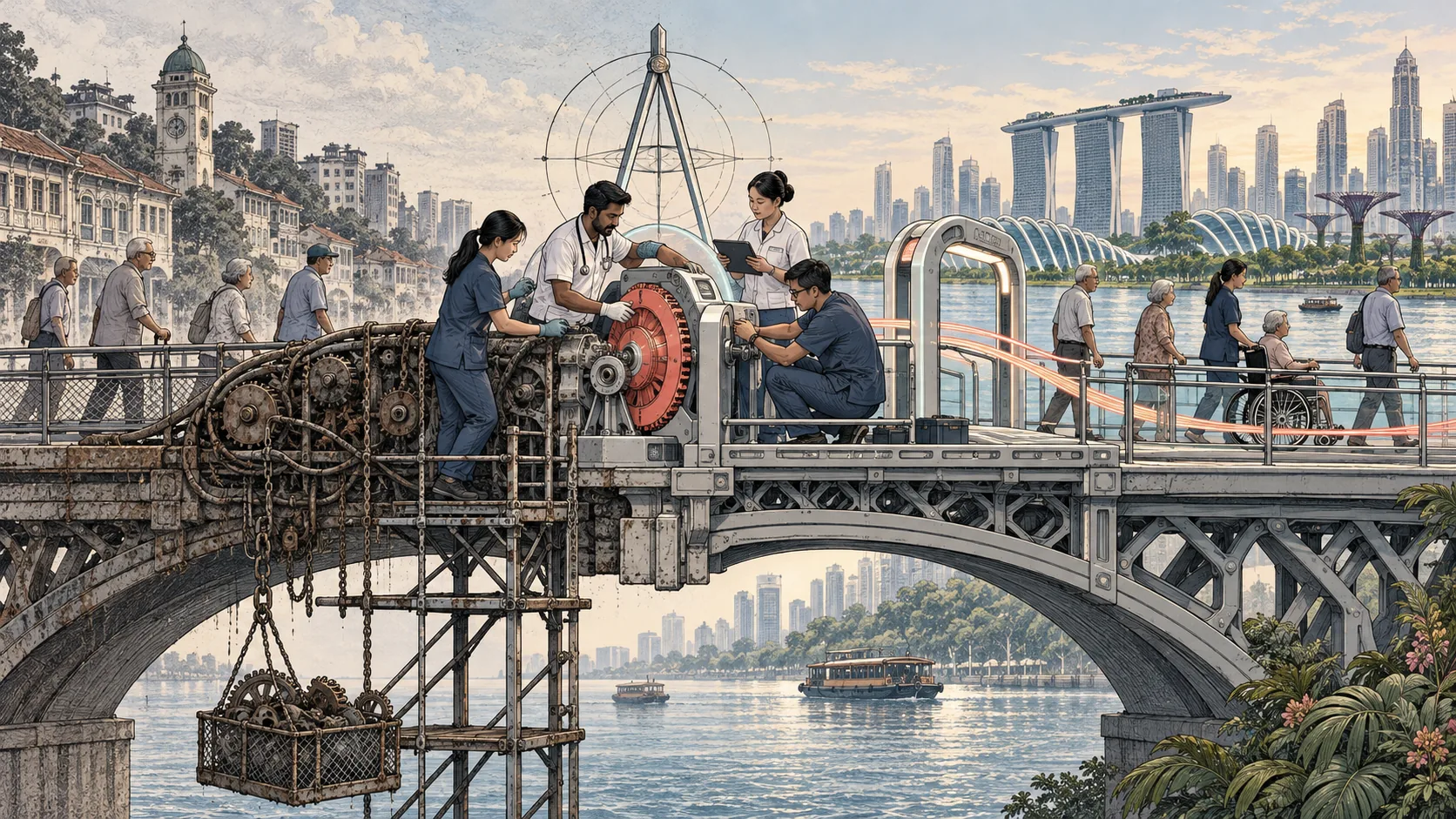
Singapore Health System Redesigns Allied Health Work
Singapore Health System Redesigns Allied Health Work

GovInsider Asia·Friday, October 9, 2026
  • •NUHS plans workforce redesign as Singapore’s over-65 population is projected to reach one in four by 2030.
  • •More than 40 per cent of NUHS staff received AI and innovation training over the past 18 months.
  • •Process changes saved around 50 man hours and S$1.5 million, while scanner downtime fell from two months to two weeks.
  • •NUHS plans workforce redesign as Singapore’s over-65 population is projected to reach one in four by 2030.
  • •More than 40 per cent of NUHS staff received AI and innovation training over the past 18 months.
  • •Process changes saved around 50 man hours and S$1.5 million, while scanner downtime fell from two months to two weeks.
  • •NUHS plans workforce redesign as Singapore’s over-65 population is projected to reach one in four by 2030.
  • •More than 40 per cent of NUHS staff received AI and innovation training over the past 18 months.
  • •Process changes saved around 50 man hours and S$1.5 million, while scanner downtime fell from two months to two weeks.
  • •NUHS plans workforce redesign as Singapore’s over-65 population is projected to reach one in four by 2030.
  • •More than 40 per cent of NUHS staff received AI and innovation training over the past 18 months.
  • •Process changes saved around 50 man hours and S$1.5 million, while scanner downtime fell from two months to two weeks.

Singapore’s National University Health System (NUHS) is redesigning allied health and pharmacy work with AI, automation and workforce changes as it prepares for rising care demand. By 2030, one in four Singapore residents will be aged 65 and above, and the healthcare system will need around 6,000 new hires every year. NUHS Chief of Allied Health & Pharmacy Michael Ong said workforce growth alone would not meet that demand. He spoke at the HealthTechX Asia 2026 conference and described technology as part of a broader change in care delivery.

NUHS has around 9,000 staff. Around five years ago, it adopted “Mission Command,” a leadership approach that sets direction centrally while allowing leaders at lower levels to act autonomously. It also formed cross-disciplinary “triads” and “quadrats” involving doctors, nurses, allied health professionals, pharmacists and operations teams. As generative AI gained momentum in 2022, NUHS assessed tools including ChatGPT and Copilot and trained staff in innovation and AI use; over the past 18 months, more than 40 per cent of its workforce received training. Ong called this a “Lighthouse” model: leaders set direction, while teams test ideas in wards and clinics.

NUHS’s allied health and pharmacy workforce numbers approximately 2,000. Ong said its plans include supporting patient self-care and caregiver involvement, and virtualising care where appropriate. Staff also need skills in AI and data to make decisions increasingly based on evidence. The longer-term aim is for allied health professionals and pharmacists to take greater leadership in care delivery. Last year, the group identified 26 transformation initiatives, with 80 per cent underway or completed.

NUHS is assessing changes across six healthcare quality domains and measures including staffing use, cost, time and environmental impact. Medical social workers redesigned consent for financial assistance so consent is obtained by default, saving around 50 man hours and helping patients receive assistance faster. Radiographers chose to upgrade an existing CT scanner instead of replacing the whole system and room, avoiding around S$1.5 million in costs and cutting downtime from two months to two weeks.

NUHS began measuring productivity across 11 allied health professions in 2023 and set a target of 10 per cent efficiency gains by 2030. Diagnostic radiographers recorded a 6 per cent productivity increase over three years while their workload grew 6 per cent annually. NUHS said the work mix had shifted toward more complex tertiary cases requiring CT, MRI and PET-CT scans. Laboratory productivity appeared to decline partly because of more prudent test ordering and automation, which reduced some tests and manual tasks. Based on current productivity gains and continued workload growth, NUHS estimates it could begin bending the curve of manpower growth around 2028. Ong said AI and automation require collaboration with policymakers, industry and other healthcare clusters, as well as early leadership and preparation of staff.

Singapore’s National University Health System (NUHS) is redesigning allied health and pharmacy work with AI, automation and workforce changes as it prepares for rising care demand. By 2030, one in four Singapore residents will be aged 65 and above, and the healthcare system will need around 6,000 new hires every year. NUHS Chief of Allied Health & Pharmacy Michael Ong said workforce growth alone would not meet that demand. He spoke at the HealthTechX Asia 2026 conference and described technology as part of a broader change in care delivery.

NUHS has around 9,000 staff. Around five years ago, it adopted “Mission Command,” a leadership approach that sets direction centrally while allowing leaders at lower levels to act autonomously. It also formed cross-disciplinary “triads” and “quadrats” involving doctors, nurses, allied health professionals, pharmacists and operations teams. As generative AI gained momentum in 2022, NUHS assessed tools including ChatGPT and Copilot and trained staff in innovation and AI use; over the past 18 months, more than 40 per cent of its workforce received training. Ong called this a “Lighthouse” model: leaders set direction, while teams test ideas in wards and clinics.

NUHS’s allied health and pharmacy workforce numbers approximately 2,000. Ong said its plans include supporting patient self-care and caregiver involvement, and virtualising care where appropriate. Staff also need skills in AI and data to make decisions increasingly based on evidence. The longer-term aim is for allied health professionals and pharmacists to take greater leadership in care delivery. Last year, the group identified 26 transformation initiatives, with 80 per cent underway or completed.

NUHS is assessing changes across six healthcare quality domains and measures including staffing use, cost, time and environmental impact. Medical social workers redesigned consent for financial assistance so consent is obtained by default, saving around 50 man hours and helping patients receive assistance faster. Radiographers chose to upgrade an existing CT scanner instead of replacing the whole system and room, avoiding around S$1.5 million in costs and cutting downtime from two months to two weeks.

NUHS began measuring productivity across 11 allied health professions in 2023 and set a target of 10 per cent efficiency gains by 2030. Diagnostic radiographers recorded a 6 per cent productivity increase over three years while their workload grew 6 per cent annually. NUHS said the work mix had shifted toward more complex tertiary cases requiring CT, MRI and PET-CT scans. Laboratory productivity appeared to decline partly because of more prudent test ordering and automation, which reduced some tests and manual tasks. Based on current productivity gains and continued workload growth, NUHS estimates it could begin bending the curve of manpower growth around 2028. Ong said AI and automation require collaboration with policymakers, industry and other healthcare clusters, as well as early leadership and preparation of staff.

Read original (English)
Healthcare#nuhs#singapore healthcare#allied health#pharmacy workforce#healthcare automation#generative ai#mission command#productivity measurement