SK Seeks Funding for 15 GW AI Data Center Plan
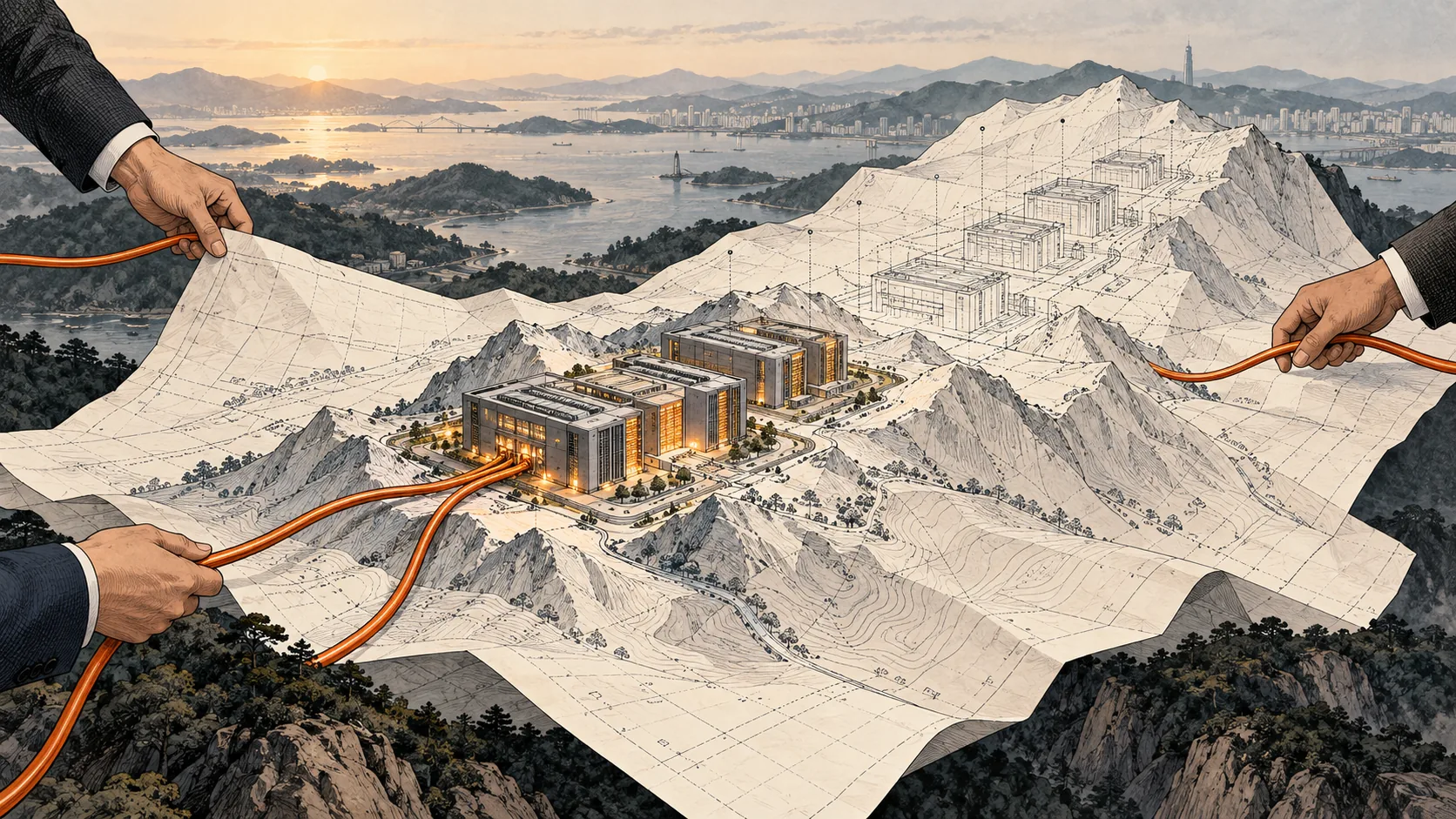
- •SK has begun talks with global investors to build 15 GW of AI data centers in South Korea by 2035.
- •The first 5 GW is estimated to cost $350 billion; SK aims to secure initial outside funding by late this year or early 2027.
- •The first facilities are due to begin operating in 2029, with expansion to 15 GW tied to customer demand.
SK Group is negotiating with global technology companies and financial investors to fund a plan for 15 GW of AI data centers in South Korea by 2035. Seok-geun Jeong, head of SK Telecom’s AI CIC and CEO of SK Hyper, said in a Bloomberg TV interview on the 23rd, local time, that discussions with potential partners had begun. He said SK plans to build data centers in South Korea to meet market demand.
SK estimates the first 5 GW will cost $350 billion, including servers and equipment. The figure covers the initial phase, not the full 15 GW plan. Rather than bear the cost alone, SK Hyper aims to share expenses with companies leasing data center space and outside investors. It plans to secure its first outside investment by the end of this year or early 2027, then raise additional funding over 3–4 years.
Jeong said investors are increasingly cautious about whether revenue from future AI services will recover the cost of building AI infrastructure. SK said it will adjust the pace of investment as it confirms actual customer demand instead of committing to the entire plan at once. Jeong said the company would manage risk in line with market demand.
SK Hyper plans to attract global technology companies from Asian markets including Japan and Taiwan, so they can use AI training and inference infrastructure in South Korea. Jeong said overseas customers are essential to the 15 GW plan because South Korea has about 1 GW of data center capacity built over the past 20-plus years. He said securing global customers and investment is as important as obtaining power and sites.
SK Group is presenting its semiconductor, energy, and telecommunications capabilities as competitive strengths. Jeong said improving computing efficiency is important to offset South Korea’s relatively high electricity costs, including producing more AI tokens at lower cost rather than relying on a larger number of GPUs. SK Hyper is pursuing a 900 MW data center project in Ulsan and a separate 100 MW project in partnership with AWS. It is also discussing additional site acquisition with the government.
SK plans to build a data center cluster of more than 2 GW in the Yeongnam region, as well as gigawatt-scale data centers in the Chungcheong and southwest regions. The first 5 GW of facilities are scheduled to begin operating in stages from 2029, with expansion to 15 GW by 2035 depending on demand from global customers. Jeong forecast that revenue could begin as early as 2027, but SK did not disclose specific revenue-generating businesses or projected revenue. He said the company is also considering providing AI computing infrastructure and AI models together to governments in Asia and the Middle East.
SK Telecom established SK Hyper, a subsidiary specializing in AI data center business development, in July. SK Hyper is responsible for securing sites and power infrastructure, attracting customers, and commercializing projects. SK Telecom plans to invest up to 750 billion won by 2030 in stages to establish the business’s initial foundation, including purchasing sites and building substations.