Snowflake Announces Business Ontology for AI
- •Snowflake announced Business Ontology, a governed layer for shared business definitions, with public preview coming soon.
- •Horizon Context combines Cortex Sense, Business Ontology and Semantic Views for inferred context, approved meaning and metric calculations.
- •Teams can link approved definitions to metrics, preserve scoped variants and exchange business knowledge through open formats.
Snowflake announced Business Ontology, coming soon in public preview, as a governance layer in Horizon Context for teams to define, own and approve shared business terms, entities, relationships and metrics. It links those definitions to the data and models that implement them, giving people and AI agents the same approved business meaning across agents and applications. The company says teams can preserve differences across areas such as sales, finance and marketing while reusing shared knowledge. A revenue question, for example, requires an agent to know how finance defines revenue and how it relates to orders and customers; that knowledge is often scattered across BI models, dbt projects and employee experience, and can be rebuilt separately for each agent.
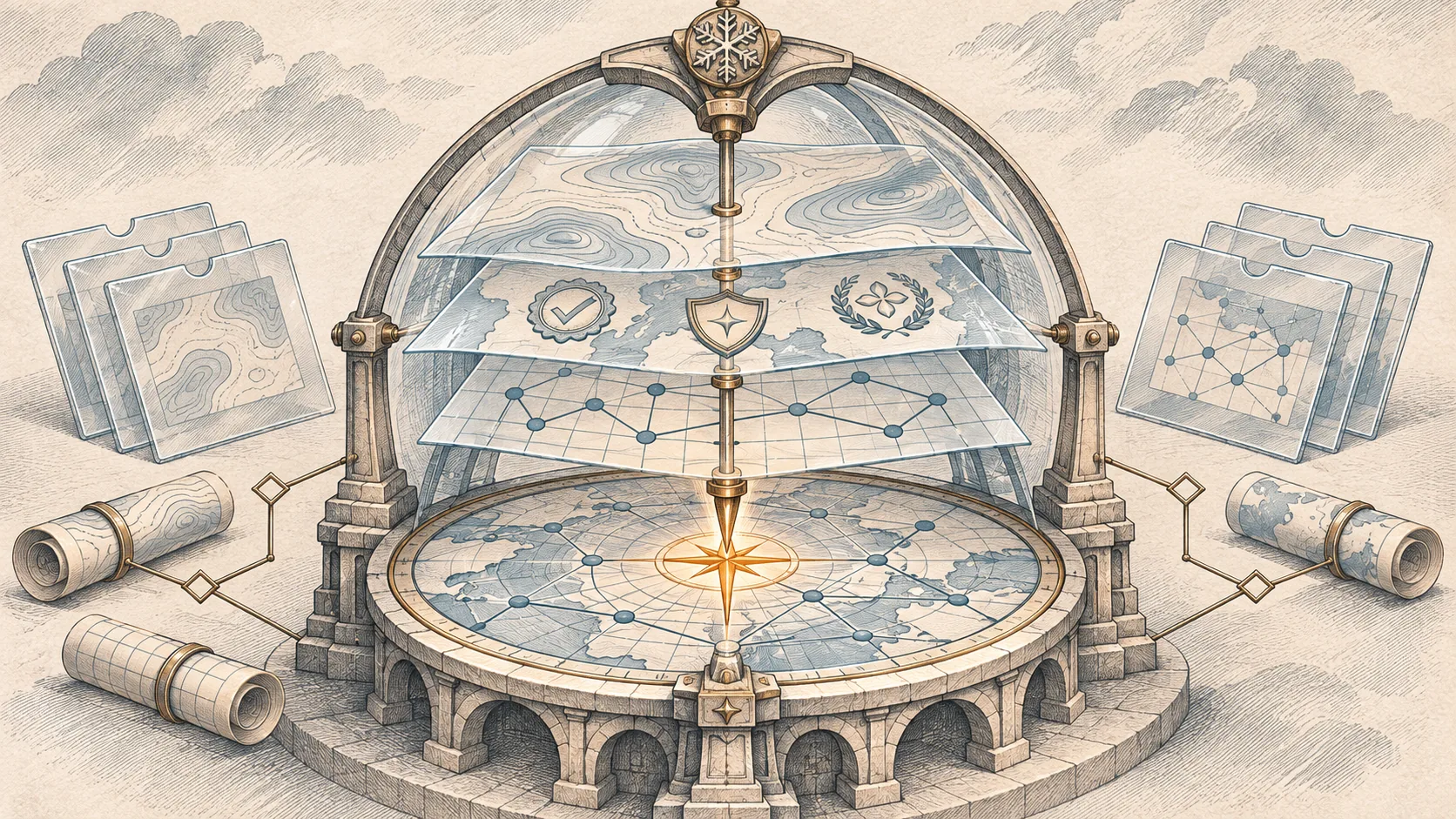
Horizon Context combines metadata from existing tools through connectors for Tableau, Power BI, dbt, SQL Server, Sigma, Omni and PostgreSQL. Cross-platform lineage traces data from a source database through transformations to a dashboard, showing where data comes from and how it is used inside and outside Snowflake. Snowflake describes three context layers: Cortex Sense, also coming soon in public preview, infers context automatically; Business Ontology governs business meaning; and Semantic Views execute metrics. The layers address different needs and are not sequential, so customers can start with whichever addresses their priorities. Cortex Sense provides broad coverage without first requiring teams to define every table and metric, Business Ontology gives authority to approved meanings, and Semantic Views make metric calculations consistent.
Cortex Sense builds context from metadata and usage patterns such as query history, dashboards and dbt models, and updates its knowledge at a cadence teams choose. Teams scope a business use case, connect relevant context and refine it through feedback and evaluations. It identifies conflicting information and asks teams which source to trust. When teams are ready to govern key terms, it can draft proposed definitions, relationships and data links for Business Ontology.
In Business Ontology, teams record what important terms mean, who owns them and how they relate. For “net revenue,” an analyst can define the term once or import it from a glossary, set its scope to finance, assign an owner, seek approval and link it to the Semantic View metric that calculates it. Teams can connect business concepts such as customers, orders and revenue to data; link equivalent metrics across Semantic Views to one approved definition; and retain intentional variants, such as different approved same-store-sales definitions for each restaurant brand. Users can check a term’s owner and approval status and follow it to its calculation, while brand and regional variants retain their scope.
Horizon Catalog governance controls determine who can create, edit and approve definitions. AI suggestions and imported definitions remain proposals for accountable owners to review. When an approved definition conflicts with an inference from Cortex Sense, agents use the approved definition, and Cortex Sense learns from it. Semantic Views separately package a domain’s metrics, dimensions and joins into Snowflake objects that agents, BI tools and SQL can query. Agents can generate SQL from this governed logic; Business Ontology links definitions to views but does not alter calculations, which remain with each view’s owners.
Snowflake says Business Ontology can import and export concepts, definitions and relationships using open formats including Apache Ossie, which is incubating, and Resource Description Framework. Snowflake helped found Apache Ossie, a vendor-neutral open standard for semantic models backed by dozens of organizations, including Microsoft, Salesforce, dbt Labs, Qlik and ThoughtSpot. Semantic Views can import and export Ossie definitions, allowing metrics to move between compatible tools; agents outside Snowflake can query Semantic Views through Model Context Protocol, with Horizon Catalog governing access. Omni, Sigma and ThoughtSpot described Business Ontology as a way to reuse governed definitions and context in analytics and agent products. Snowflake says the ontology gives business knowledge an accountable owner and a link to where each definition is calculated, allowing future agents and applications to start from existing company knowledge.