SPIFFE Identifies Agents, Not Their Actions
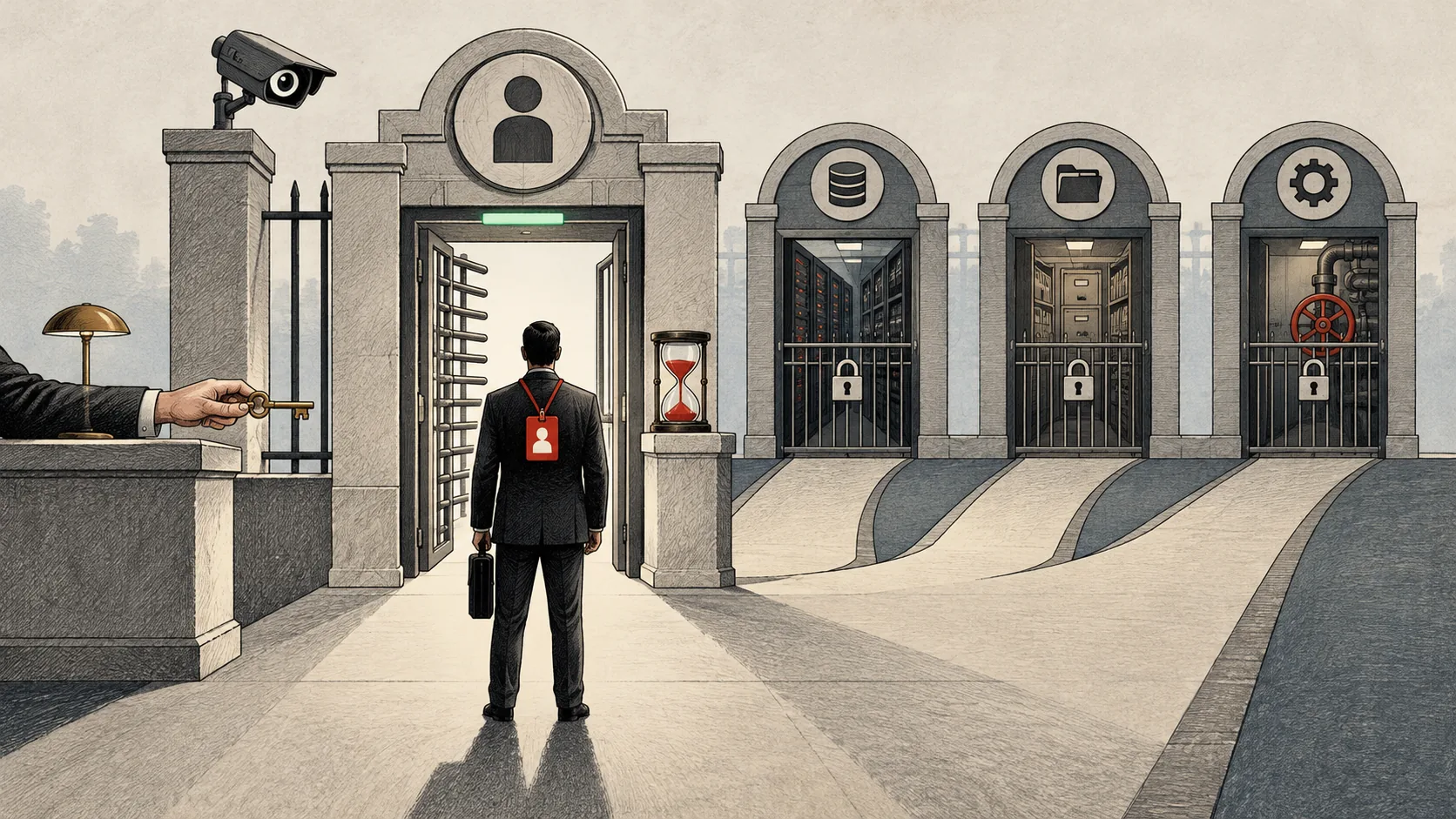
- •SPIFFE verifies AI agent identities, but a separate authorization layer must govern what agents can access or change.
- •SPIRE issues identity credentials; experts recommend task limits, narrower sub-agent permissions, monitoring and human approval.
- •Security advisers urge session termination, short-lived tokens, behavior monitoring and incident reports after agent misfires.
SPIFFE gives AI agents cryptographically verifiable identities, but identity checks do not determine what an authenticated agent may access, decide or change. Security experts quoted by InformationWeek say organizations need authorization and policy enforcement alongside SPIFFE as they deploy autonomous agents. SPIFFE is an open standard for workload identity; it can help prevent spoofing, but it does not control an agent’s actions.
SPIRE, the SPIFFE Runtime Environment, is a production-ready implementation of SPIFFE APIs. It attests nodes and workloads and issues SPIFFE Verifiable Identity Documents (SVIDs), credentials in X.509 certificate or JWT formats that workloads use to prove identity. The SPIRE Server manages identity issuance within its configured trust domain, stores workload registration entries and signing material, authenticates SPIRE Agents through node attestation, and issues SVIDs through them. It also maintains trust bundles for SVID validation and can support federation between separately configured trust domains. A separate authorization and policy layer must decide what an identified workload is permitted to do.
Karthik Karunanithi, an IBM solution architect, said SPIFFE confirms agents’ presence and prevents spoofing, so an authorization layer is needed to stop damage when an agent misunderstands a request. Ben Bernstein of Huntress Labs said fears of rogue agents are overblown because organizations have a 20-year playbook for compromised service accounts and runaway scripts. He recommends role-based access control (RBAC), continuous monitoring, testing, sandboxing, red teaming, action verification and withholding production write access at first.
Amihai Neiderman, co-founder and CTO of NewCore, recommends setting baseline permissions before considering individual tasks. Agents acting on behalf of a person or parent agent should not have broader permissions than their creators, and IT teams or CISOs should set guardrails. Controls can limit an agent to the access needed for a task, give sub-agents narrower permissions than parent agents, and block actions that do not match the assigned task. They can also restrict capabilities after sensitive data is encountered, limit sensitive operations by time and environment, cap queries or tool calls per session, and require human approval before actions such as moving money, deleting records or messaging large groups. Instructions in prompts cannot replace these permission controls.
Will Barker, a Huntress cybersecurity advisor, said “Never delete data” in a system prompt is a suggestion rather than a control. The Open Worldwide Application Security Project Foundation advises enforcing authorization in downstream systems instead of relying on a language model to decide whether an action is allowed. Barker recommends using Open Policy Agent or a similar policy tool at a gateway or API the agent cannot bypass. He also recommends a kill switch that stops tools, cancels pending tasks and cuts off connected-system access while preserving a complete action record; revoking credential renewal alone may not stop a live session.
Jayakumar Ramalingam, a SiriusXM staff software engineer and cloud architect, says guardrails should reflect the potential harm and how difficult an action is to reverse. Low-impact actions that are easy to undo may be left to agents, but people should decide when recovery would require restoring data, reconciling transactions or contacting customers. Brian Trzupek, a DigiCert senior vice president, recommends continuous monitoring, action records, and the ability to suspend agents or revoke identity and permissions immediately.
Amihai Neiderman said agents can still misfire if prompt injection tricks them, they encounter an edge case or they misinterpret instructions. To limit fallout, he recommends narrowly scoped, short-lived tokens; terminating the whole run and revoking tokens after an unauthorized action; treating unexpected requests for administrative or network tools as security signals; tracking behavior for drift from the assigned goal; and keeping a human able to monitor, interrupt and stop the agent. Organizations should also document incidents and how to prevent similar problems.