Sullivan & Cromwell Builds AI Agreement Analyzer
- •Sullivan & Cromwell and OpenAI developed Agreement Analyzer to review draft agreements using legal precedents and firm expertise.
- •The tool runs multiple review cycles, compares clauses and returns a memorandum with proposed tracked changes for lawyers to assess.
- •John Savva cited GPT-6 Astra’s reasoning advances as a way to support more legal research and writing.
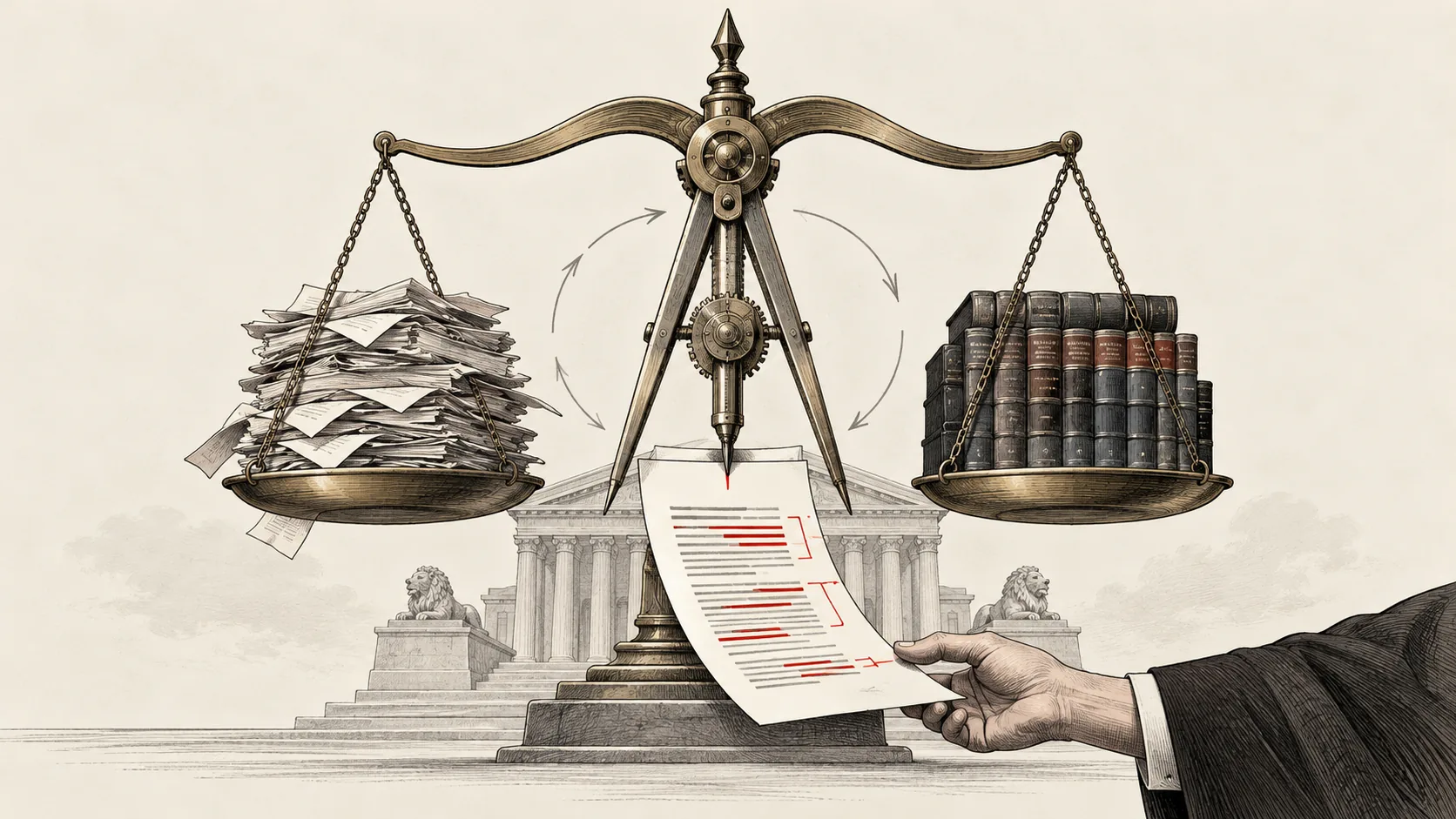
Sullivan & Cromwell and OpenAI developed Agreement Analyzer, an AI tool that checks draft agreements against legal precedents and the firm’s experience. The tool combines analysis with proposed edits that lawyers can inspect and refine. Partner John Savva said AI could let lawyers focus on questions that matter most to their clients.
Savva said improvements in AI models’ analytical abilities have opened more uses in demanding legal work, including deep analysis of complex agreements. Agreement Analyzer compares matching provisions across earlier agreements and tracks how those provisions interact. Savva first built it as a single-user proof of concept with Codex, then worked with OpenAI to improve output quality, increase efficiency through parallel processing and make it usable by multiple lawyers at once.
The system combines Sullivan & Cromwell’s workflows, selected firm precedents, negotiating playbooks and ChatGPT Enterprise. A lawyer can provide a draft, chosen precedents, positions for the firm and client, and information about market practice. The tool runs multiple review cycles from different perspectives, combines their results and produces a memorandum and proposed tracked changes. Lawyers may review, adapt or reject the suggestions.
Savva said lawyers need to see the sources behind claims about market practice. In one described approach, AI agents reach conclusions while other agents challenge them. Specialized agents can review agreements in parallel for market deviations, risk allocation, interactions between clauses and ambiguities that could affect litigation. The results separate findings that withstand challenges, findings dismissed after challenge and unverified issues retained with qualifications. Lawyers can inspect explanations and relevant precedents before deciding whether to change the final markup.
Sullivan & Cromwell continues to explore tools for specific legal tasks, including support for research and writing. Savva said GPT-6 Astra has improved reasoning quality, which he described as a bottleneck in the past. OpenAI also says more than 1 million businesses worldwide are achieving meaningful results with its products.