Supply-Chain AI Moves to Persistent Workflows
- •Supply-chain AI is shifting from repeated prompts to workflows that preserve decision context and operating state over time
- •Persistent workflows connect detection, recommendations, approvals, execution, and feedback, using AI alongside rules and human judgment
- •Buyers are urged to assess workflow memory, authority controls, write-back, versioning, and auditability as operating capabilities
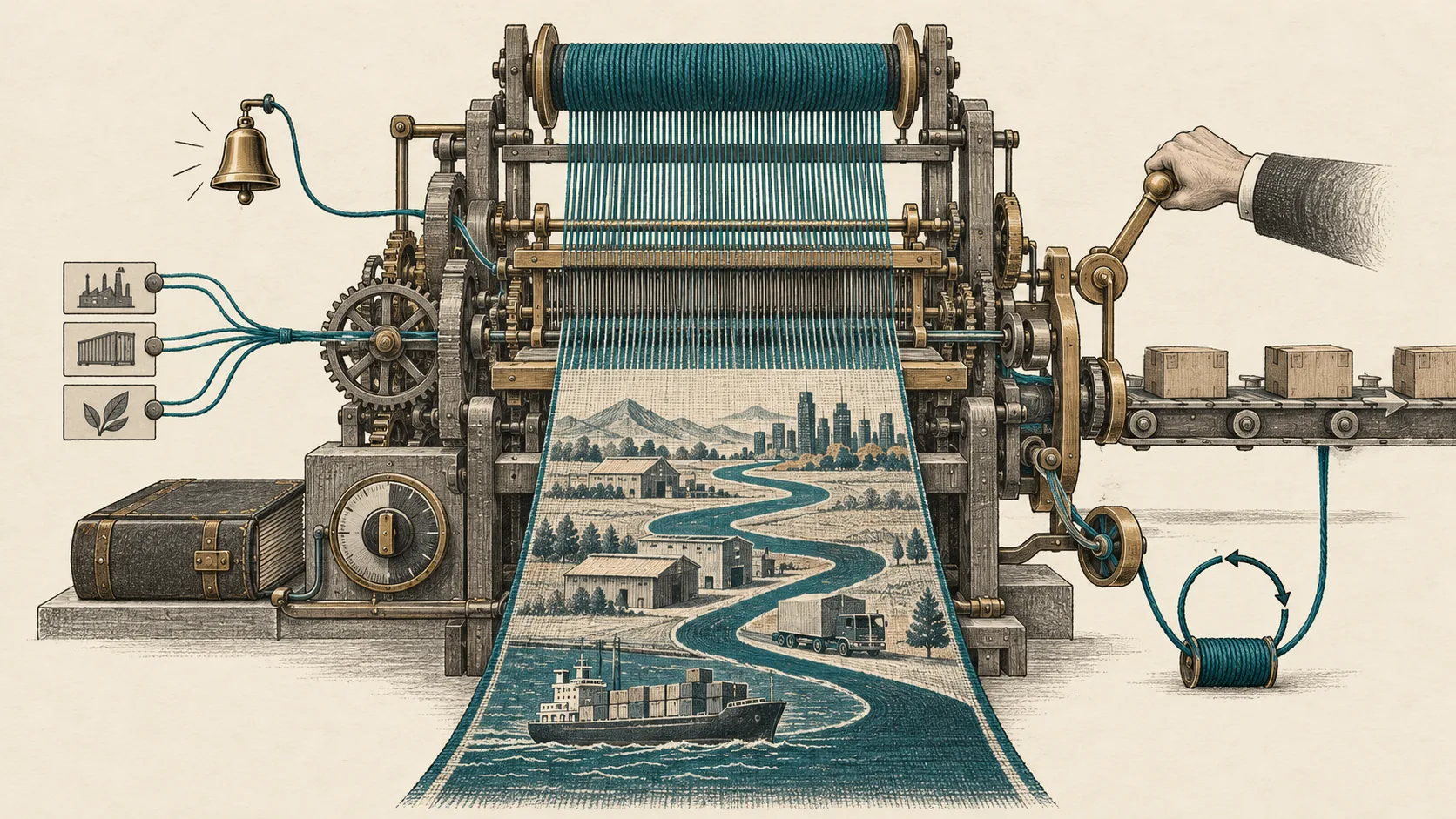
Supply-chain AI is shifting from one-off prompts to persistent decision workflows that preserve context, monitor changing conditions, retain decision logic, and connect recommendations to subsequent work. Analysts can use repeated prompts to solve individual problems, but an operating capability must maintain continuity.
A persistent workflow needs to remember the business object, current plan, earlier recommendations, overrides, policies, and outcomes. Without that history, users must rebuild context and a model may not distinguish a new exception from an existing decision continuing. The need grows as AI agents advance: an agent cannot act safely if each interaction begins without durable operating state or prior decision context.
A mature workflow links detection, context assembly, analysis, option generation, recommendations, approval, execution, and feedback. Generative AI may support some stages; optimization, rules, deterministic integrations, or human judgment may suit others. Persistence comes from the workflow and its state model, not the chat interface. The system should define what it may observe, recommend, prepare, execute, or escalate, with autonomy levels shaped by financial thresholds, customer impact, reversibility, confidence, and policy.
ERP, planning, transportation management, warehouse management, visibility, risk, and network platforms remain systems of record and execution. Decision intelligence works across them to assemble context, assess tradeoffs, prioritize actions, and coordinate responses, so a persistent workflow needs controlled write-back or action mechanisms as well as read access and summaries. Recording recommendations, human overrides, actions, and results creates evidence for improving rules, models, prompts, and autonomy thresholds; a chat transcript alone does not provide an operating learning system.
Buyers are urged to test whether a system can resume an unresolved decision when new data arrive, explain to another user why an option was rejected, restrict agents to encoded authority, and trace a transaction to its supporting evidence and rule. These are architecture questions, the article says, rather than interface questions.
Persistent workflows can avoid repeating context-assembly work when decisions change hands. New events can be assessed against existing state, prior alternatives remain visible, and approvals or overrides need not be reconstructed from email or chat. The article says this can reduce decision latency and improve traceability, while helping automation distinguish a new decision from a continuation. Buyers are advised to assess memory, state management, versioning, and auditability as operating capabilities.
The 2026 Market Map is intended to help organizations understand the Decision Intelligence market, compare providers, and identify relevant capabilities. The article offers a brochure and discussion for organizations evaluating platforms or clarifying where decision intelligence fits in their technology architecture. An ARC webinar is advertised for October 29 at 11:00 AM ET, covering WMS, TMS, Supply Chain Planning, Decision Intelligence, and Autonomous Exception Management.