Synaptics Unveils Coral-Based Edge AI Chips
- •Synaptics introduced its Astra SR200 edge AI chip series, built on Google’s Coral technology.
- •The SR210, SR230 and SR250 deliver 200, 300 and 400 GOPS, respectively.
- •Synaptics also unveiled a Coral compiler and developer board; the SR200 launch date remains unconfirmed.
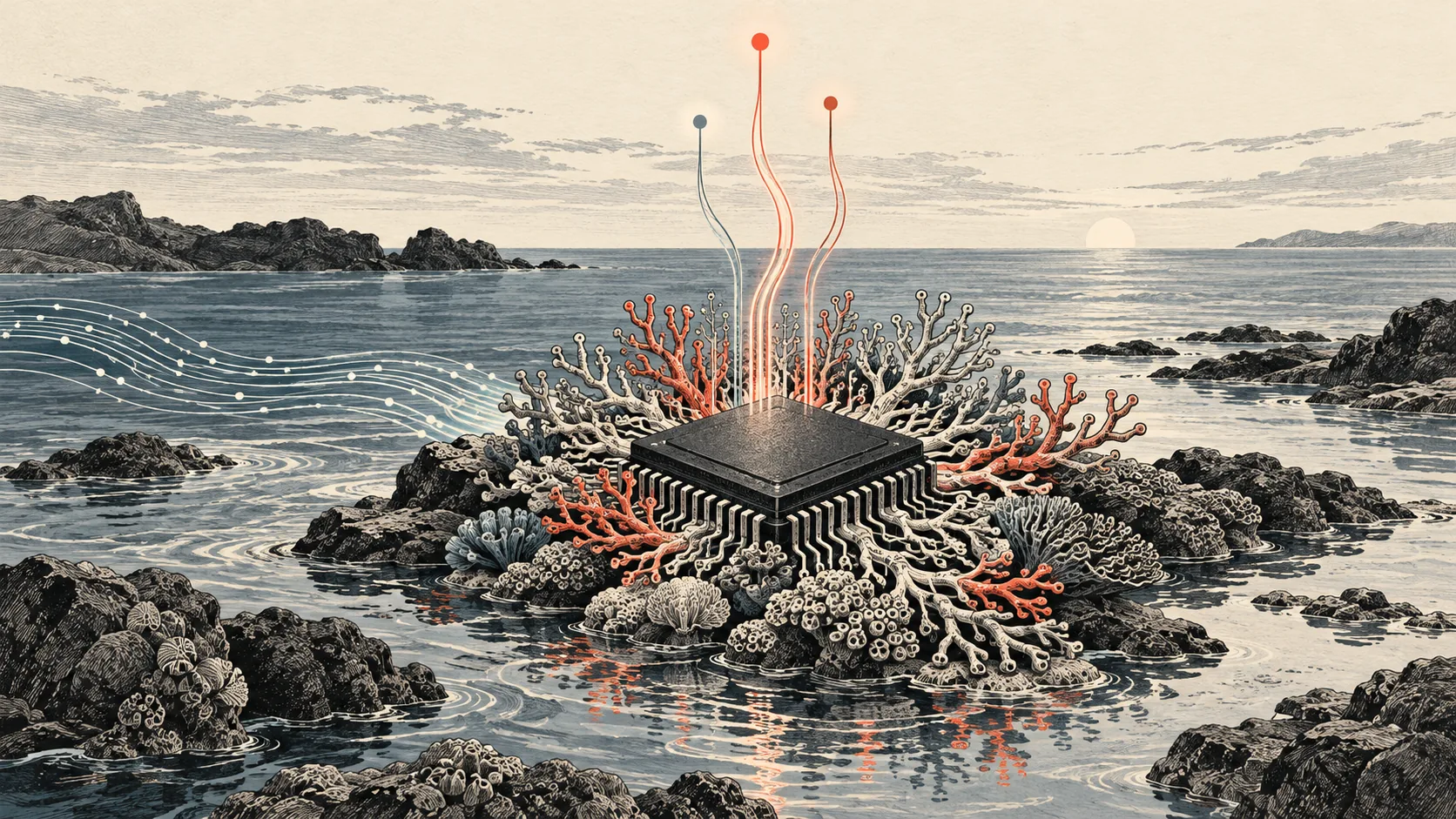
Synaptics unveiled the Astra SR200 series on the 20th local time, applying Google’s open-source Coral AI accelerator technology. The microcontroller-class chips are designed to handle complex AI tasks directly on wearables and industrial devices. The companies are also providing a developer board and compiler to help developers run models on devices and use them in commercial products.
The lineup has three models: SR210, SR230 and SR250. The SR210 delivers 200 GOPS, or 200 billion operations per second, for always-on voice recognition and sensor processing. The SR230 delivers 300 GOPS and supports image processing and display functions, while the SR250 delivers 400 GOPS and handles multiple data types, including image and audio, at the same time. Each model combines Arm Cortex-M85 and Cortex-M52 cores with a Coral neural processing unit (NPU), assigning general computing and AI inference according to the task.
The series uses an xMCU design combining different computing cores, an AI accelerator and high-bandwidth memory. Synaptics says its goal is to retain the low-power characteristics of conventional microcontrollers while supporting more complex AI models and a Linux-class user experience. The chips support up to 8MB of SRAM and custom DRAM configurations in the hundreds of megabytes; the Coralboard SR for developers is expected to offer up to 256MB of memory. The design targets running large models and processing camera, microphone and sensor data without a separate high-performance application processor. Synaptics says custom memory can reduce power consumption to about one-third of that of conventional system DRAM for similar tasks. Actual battery life and overall system power efficiency may vary with workload and hardware configuration.
Google Research unveiled the Coral NPU architecture last year and opened it for other semiconductor companies to use in their chips. Coral is based on the RISC-V instruction set architecture and can be used in commercial products under the Apache 2.0 license. The accompanying Coral Compiler 1.0, built on MLIR and IREE, converts PyTorch, JAX and TensorFlow models for Coral NPUs. Billy Rutledge, head of Google Research’s systems research team, said the goal is to reduce the difficulty developers face when deploying models on different chips.
Google said it completed the Coral NPU’s 32-bit architecture and added a matrix execution unit for matrix multiplication. Depending on the configuration, it can deliver up to 1 TOPS, with average power consumption targeted at around 10mW. Google says this will enable small transformer models, real-time voice processing and robotic vision on low-power devices. Potential applications include smart glasses, smartwatches, security cameras, factory sensors and robots. Analyzing audio and video on-device can avoid sending data to external servers, which the companies said can benefit response times, privacy and network costs.
Models cited for potential use include Google’s Gemma, Liquid AI’s LFM2.5 and Ultralytics’ YOLO computer vision models. Synaptics said Gemma 3 270M can generate about 12–16 tokens per second under several compression settings. Synaptics has begun global sales of the Coralboard SL, which uses its existing Astra SL2619 processor and a 1 TOPS AI accelerator; DigiKey lists it for $99.79. The company also unveiled the Coralboard SR with the new SR200 chip, but has not confirmed a launch date. SR200 chips are being supplied as samples, and Synaptics has not disclosed chip pricing or a schedule for mass production.