T-Mobile Uses AI for Network Resilience
- •T-Mobile applies AI to network adjustments during disasters and high-demand periods, according to CTO John Saw.
- •The carrier made 30,000 antenna adjustments with intent-based automation during January's winter storm Fern.
- •T-Mobile's backup network assets include hybrid generators, satellite links, mobile cell sites and SuperBroadband.
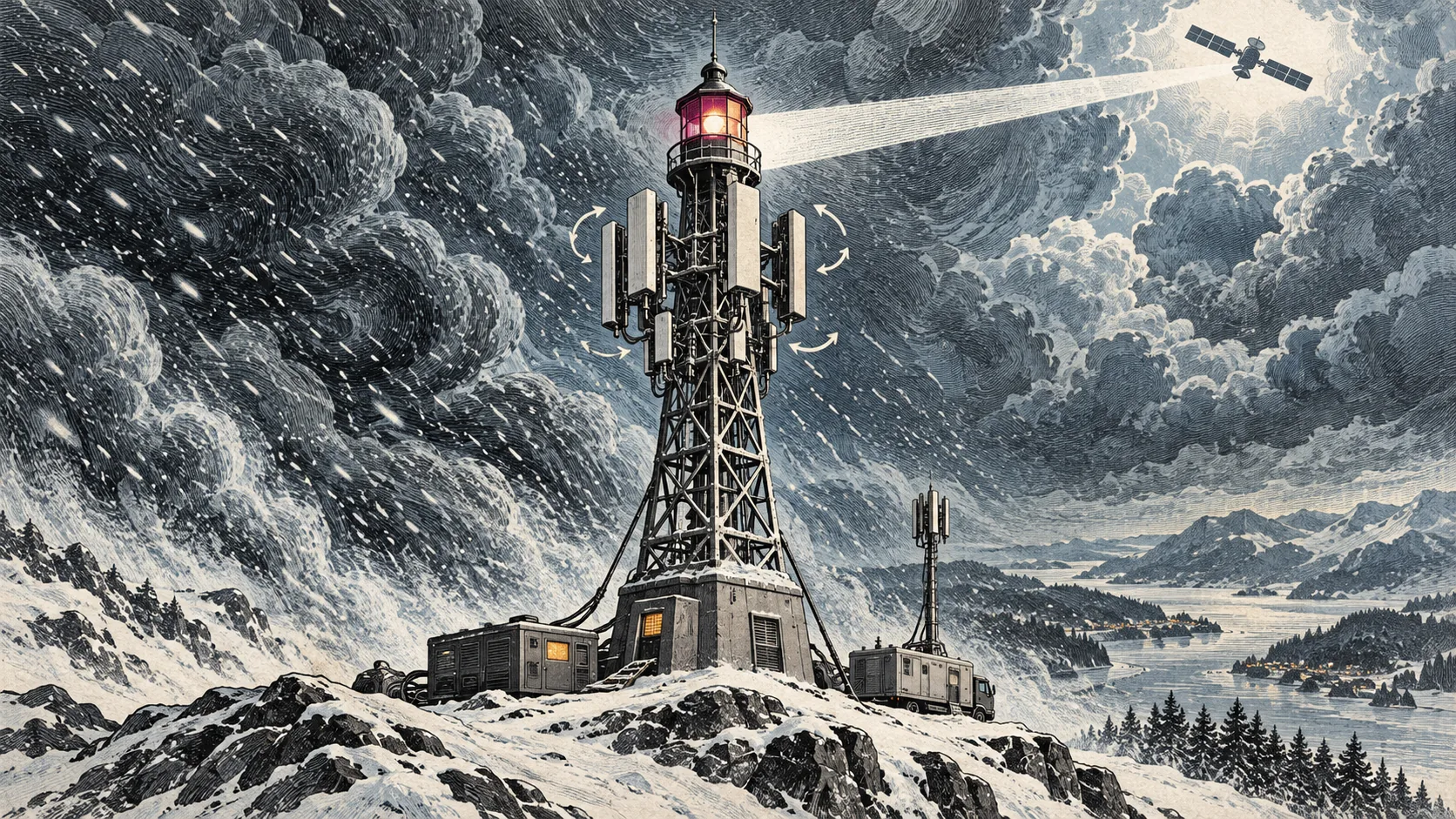
T-Mobile is using AI to adjust its mobile network during disasters and periods of heavy demand, CTO John Saw said. The system can change antenna direction and power levels, anticipate traffic, and restore a site's optimized settings automatically after power and service return. During winter storm Fern in January, which stretched from Northern Mexico to Canada, T-Mobile used intent-based automation to make 30,000 antenna adjustments. Saw said the work would not have been possible in real time with human engineers alone.
T-Mobile also deploys cell on wheels vehicles and cell on light trucks to provide temporary coverage and cellular backhaul when emergencies damage infrastructure. Many cell sites have hybrid generators for longer runtimes, and satellite links provide backup coverage. Earlier this year, the carrier launched SuperBroadband for businesses, a managed service using fixed wireless 5G as its primary connection and Starlink satellite broadband as backup. Saw said AI helps the company deploy these assets more efficiently and adaptively.
T-Mobile's T-Priority service gives first responders prioritized connectivity through a network slice on its 5G standalone core. Verizon Frontline and AT&T's FirstNet are comparable services from the other two major US wireless carriers. T-Mobile also uses AI to increase capacity around sporting events, including the recent World Cup, by forecasting where fans gather and returning cell sites to normal settings after crowds disperse.
Aramark Destinations and Aramark Nexus, which provide hospitality and workforce services, use T-Mobile SuperBroadband. CIO Dimple Jethani said combining fiber, cellular and satellite connections, monitored and operated through one managed service, has made connectivity easier for the business. Aramark serves remote properties and aims to offer a home-like connection experience; access to familiar services such as video streaming also benefits retention among remote data center construction workers.
Essential services such as hospitals, government agencies and financial institutions need network connectivity restored quickly after disasters. Omdia analyst Ildefonso De La Cruz Morales said their main concerns are coverage, capacity and avoiding congestion. He said AI can turn incoming data into real-time actions without overwhelming first responders, but AI for disaster preparedness remains at an early stage. The location of AI processing—on devices, at emergency hubs or by satellite—has not yet been decided.