Tech Executives Address Midterm Sell-Off Fears
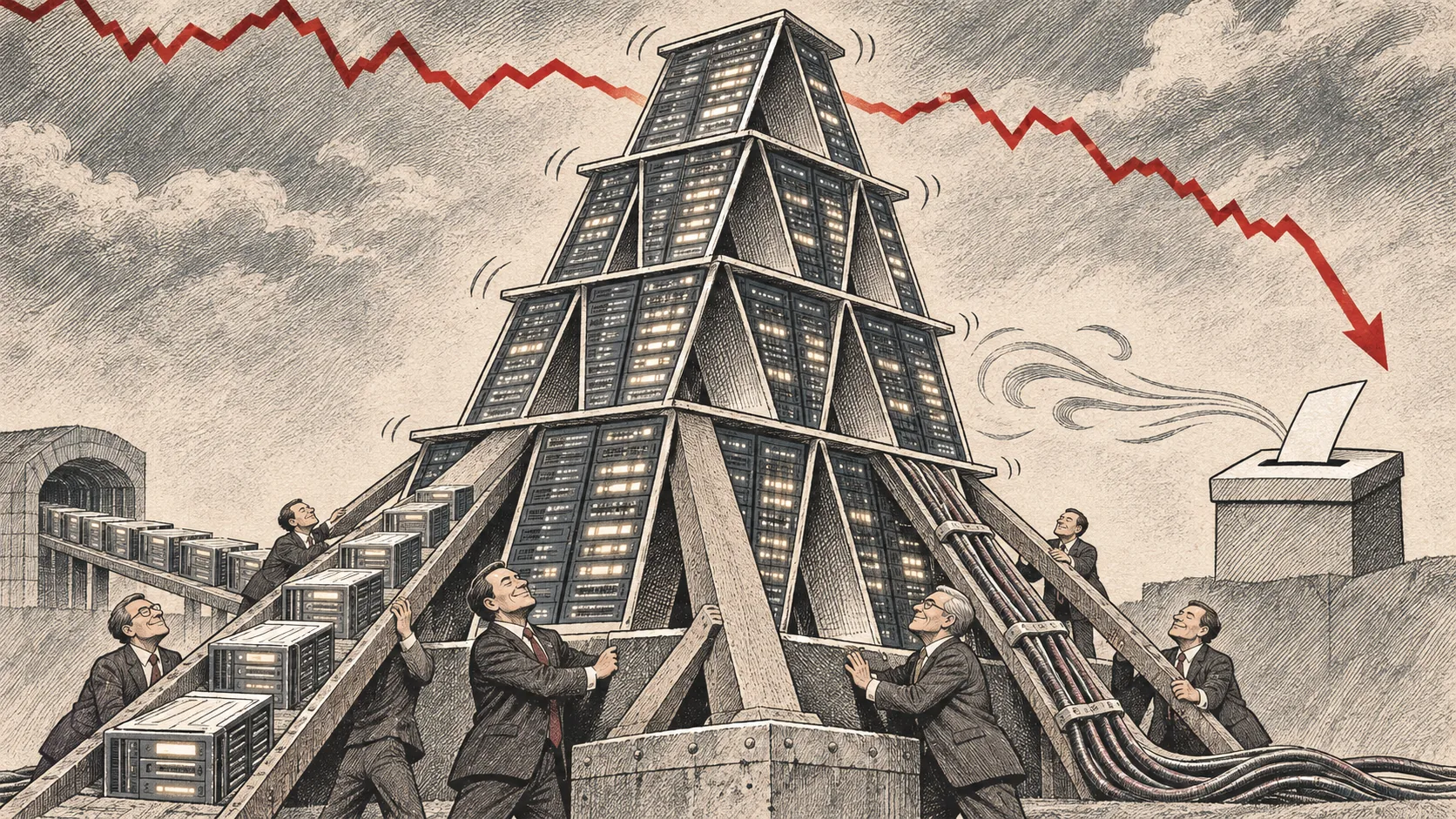
- •Midterm election results sparked fears that data center regulation could slow construction and hit technology stocks.
- •The Magnificent Seven lost more than $1 trillion in combined market value during Thursday’s sell-off.
- •OpenAI, Arm, Qualcomm, Box and Lyft executives said their businesses could withstand market concerns, citing demand and other strengths.
After Tuesday’s U.S. midterm elections, a Democratic sweep of Congress and many governorships prompted investor fears that data center regulation could slow construction. Stocks rallied Wednesday, posting their best day in more than 18 months, then sold off sharply Thursday as investors also questioned whether the AI trade had peaked. The Magnificent Seven lost more than $1 trillion in combined market value, and major indexes had their worst day since April 2025; stocks recovered some losses Friday. Tech executives told CNBC they did not expect data center concerns to derail their businesses.
Arm CEO Rene Haas called the post-election fears “very, very short term thinking” and said the United States must keep investing in data centers because global demand is high and other countries are ready to build capacity. OpenAI CFO Sarah Friar said the company would continue investing in data center infrastructure to meet customer demand and raise capital, while working with communities on concerns such as electricity. She said OpenAI would “never raise your electricity bill.”
Qualcomm CEO Cristiano Amon said data center infrastructure is only one part of the chipmaker’s business. Qualcomm shares fell 9.49% Thursday and recovered some losses Friday; Amon pointed to the company’s work outside data center computing and its historical focus on low-power computing. Box CEO Aaron Levie said AI-driven productivity gains were clear, but warned that industry messaging centered on “doomerism” can worsen public perception. He said consumers need to see direct benefits, which will take time.
Lyft CEO David Risher said market sentiment did not concern him because consumer sentiment and bookings remained strong. He cited Lyft’s biggest Halloween to date as evidence of activity in the company’s business.