Terence Tao Proposes ‘Math 2.0’ for the AI Era
- •Terence Tao published materials from his public ‘Math 2.0’ lecture on October 10.
- •After releasing 722 math manuscripts, OpenAI withdrew three over errors, leaving 719 posted.
- •Simons Foundation announced $15 million in support with Anthropic and OpenAI.
Mathematician Terence Tao published materials for his public lecture “Math 2.0,” outlining directions for mathematical research in the AI era, on his blog on October 10, 2026. He gave the lecture at the California Institute of Technology on October 9. As interest grows in AI automatically solving open problems, Tao proposed using AI to support the mathematics community and deepen human understanding.
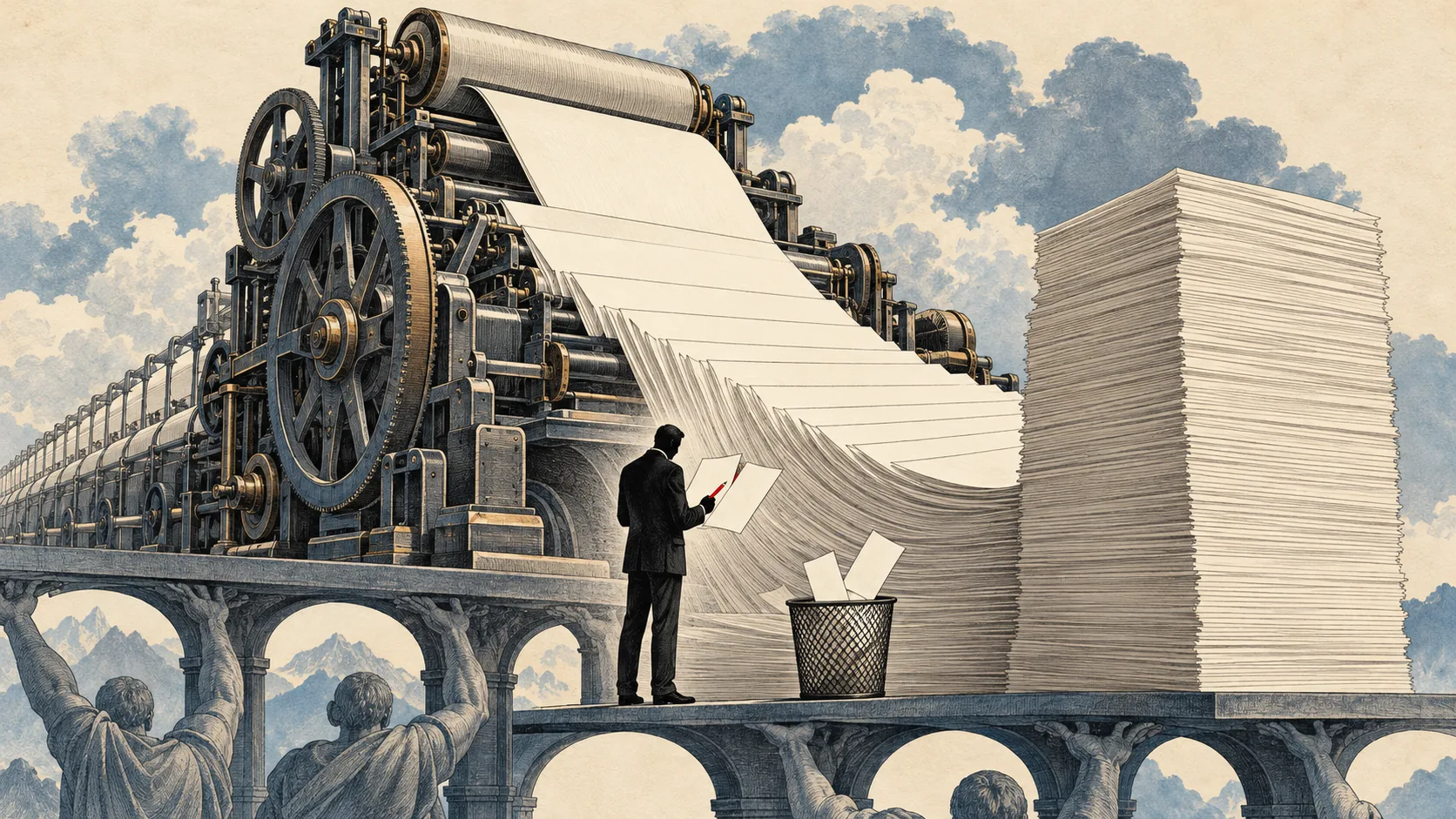
Tao called traditional mathematics “Math 1.0,” describing a field valued for the difficulty of obtaining proofs and the work of people with specialized knowledge. He argued that when AI makes proofs abundant, pursuing problem-solving alone could harm mathematics’ long-term development. Open problems also serve as “lighthouses” for exploring surrounding mathematics, he said, and insights from successes, failures and partial progress can sometimes be more valuable than the final answer.
“Math 2.0” would use AI to strengthen activities that connect mathematics with human understanding. Tao cited improving explanations of difficult existing proofs, building knowledge networks that link papers, and expanding mathematical libraries of proofs in computer-verifiable formats. He also envisioned changing a theorem’s assumptions to test where it holds, and finding new principles and methods. Many open problems remain at the frontier of mathematics, and AI has uneven capabilities, he said, calling for transparent evaluations that include computing resources and examples of failures.
The discussion comes amid AI companies’ publication of mathematical work. On October 6, OpenAI released 722 mathematical manuscripts generated by an unreleased internal model, along with supporting materials for the proofs, and organized the manuscripts into 372 groups by related work. Their levels of verification varied. On October 7, OpenAI withdrew three over proof errors, leaving 719 posted. In a statement, the Association for Human Mathematics (AHM) criticized releasing more than 700 files at once as a display of power rather than academic work, and urged mathematicians to stop collaborating with OpenAI and return to science centered on human understanding. Tao’s blog reposted the statement as an AHM contribution on October 7. AGMAI, an independent organization advising OpenAI, also said publication is the starting point—not the completion—of people understanding results and incorporating them into mathematical knowledge.
On October 15, the Simons Foundation announced a total of $15 million in support in partnership with Anthropic and OpenAI. The foundation will manage and distribute the funding, supporting workshops and initiatives through open calls and other means to evaluate recent AI-assisted results, learn and use new tools, and develop shared standards for AI use. The companies will provide AI tools and computing resources to researchers supported by the foundation. OpenAI updated its mathematics-results page that day and pledged $5 million to the effort. David Spergel, president of the Simons Foundation, said mathematics is collective understanding grounded in human curiosity, rather than a collection of proofs and theorems, and that the mathematics community should lead discussions on evaluating, adopting and using tools.