Toyobo Builds a Manufacturing AI Agent with Plant Staff
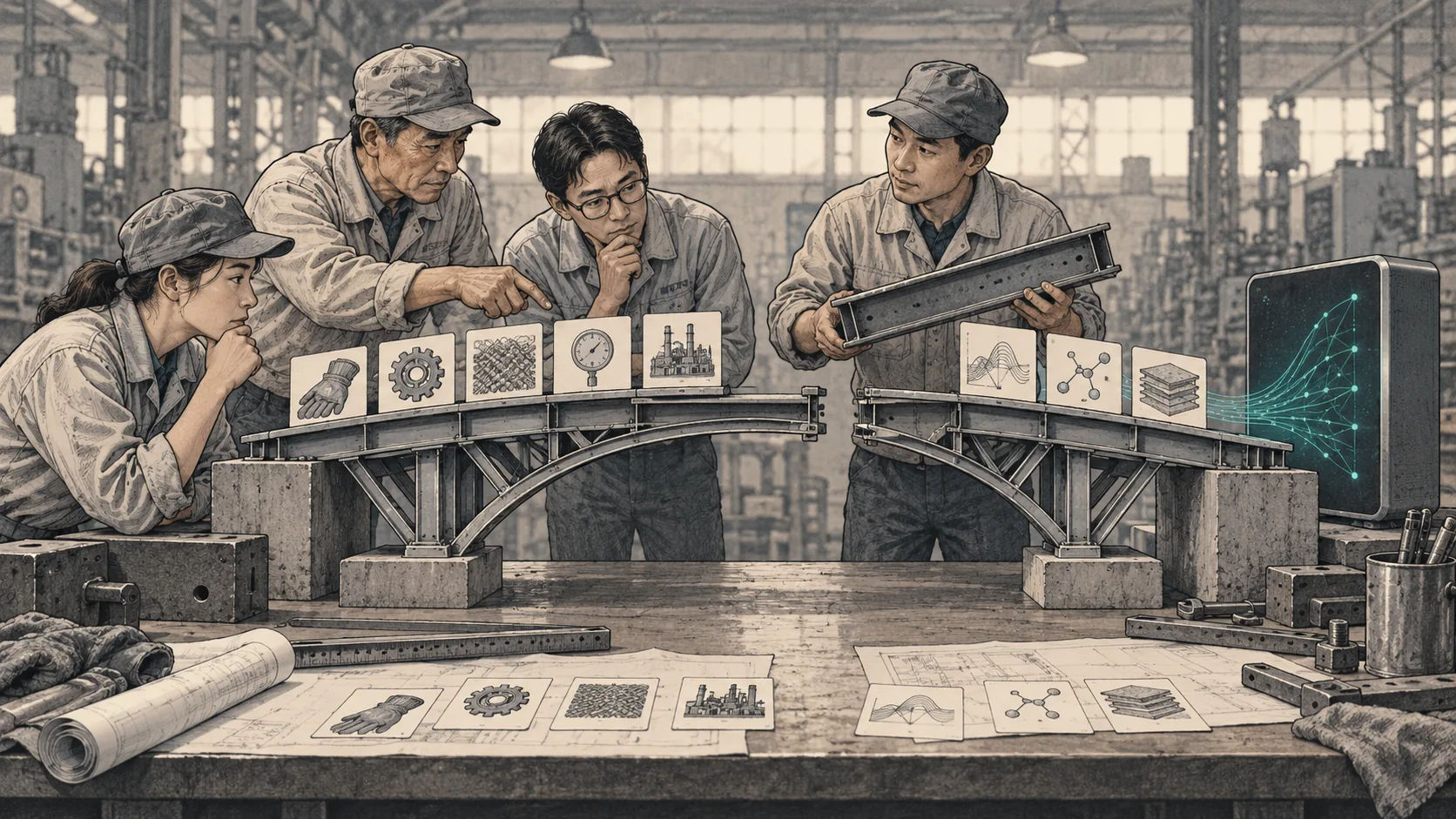
- •Toyobo is co-developing a generative AI agent that uses the language and expertise of its manufacturing teams.
- •Workers requested four capabilities; a basic RAG system scored 0.45 for accuracy on 111 internal glossary entries.
- •Initial evaluations scored below 50%, prompting workers to say the system was not useful enough to justify changing their work.
Toyobo is introducing a generative AI agent to share manufacturing knowledge and know-how, developing it with plant staff and incorporating their terminology. Hiroya Sakakura of the TX Business Innovation Division described its design and operation at AWS Summit Japan 2026, held June 25–26, 2026, and hosted by Amazon Web Services Japan. The effort is part of Toyobo Transformation, or TX.
Founded in 1882, Toyobo makes materials including film using recycled PET resin, reverse-osmosis membranes for seawater desalination, and enzymes used as ingredients in biochemical testing reagents. Sakakura studied chemistry through graduate school and joined Toyobo in 2024. He first promoted materials informatics at a research institute and now oversees the introduction of machine learning and generative AI at manufacturing sites. The company’s approach is to develop the technology together with plant staff, rather than simply introduce it and encourage its use.
Interviews with workers identified three challenges: they are too busy with operations and troubleshooting to search or update documents; experienced workers’ practical knowledge is buried in conversations and tasks, making it hard to pass on; and growing combinations of products, conditions, equipment, and processes place more demands on specialists. Daily reports and incident records had accumulated, but were not ready for immediate use in solving new problems. Workers requested four features: asking questions in everyday language, retaining terms taught once for later use, narrowing down similar cases from ambiguous situations, and improving fit with the workplace through use. They particularly emphasized understanding plant-specific abbreviations and informal names, with the goal of using workers’ wording to fill in missing information and connect questions to relevant knowledge.
Toyobo first organized workplace terminology and combined it with internal documents in a basic retrieval-augmented generation (RAG) system using Amazon Bedrock Knowledge Bases, a service for supplementing answers with document searches. The company used Amazon Bedrock Evaluations to assess accuracy across 111 entries in its internal glossary. It used an LLM-as-a-Judge method, in which a large language model scores answers. The accuracy score was 0.45, below 50%. Workers responded negatively, saying the system was not useful because its benefit did not justify the effort of changing how they worked.