VLA-Rolling Reuses Action Tails for Faster Control
- •VLA-Rolling reuses unused action tails to reduce inference cost in vision-language-action models
- •Tests across 16 model-benchmark pairs reached up to 1.48 times speedup
- •Success rates improved in 14 pairs by up to 15.08 percentage points
Researchers introduced VLA-Rolling, a lightweight inference framework for vision-language-action (VLA) models, in a paper published on October 18. It reuses the unexecuted portion of an earlier action sequence and adjusts how much that sequence is refined after the model receives updated observations. The approach leaves the underlying VLA model frozen.
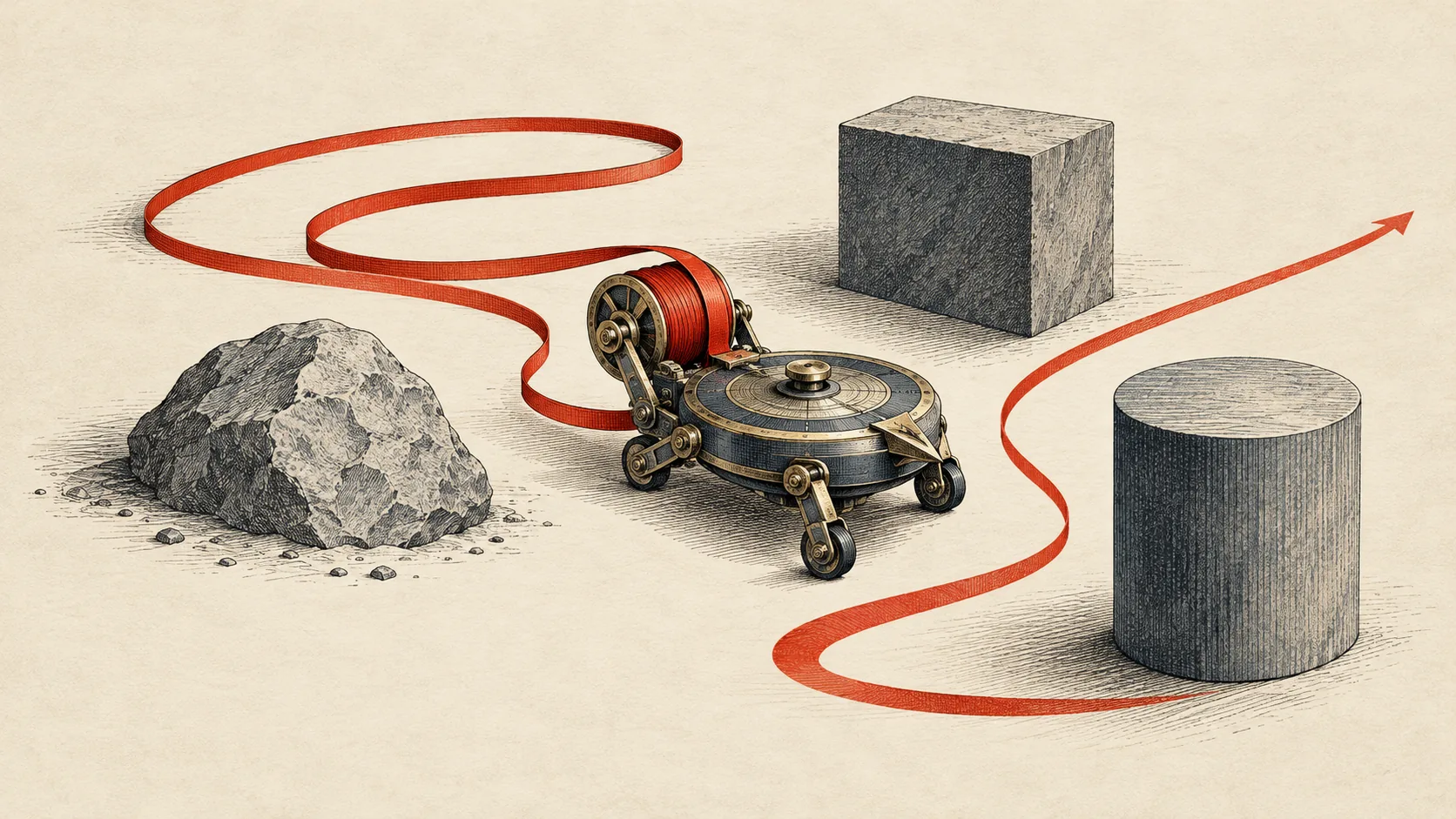
VLA models generate an action chunk by repeatedly removing noise, but under the receding-horizon approach they execute only a short prefix before replanning. The remaining action tail is usually discarded and a fresh chunk is generated from Gaussian noise. The researchers found that the discarded tail retains denoising progress and can match or outperform a 10-step Gaussian baseline with fewer denoising steps.
VLA-Rolling uses three stages: action-tail inheritance, per-action confidence estimation, and confidence-guided refinement that allocates denoising steps. The researchers tested it with π₀.₅, SmolVLA, X-VLA and MolmoAct2 on LIBERO, MetaWorld, LIBERO-Plus and RoboTwin 2.0. It reduced action-chunk inference cost in all 16 model-benchmark pairs, reaching up to 1.48 times speedup, and improved success rates in 14 pairs by up to 15.08 percentage points. The paper says the best denoising budget varied substantially between samples, so tail refinement was adapted to updated environments.