Workday Leaders Call for Faster AI Reskilling
- •Workday leaders warn AI may affect entry-level hiring and call for faster reskilling
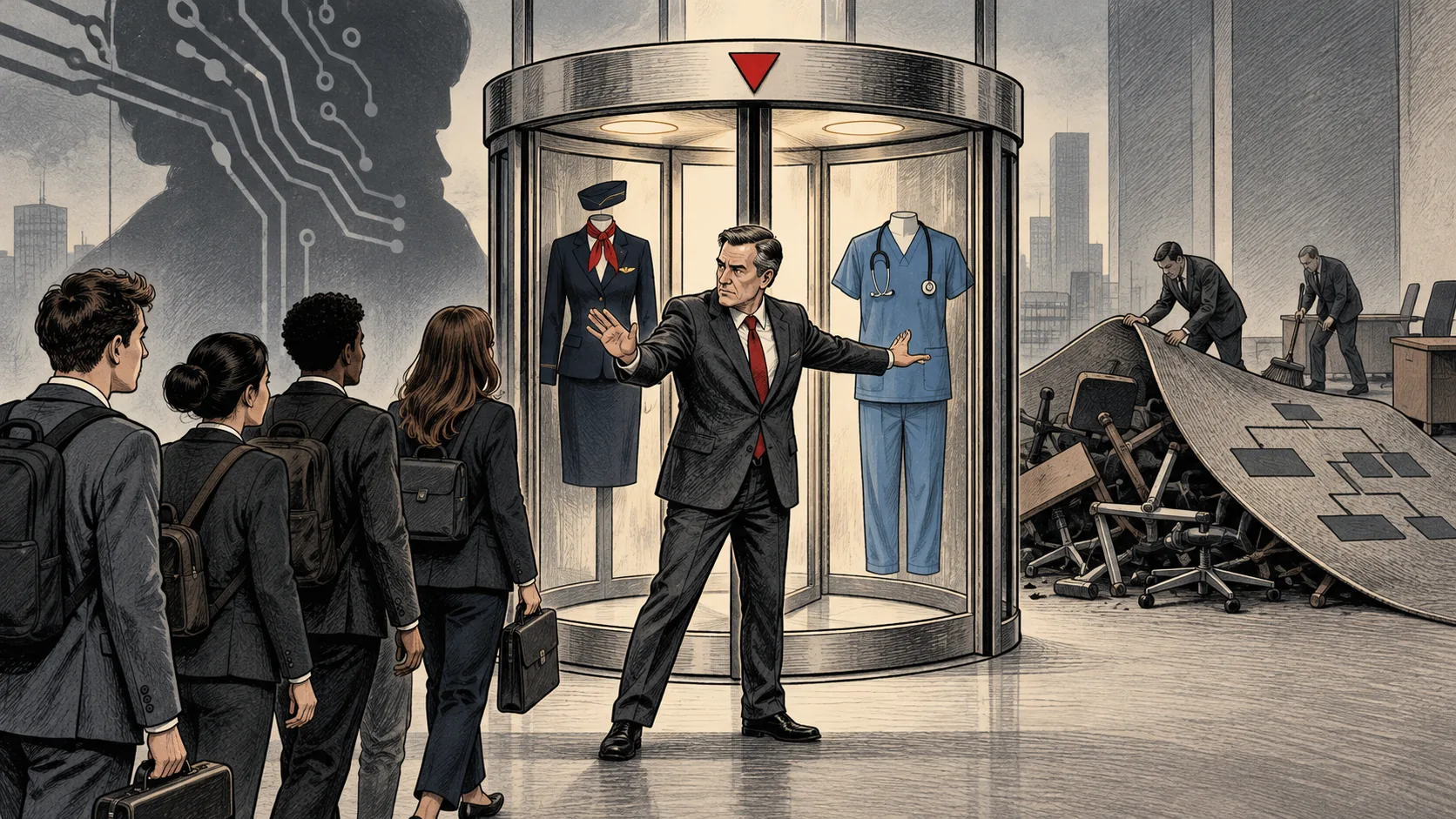
- •Sana retrained 200,000 flight attendants for hospital roles during the pandemic
- •Workday says roughly 900 job cuts this year addressed organizational bloat, not AI
At Workday Rising, Workday leaders acknowledged that AI could put entry-level jobs at risk and called for faster reskilling. Co-founder and CEO Aneel Bhusri said companies are slowing hiring as they assess AI’s benefits, which could affect college graduates seeking work. He said many entry-level jobs may be automatable, while workers need those jobs to move into subsequent roles; he warned against high unemployment among new graduates in the US and described the issue as a challenge in Europe as well.
Gerrit Kazmaier, Workday’s president of product and technology, said labor shortages vary by sector. Healthcare, he noted, is constrained less by the number of beds than by the availability of practitioners. He said graduates trained before AI are entering workplaces that require different skills, while roles such as AI engineer, AI marketing and AI sales are among the fastest-growing job profiles and face a shortage of people who can move into them quickly. He called investment in education and reskilling the answer.
Kazmaier said Workday’s Work Intelligence tool breaks jobs into tasks and identifies work that could be automated, but he described its purpose as helping companies combine human work with AI to grow and operate more efficiently. In his account, that support can help businesses grow without hiring and protect jobs. He also said companies can organize work around tasks and missions rather than fixed org charts and teams, giving employees greater impact and treating headcount as a strategic asset rather than a resource to expand or shrink. He added that AI companies still focus on hiring and retaining talent, rather than replacing people entirely with agents.
Workday Chief AI Officer Joel Hellermark cited a pandemic-era Sana program that retrained flight attendants for hospital roles. Training that would historically have taken a year enabled the program to reskill 200,000 people, he said, using personalized learning and AI-based reskilling to target what each person needed to learn. He warned that AI-driven changes will move much faster than the roughly decade-long pace people are used to, requiring faster retraining, and said Workday wants to build tools to support the transition.
Workday said it is investing in reskilling through Raise US, the Workday Foundation, which funds Ada – The National College for Digital Skills and INCO in Europe, and an AI upskilling program launched with Technology Ireland. Bhusri said the company is looking at similar organizations around the world. He also said Workday’s roughly 900 job cuts this year were not tied to AI, but aimed at reducing organizational bloat: he and Kazmaier found 10 management layers between Bhusri and developers. The company offered affected employees individual contributor roles, while expecting managers to coach and step in on development work.