WorldCast Controls Large-Angle Character Video Views
- •Researchers introduce WorldCast for character video generation with large-angle camera movement control
- •CLACT dataset and benchmark cover varied camera paths with geometry and multi-view character observations
- •Evaluations report trajectory following while preserving character geometry, appearance and identity
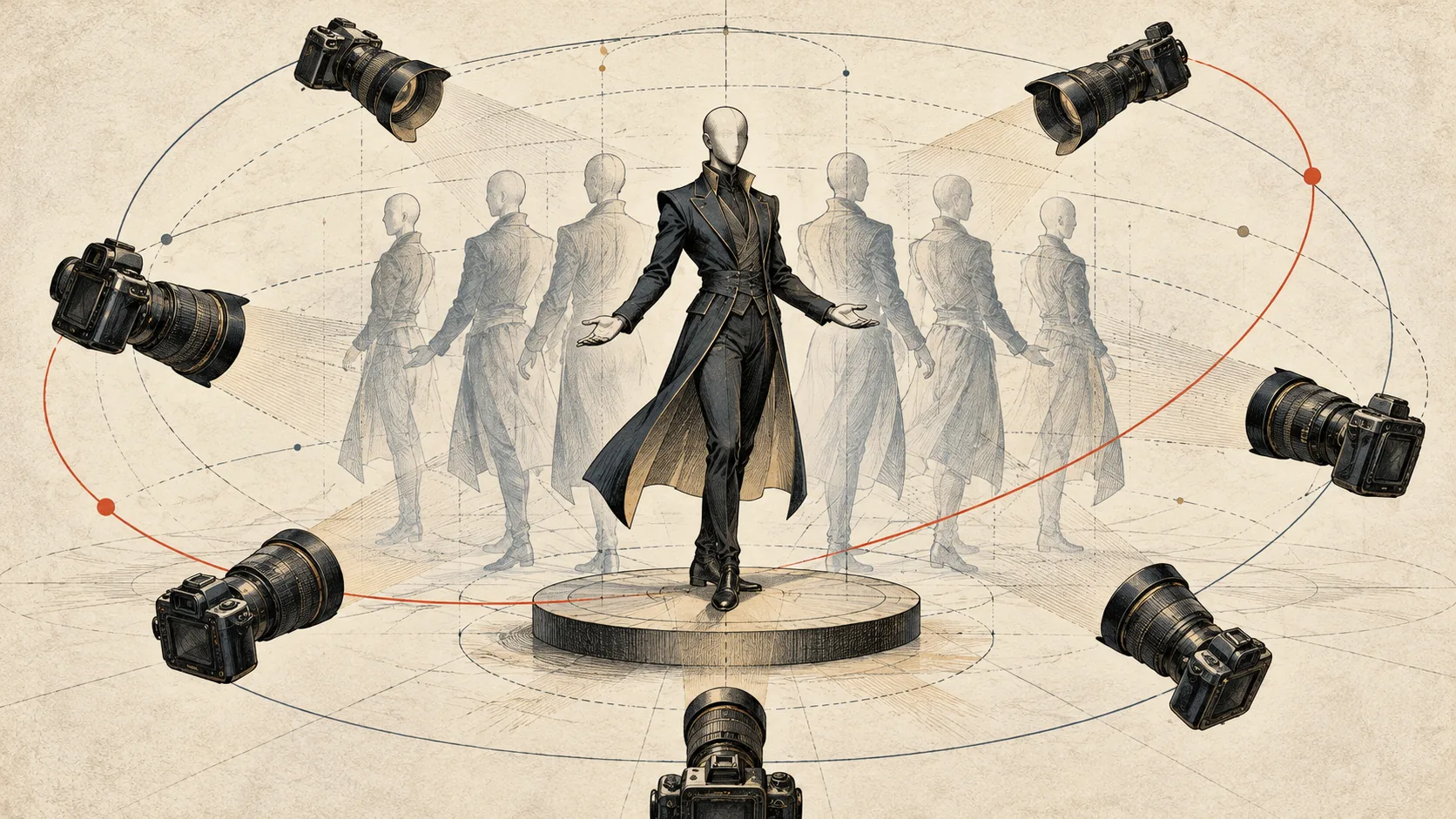
A research team introduced CLACT and WorldCast to address character video generation under large-angle camera movements. The paper, published on October 23 and submitted to Hugging Face on October 27, examines camera paths that combine rotation, translation and changing distance from arbitrary starting angles. The authors say existing methods struggle with these movements, which can expose parts of a character hidden in the initial frame and lead to geometric distortion, degraded appearance and identity drift.
CLACT is a character-focused dataset and benchmark covering varied large-angle camera trajectories. It includes camera geometry and multi-view character observations for training and evaluation. WorldCast is the proposed generation framework. It estimates depth from the initial frame, projects that frame into a 3D point cloud, aligns its scale with the target camera path, then renders it along that path to provide geometric guidance and coverage masks.
To address character details missing from the initial view, WorldCast adds Geometry-Aligned Memory Attention (GAMA). The method uses relative camera poses estimated from the initial frame and multi-view character anchors to place anchor and target-view geometry in a shared coordinate frame. GAMA uses this alignment to retrieve and insert character features relevant to each view during video generation. The authors report that evaluations across varied large-angle camera trajectories showed accurate camera-path following while preserving character geometry, appearance and identity.