OpenAI Disbands Stand-Alone Robotics Team
- •OpenAI dissolved its stand-alone robotics team and reassigned researchers across its research and Applied organizations.
- •An Nvidia study reported 74.8% success for an Astra-powered agent versus 51.0% for specialized models on a simulated benchmark.
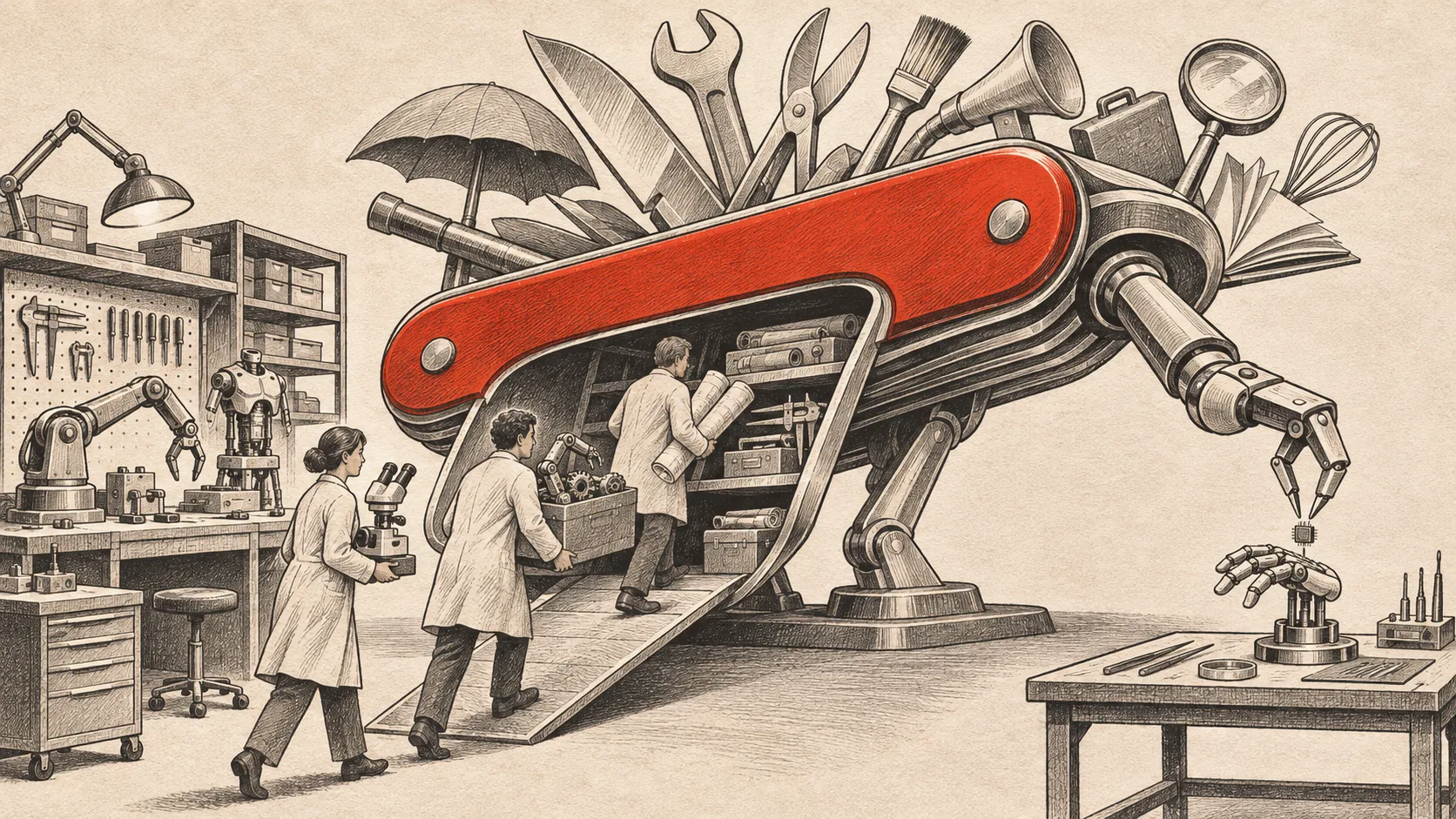
- •OpenAI says general-purpose frontier models, including GPT-6 Astra, can be applied directly to robotics tasks.
OpenAI disbanded its stand-alone robotics team and reassigned researchers to its main research and Applied organizations, the company confirmed to Fortune on November 13. OpenAI said the change is intended to accelerate robotics research, not end it: research staff now report to Chief Research Officer Mark Chen, while applied robotics and hardware staff moved to the Applied organization led by President Greg Brockman. The reorganization came shortly before the CoRL robotics conference in Austin, where OpenAI had registered booth #208; Fortune found it empty, with no company logo.
OpenAI had wound down an earlier robotics team in 2020, with cofounder Wojciech Zaremba citing limited robot data and a more efficient route toward artificial general intelligence through other methods. The company later concentrated on large language models trained on human-written text, leading to ChatGPT in late 2022. OpenAI rebuilt a stand-alone team in 2024 and announced a partnership with Figure to develop models for humanoid robots. Figure said the partnership ended in February 2025 as it pursued its own robot AI. OpenAI has said it is developing a humanoid robot, and CEO Sam Altman has targeted a public demonstration in 2027.
The company said its thinking changed after researchers found that general-purpose frontier models, including GPT-6 Astra, could be applied directly to robotics. At the start of the year, OpenAI researchers had viewed work on models such as Sora, its video-generation model, as a route to robotics because realistic video generation required some implicit understanding of the physical world. The company now says applying general models directly motivated the team’s dissolution. Carnegie Mellon University professor Guanya Shi told Fortune he sees the move as a sign OpenAI regards robotics as an application of general intelligence rather than a separate problem. OpenAI’s change also comes amid pressure to cut costs and focus on core products. Last year, Sam Altman urged staff to drop “side quests”; the company has since ended some efforts, including Sora, to redirect computing resources. Reported operating losses reached $10.9 billion in the most recent quarter as OpenAI seeks a funding round and prepares for a possible IPO in early 2027.
Experiments offer evidence for using general models in robot control. In an Nvidia study, an Astra-powered agent achieved a 74.8% success rate on a simulated manipulation benchmark, compared with 51.0% for the best specialized robotics models reported on the same leaderboard. The system received camera images, robot information and a control interface; the test used a simulated robot, not a physical one. Shi said general models’ spatial and reasoning abilities can help them adapt to changes in object position or lighting and work through task steps. However, he said large language models are slow and cloud-hosted, so robots using them need a constant network connection; he sees a role for smaller specialized models that run onboard without constant internet access.
Robotics companies may retain an advantage through robots already working in settings such as factory floors, MIT professor and Walden Robotics CEO Russ Tedrake told Fortune. Their deployment experience and collected data can help robots adapt to specific workplaces and tasks, and Tedrake said stronger foundational models make that site-specific data more valuable because robots can learn from it faster. Pete Florence, Generalist cofounder, said it remains unclear which existing model, if any, will dominate robotics over the long term. OpenAI said moving the researchers to other teams is its best way to accelerate general-purpose robots.
The fastest, most reliable AI news, straight to your inbox

 GPT Image 2.6 Flare
