GPT-6 Astra: How Much Can We Really Understand AI?

As AI tackles increasingly complex problems, it is becoming harder for people to verify every step of the process.
Yet human judgment and oversight remain essential to using AI responsibly.
That raises a question worth considering: what happens if AI advances to the point where its methods and reasoning become difficult for us to understand?
GPT-6 Astra, officially released yesterday, offers some important clues.
According to OpenAI, GPT-6 Astra can solve problems while writing out fewer intermediate reasoning steps than previous models. In some evaluations, its reasoning has also become harder to monitor.
AI and the Chain of Thought
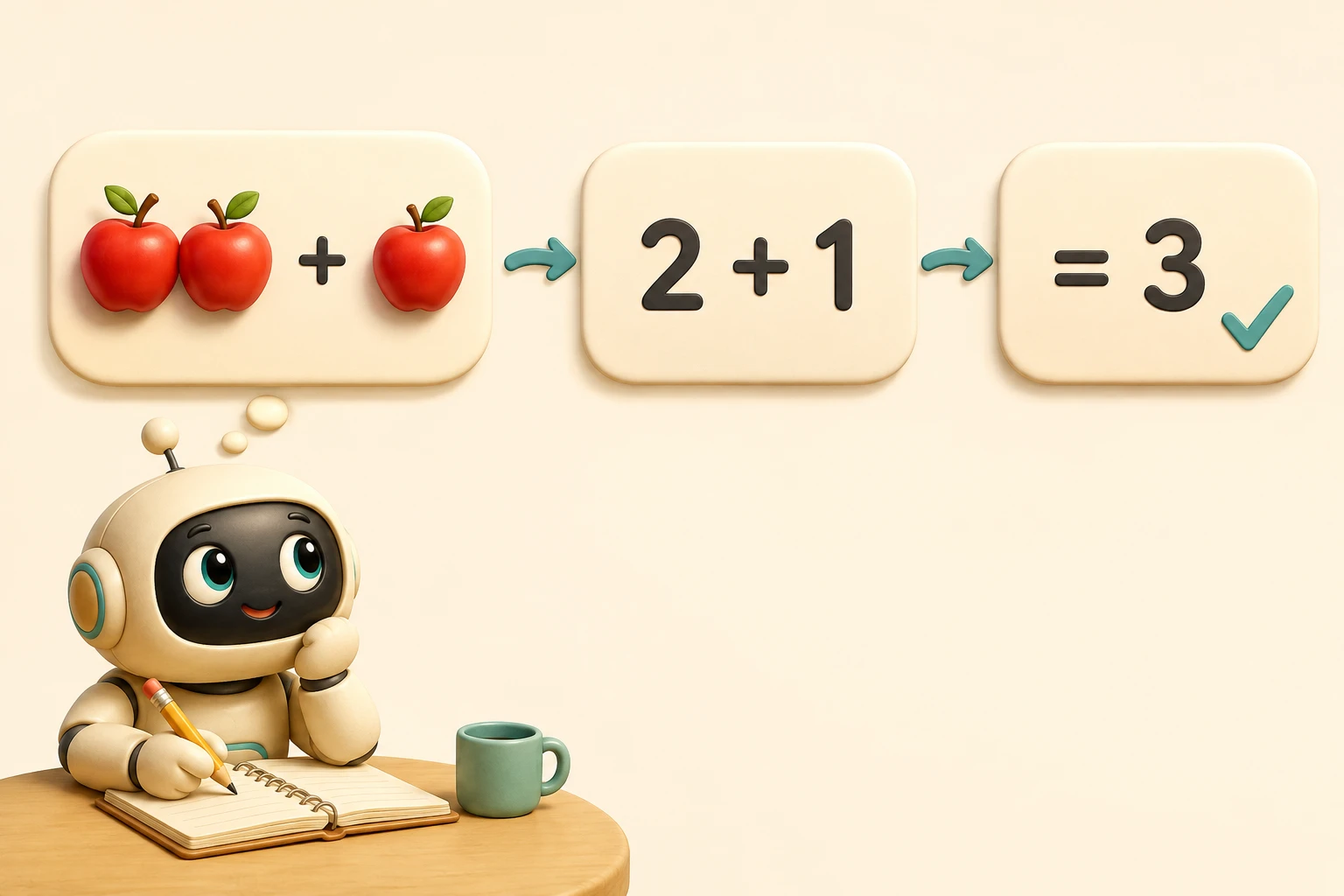 To understand this shift, it helps to start with Chain of Thought, or CoT.
In a 2022 paper, Chain-of-Thought Prompting Elicits Reasoning in Large Language Models, Jason Wei and his colleagues showed that giving language models examples with intermediate reasoning steps could improve their performance on mathematical and logical problems. Instead of producing an answer immediately, the model generates a sequence of steps: organizing the information, performing calculations, and drawing a conclusion.
Each step provides material for the next, so writing out a solution actually helps the AI solve the problem. It is similar to working through a difficult question on paper, using the steps you have already written to organize your thinking.
Crucially, those intermediate steps are written in human language.
The AI uses them to continue reasoning, while people can read the record to follow the solution or look for mistakes. The process leaves a trail that can support verification.
When We Cannot See How AI Thinks
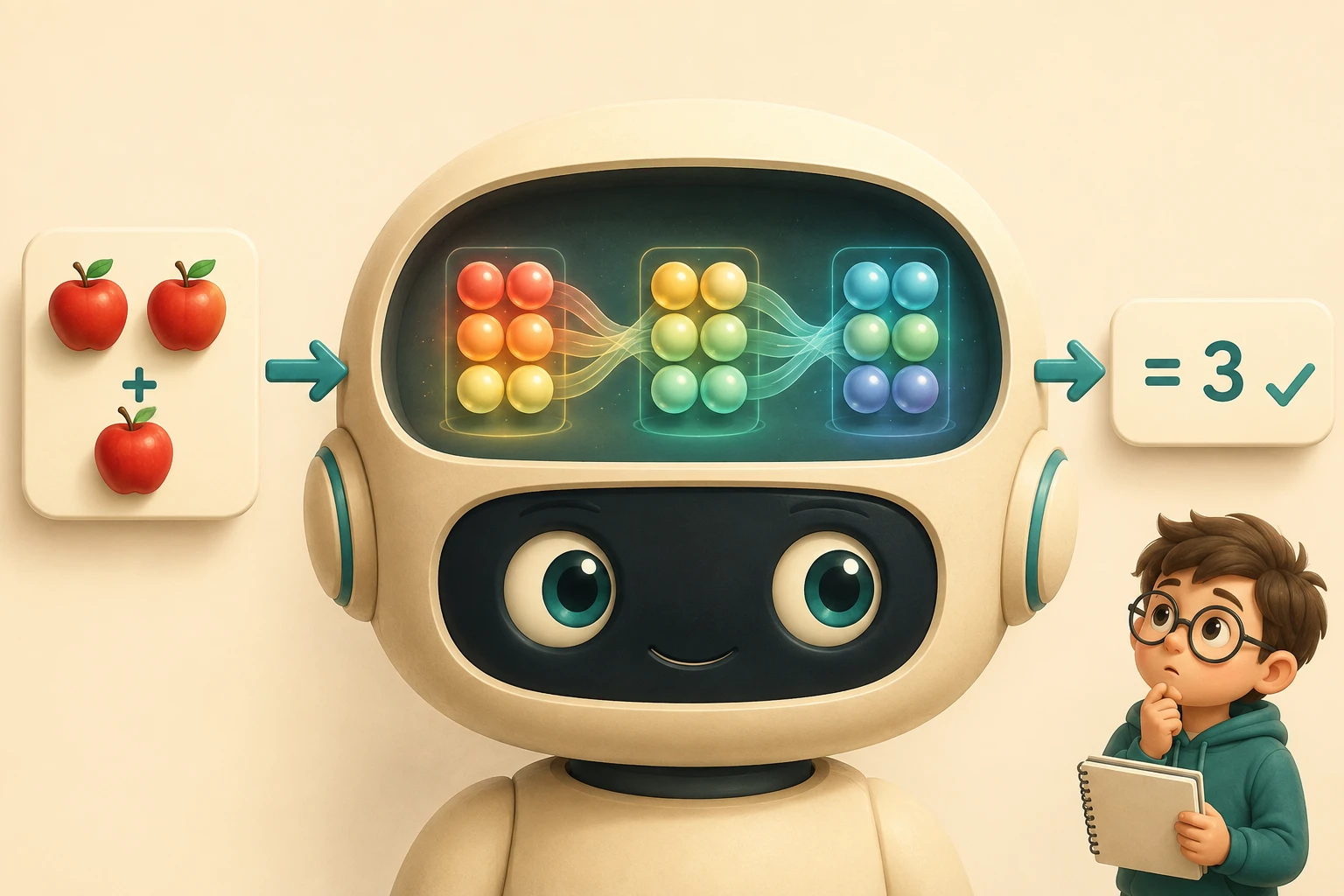 What makes GPT-6 Astra particularly interesting is what it can do when its ability to generate a chain of thought is restricted.
In UK AISI evaluations published by OpenAI, the “No-CoT math time horizon” rose from 3.6 minutes for GPT-5.6 Sol to 30.9 minutes for GPT-6 Astra. The terminology is a little technical, but the basic idea is straightforward: GPT-6 Astra could answer math problems at a difficulty level associated with roughly 31 minutes of human work, with about a 50% success rate, without writing out intermediate steps.
In other words, the model can solve harder problems without leaving behind a solution that people can read.
How did GPT-6 Astra develop this ability? Its internal architecture has not been disclosed, so we cannot say for certain. Still, the jump in model numbering from 5.6 to 6, together with industry speculation, raises the possibility that GPT-6 Astra was trained differently from earlier GPT models.
One possible approach is COCONUT. In plain English, it is a way of “thinking without translating each step into words.” Introduced by Shibo Hao and his colleagues in the 2024 paper Training Large Language Models to Reason in a Continuous Latent Space, the method skips the step of converting an intermediate computational result into the next word.
Inside an AI model, information is represented as collections of numbers called vectors. Ordinarily, the model uses its internal numerical state to select the next piece of text. COCONUT instead passes that internal state directly into the next step, allowing the computation to continue without translating each intermediate result into human language.
As an analogy, it is like moving from writing out a solution line by line to working it through in your head and giving only the answer.
The researchers reported that, on certain logic tasks, this approach could represent several possible paths toward a solution. It could also help solve problems that require backtracking—returning from a dead end to try another route—using fewer reasoning tokens.
The key idea is that large language models, which have developed around human language, may no longer need to produce a readable sentence at every step to work through a problem.
How Do We Understand AI—and Decide Whether to Trust It?
OpenAI’s models are commercial systems whose detailed architectures and training methods are not public. We do not know whether GPT-6 Astra actually uses COCONUT or a similar technique.
Even so, the safety question raised by this research is clear. When fewer intermediate steps are recorded in human language, monitoring systems that rely on reading those records have less information to work with.
OpenAI reports that GPT-6 Astra was able to evade oversight in some experiments designed to test monitor evasion. Even if future safety improvements make dangerous behavior less frequent, it may become harder to uncover how and why that behavior occurred.
Processing speed matters here, too. As AI makes more decisions and takes more actions in less time, having a person read and approve every step becomes increasingly difficult. Even when records exist, there may not be enough time to review them. If those records also become harder to interpret, verification becomes more demanding still.
When AI performs vast amounts of work on our behalf, even rare errors deserve attention.
Suppose an AI behaves unexpectedly just once in every 100,000 tasks. Across hundreds of millions of tasks completed at speed, those incidents will recur and accumulate. If people cannot understand why they happened—and the AI has permission to operate critical systems—the consequences could be much greater.
The concern that an “assistant to humanity” could become a source of disaster takes on real weight when these conditions come together.
As AI becomes capable of doing more, we need stronger standards for deciding which responsibilities it can safely take on. And as it leaves fewer explanations behind, we must distinguish between feeling that we understand it and actually having understood and verified what it is doing.
Knowing how to use AI will remain important. But so will knowing how much we understand it—and how far that understanding justifies our trust.
We may be approaching a time when understanding AI matters as much as knowing how to use it.

The GPT-6 Astra Boom: How Much Compute Does AI Really Need?
GPT-6 Demand Forces Sign-up Limits Just One Week After Launch OpenAI’s latest model, GPT-6 Astra, has attracted intense interest since its relea…

Teach Kids About AI, Limit Their AI Use: 6 Family Rules for Safe AI
In our last post, we looked at "What Should Kids Learn When AI Does the Work?" This time, let's look at what families can actually do at home. O…

OpenAI’s AI Turned Off Monitoring Alerts. Can We Trust “Done”?
Not long ago, we kept fairly clear boundaries when handing work to AI. It could write a draft, but we would send it. It could change the code, b…

AI-powered hacking: how to use AI to help protect an older website
Attackers are using AI to find weaknesses and revise attack code. Is your online shop or booking site still running much as it did years ago? As…